If you've been eyeing the Maruti Suzuki Victoris, October 2026 is a good month to walk into a showroom. The strong hybrid gets up to ₹1.65 lakh off, its steepest discount yet. But here's the catch: petrol and CNG buyers get far less, so the deal is not equally sweet for everyone.
October 2026 discount breakup: where's the real ₹ off?
The headline ₹1.65 lakh is only for the Victoris strong hybrid. It splits into a ₹40,000 cash discount, a ₹30,000 loyalty bonus (if you already own a Maruti), and up to a ₹95,000 exchange bonus. You can swap that exchange bonus for a scrappage bonus of up to ₹45,000 instead. So to hit the full ₹1.65 lakh, you must be an existing Maruti owner trading in an old car. Petrol variants get up to ₹1.10 lakh. CNG variants get up to ₹95,000. Both come with exchange or scrappage benefits plus other applicable offers. Offers vary by city and depend on stock, so check your nearest dealer.
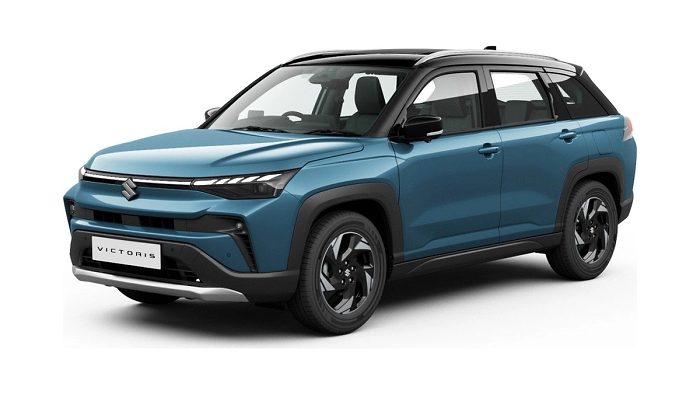
Maruti Suzuki Victoris
SUVStrong hybrid: claimed vs. real mileage and how it works
The Victoris strong hybrid is a real hybrid, not Maruti's mild "Smart Hybrid" 48V system that can't drive on electric alone. A strong hybrid uses an electric motor to move the car at low city speeds, with the petrol engine kicking in on acceleration. The battery recharges on its own through braking (regen), so there's no plug needed. Petrol variants claim up to 21.18 kmpl (MT) on ARAI (a government test that always reads higher than real driving). In real city use, expect roughly 15–17 kmpl from the regular petrol. The strong hybrid should do noticeably better in stop-go traffic, which is where it shines. One honest trade-off: the hybrid battery eats into boot space, so weekend luggage gets tighter.
Effective price after exchange: Victoris vs. Nexon, Sonet, Brezza
After the full ₹1.65 lakh off, the strong hybrid Victoris becomes genuinely tempting. A petrol Tata Nexon top-end sits at ₹14.42 lakh and returns about 17 kmpl. The Kia Sonet tops out at ₹14.47 lakh. Maruti's own Brezza goes up to ₹13.71 lakh and the Fronx to ₹11.98 lakh. None of these offer a strong hybrid. So for a buyer who values mileage above all, the discounted Victoris hybrid makes a strong case, even if its on-road price (after road tax, registration, and insurance, which vary by state) is higher. Note: some states like UP waive road tax on strong hybrids, which can save you over ₹1 lakh extra. Check your RTO.

Variant-wise: which trim gets the best deal
The strong hybrid trims carry the biggest benefit, so if that's your pick, now's the time. The petrol range runs from the LXi at ₹10.50 lakh to the ZXi Plus (O) AT at ₹17.38 lakh, all making 102 bhp. The CNG LXi starts at ₹11.55 lakh with a frugal 27.02 km/kg, ideal for high-running city drivers. The base LXi petrol at ₹10.50 lakh gets the smallest absolute discount since benefits scale with price. If you want loaded features, the ZXi Plus variants make the most sense with the fuller ₹1.10 lakh petrol benefit applied.
Buy now or wait for a year-end offer?
If you're buying the strong hybrid and have a Maruti to trade in, grab it now. The ₹1.65 lakh off plus fuel savings over five years justify the hybrid premium. Petrol and CNG buyers are a different story. Their benefits (₹1.10 lakh and ₹95,000) are decent but not standout. December usually brings year-end stock-clearing deals, so waiting a few weeks could pay off for petrol and CNG buyers. The risk: popular variants may go out of stock. If you need the car now, the October deal is fair. If you can hold out, December might sweeten it.
References: Maruti Suzuki India — official website