Big news if you're eyeing a Hyundai Creta. The next, third-generation model has been caught testing in Manali, and for the first time it's a lower-spec version with 16-inch wheel covers. That tells us Hyundai is reworking the whole range, not just the top trims. It's tipped to launch around mid-2027, so you've got a real decision: grab today's discounted Creta or wait 18 months for a bigger, hybrid SUV that'll likely cost more.
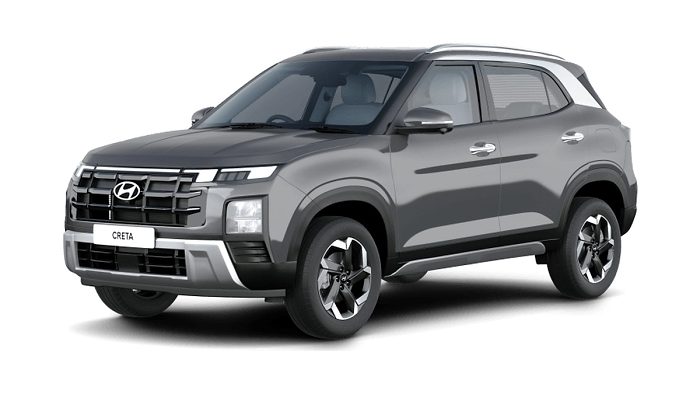
Hyundai Creta
SUVNext-gen Creta spied: what the lower-spec test car confirms
The car in the latest spy shots is the third-generation Creta, codenamed SX3. What's new here is the trim. It's a lower-spec variant, shown by its 16-inch wheel covers instead of alloys. That matters because it hints the entire lineup, from the base E to the top trim, is being redesigned, not just the flagship. Higher trims are expected to get 17-inch wheels, with top versions possibly moving to 18-inch units for the first time. The launch is expected by mid-2027, which puts it in Hyundai's next financial year. The brand hasn't given an official date yet.
Design changes: boxier grille, flush handles, split LED lights
The current Creta has a wide, flat face with connected LED lights and a bold grille. The new one goes in a boxier, more upright direction. Spy shots show a Venue-like rectangular grille with a radar sensor in the middle for ADAS (safety tech that can brake or steer for you). Up front, expect split-style headlights, with LED DRLs (daytime running lamps) on top and the main beam lower down. The rear gets a three-part LED tail-light design. On the sides, there are flush door handles that sit flat with the body, plus revised mirrors with a camera pod for the 360-degree view. New alloy wheels look sportier than earlier test cars. It's a cleaner, more modern look than the car it replaces.
Interior: new Pleos Connect the screen and a slimmer digital cluster.
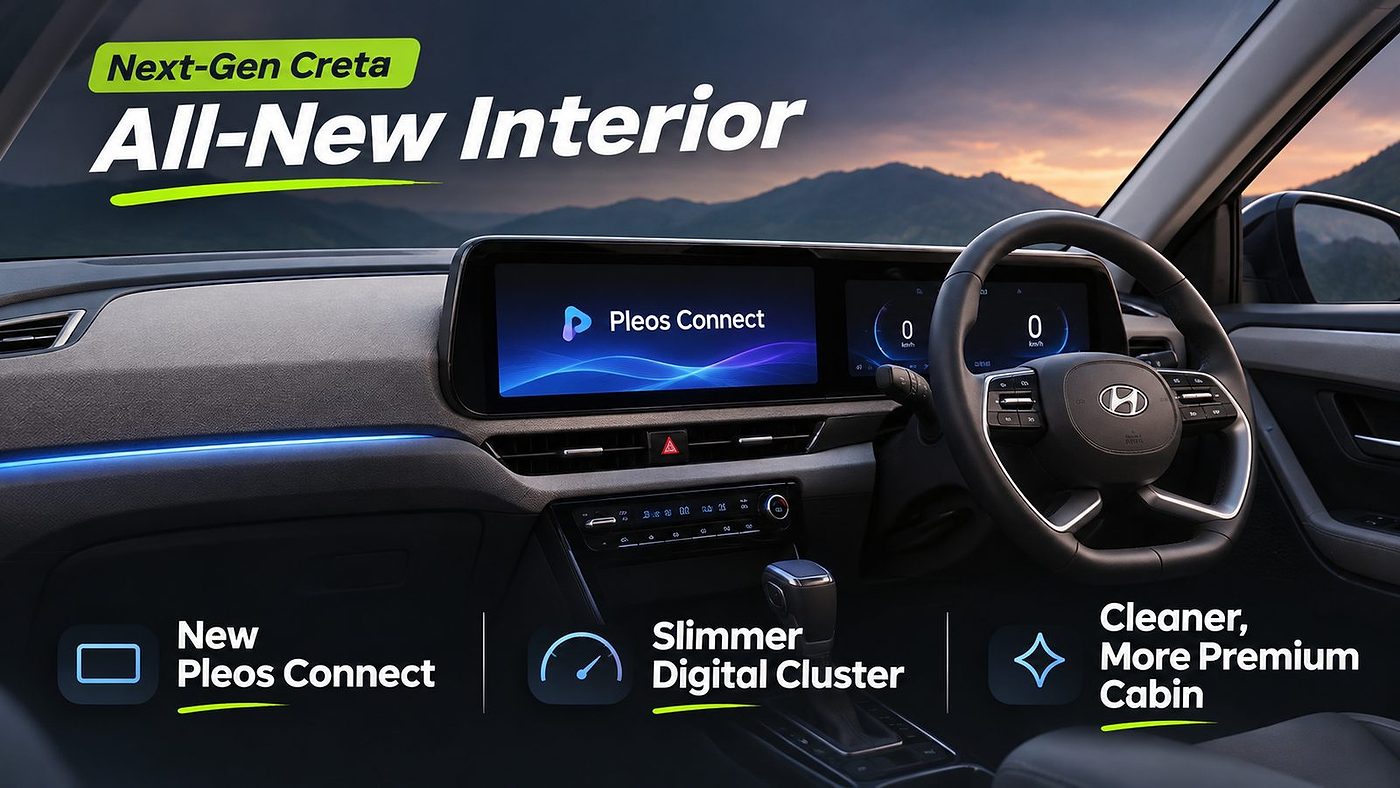
The cabin is set for a full rethink. A test car spotted abroad had a large infotainment touchscreen, likely Hyundai's next-gen Pleos Connect system. Expect a slim digital driver's display alongside it. Hyundai looks to be going for a cleaner, more premium feel than the current dashboard. The company hasn't shown the production interior or the final feature list yet. Which goodies are standard and which are top-trim only will become clear closer to launch. If you want the current cabin, today's SX and SX Premium trims already get a 10.25-inch touchscreen, ventilated seats and a panoramic sunroof on higher versions.
Strong-hybrid powertrain: the big mechanical change
The headline mechanical news is a likely strong-hybrid option. A strong hybrid pairs a petrol engine with an electric motor and battery to cut fuel use, especially in city traffic. This setup is expected to be based on the 1.5-litre petrol engine and shared with the next Kia Seltos. Hyundai hasn't shared power, torque (pulling power), battery size or mileage, so treat any numbers as unconfirmed. The current engines are expected to carry over too. Today's Creta uses a 113 bhp 1.5-litre petrol (17.4 kmpl manual, 17.7 kmpl CVT) and a 114 bhp 1.5-litre diesel (21.8 kmpl, going by ARAI, a government test that always reads higher than real driving). In real traffic, expect the petrol to return roughly 12–14 kmpl.
K3 platform: bigger car, more cabin space
The next Creta moves to the K3 platform, the same base as the Kia Seltos. That means it'll be longer and wider than today's car. More length usually means more rear knee room and a bigger boot, good news for a family of five heading to Lonavala with weekend bags. Hyundai hasn't confirmed the exact length, wheelbase or boot figures yet. The bigger footprint also nudges the Creta further upmarket. It'll sit above the new Bayon in Hyundai's SUV range, which could end up covering the sub-₹12 lakh space the Creta vacates.
Current Creta pricing and variants: ₹10.91–20.46 lakh today
Here's what you get right now, all ex-showroom (on-road adds road tax, registration and insurance, which vary by state). The range starts with the E petrol MT at ₹10.91 lakh and the E diesel MT at ₹12.53 lakh. The EX follows at ₹12.07 lakh petrol, then the EX (O) at ₹13.14 lakh, which is where the CVT automatic first appears at ₹14.50 lakh. The S (O) at ₹14.21 lakh is a sensible mid-spec pick. Higher up are the SX at ₹15.04 lakh, the SX Premium at ₹16.34 lakh, and the fully loaded King Edition topping out at ₹20.46 lakh in the current range. Eight trims in all, so there's a Creta for most budgets. The S (O) or SX is the sweet spot value for most buyers.
Hyundai Creta — Price by variant
| Variant | Ex-showroom price |
|---|---|
| E | ₹10.91 lakh – ₹12.53 lakh |
| EX | ₹12.07 lakh – ₹13.66 lakh |
| EX (O) | ₹13.14 lakh – ₹16.08 lakh |
| S (O) | ₹14.21 lakh – ₹17.3 lakh |
| S (O) Knight | ₹14.39 lakh – ₹16.03 lakh |
| SX | ₹15.04 lakh – ₹15.19 lakh |
| SX Premium | ₹16.34 lakh – ₹18.08 lakh |
| King Edition | ₹17.28 lakh – ₹20.06 lakh |
| King Knight Edition | ₹18.83 lakh – ₹20.11 lakh |
| King Lounge Edition | ₹19.22 lakh – ₹20.46 lakh |
(Current pricing* as of November 2026)
Should you wait or buy the current Creta now?
This is the real question. The current Creta already starts ₹3.51 lakh above the Maruti Suzuki Brezza (₹10.91 lakh vs ₹7.40 lakh) and roughly matches the Kia Sonet (₹7.45–14.47 lakh) at the top. The next-gen, with a strong hybrid and a bigger platform, is widely expected to cost more, likely ₹2–3 lakh above today's prices, moving it closer to Seltos and Kushaq's money. Currently, Hyundai is offering up to ₹1.20 lakh off the current Creta this month. So if you need a solid mid-size SUV now and want to save money, buying today makes sense. But if you want the latest hybrid tech, a bigger cabin and a fresher design, and can wait 18 months, the 2027 Creta is worth holding out for. It's a value-versus-future-proofing call.
References: Hyundai India — official website