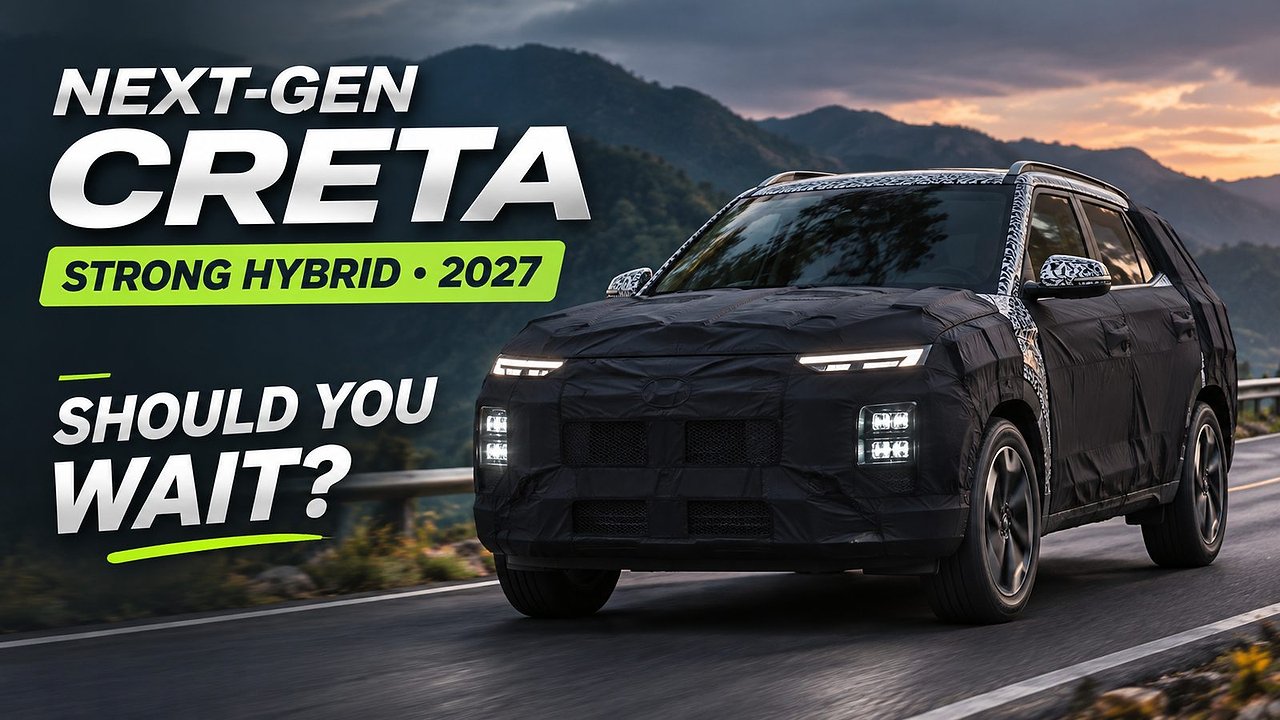
A camouflaged next-gen Hyundai Creta was caught testing, and the spy video gave us our first proper look inside. It's bigger than today's car, swaps the twin screens for one giant touchscreen, and adds electric Boss Mode. With Hyundai's new Bayon now sitting at ₹10 lakh, the Creta is free to move upmarket, so expect it to cost more than the current ₹10.91–20.46 lakh range.
How much bigger is the next-gen Creta?
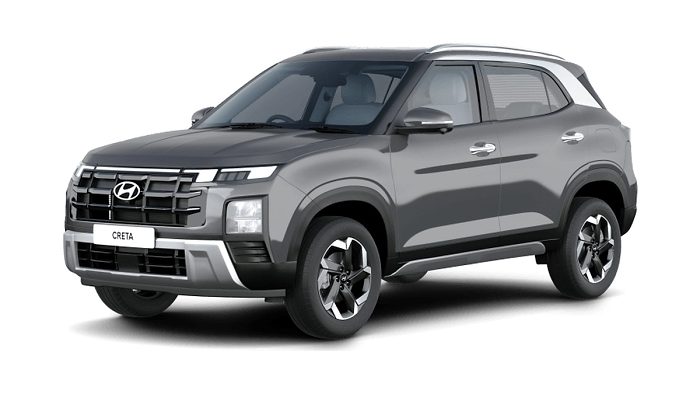
Hyundai Creta
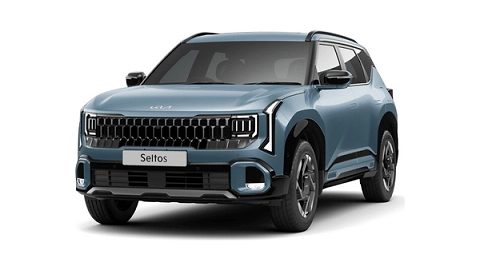
SUVThe spy shots show a Creta that's grown in all directions. Think of what Kia did with the new Seltos; the Creta looks set to follow the same path. The body is boxier, with bigger wheel arches, a flatter bonnet line and large geometric alloy wheels. Hyundai hasn't shared official dimensions yet, so treat the "matches the new Seltos" talk as expected, not confirmed. The reason for the growth is simple. The Bayon now anchors Hyundai's range at ₹10 lakh, giving the Creta room to get longer, roomier and pricier without eating into cheaper models.
Interior and tech: Pleos Connect screen and electric Boss Mode
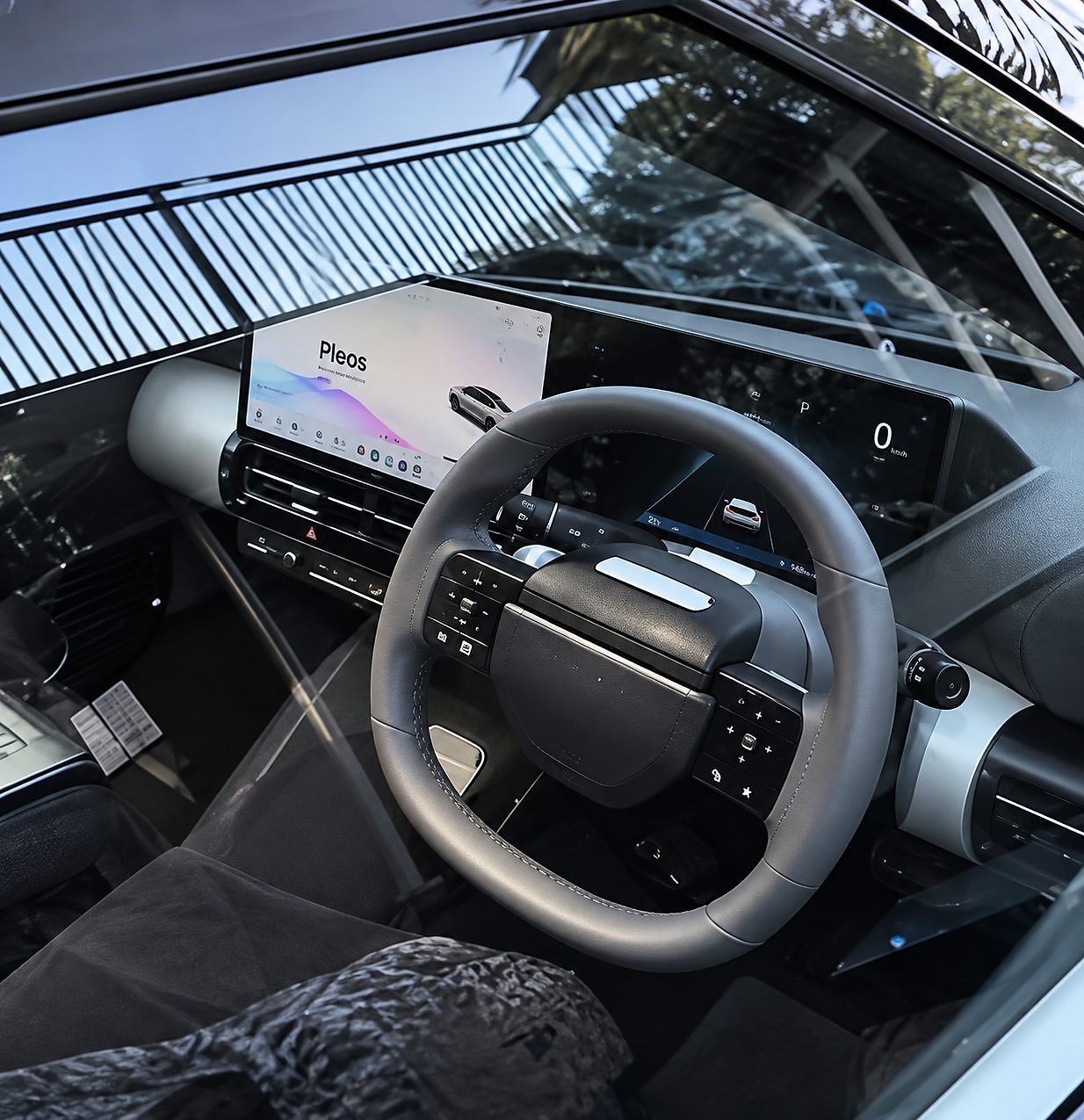
The cabin is where the real change shows. Out goes the current twin-screen layout; in comes one large freestanding central touchscreen running Hyundai's new Pleos Connect software. The driver's digital cluster (the screen behind the wheel) shrinks to a slim strip showing only key info. Spy videos show a light off-white and grey dual-tone theme on the seats, doors and centre console. The big party trick is electric Boss Mode. This lets a rear passenger slide the front passenger seat forward at the push of a button for more legroom. Right now you only get this feature on the Creta Electric and the Alcazar, not the petrol or diesel Creta. Both front seats are now electrically adjustable too, which is a step up from today's car where only the driver's seat is powered.
Features and safety: what's new beyond ADAS?
Hyundai wants the fattest feature list in the segment, and the spy video backs that up. Expect front and rear ventilated seats, all-LED lighting, rear AC vents, a rear centre armrest with cupholders and a possible rear wireless charger. There's also talk of reclining rear seats and all-four auto up/down windows. On safety, the car is tipped to get a Level 2 Pro ADAS suite (safety tech that can brake, steer and keep you in lane), plus a 360-degree camera and blind-spot alerts. For context, today's top King Edition already packs a sunroof, Level 2 ADAS and Bluelink connected tech, so the new car builds on an already loaded base rather than starting from scratch.
Powertrain: same 1.5L trio plus a new strong hybrid
Under the bonnet, the engines carry over. The new Creta keeps the 1.5L naturally-aspirated petrol, the 1.5L turbo petrol and the 1.5L turbo diesel. For reference, today's NA petrol makes 113 bhp and returns 17.4 kmpl (MT) or 17.7 kmpl (CVT), while the diesel does 114 bhp and a frugal 21.8 kmpl. Gearbox choices will be 6-speed manual, iVT and a 7-speed DCT (dual-clutch automatic). The big addition is a fourth option: a strong hybrid (a petrol-electric setup that drives on battery alone at low speeds). It could arrive at launch or later. A localised 1.5L hybrid is expected to chase 22–25 kmpl, which would make it the most fuel-sipping Creta yet, if the price is right.
Hyundai Creta — Engine & performance
| Specification | E / EX +5 | EX (O) / King Knight Edition | King Lounge Edition |
|---|---|---|---|
| Fuel type | Petrol | Diesel | Petrol |
| Engine | 1497 cc | 1493 cc | 1497 cc |
| Max power | 113 bhp @ 6300 rpm | 114 bhp @ 4000 rpm | 113 bhp @ 6300 rpm |
| Max torque | 143.8 Nm (14.7 kgm) @ 4500 rpm | 250 Nm (25.5 kgm) @ 1500-2750 rpm | 143.8 Nm (14.7 kgm) @ 4500 rpm |
| Transmission | 6-Speed Manual | 6-Speed Automatic | 6-Speed Automatic |
| Drivetrain | FWD | FWD | FWD |
| Mileage | 17.4 kmpl | 19.1 kmpl | 17.7 kmpl |
(Powertrain as of November 2026)
Expected price vs the current ₹10.91–20.46 lakh range
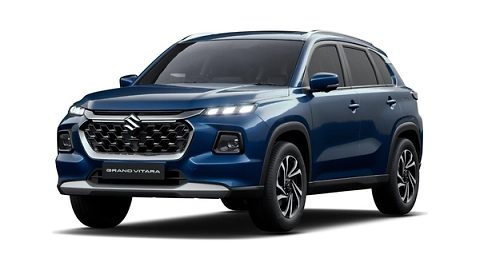
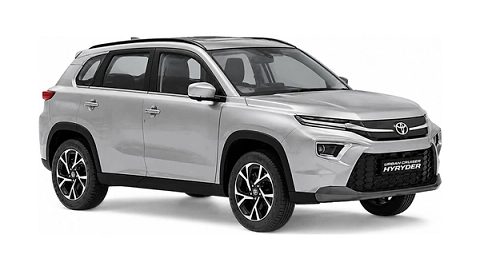
Here's the honest part: Hyundai hasn't confirmed a single price. With the Bayon freeing up the ₹10 lakh slot, the new Creta will almost certainly start higher than today's ₹10.91 lakh base. A strong hybrid, if it comes, will sit at the top and cost noticeably more than the petrol and diesel versions. Remember these are ex-showroom figures; your on-road price adds road tax, registration and insurance, which varies by state. Against rivals, the Creta already plays above the smaller compact SUVs. The Tata Nexon tops out at ₹14.42 lakh and the Kia Sonet at ₹14.47 lakh, both well below the Creta's ₹20.46 lakh ceiling. The next-gen car will stretch that gap further, but it also adds electric Boss Mode, which no petrol-diesel rival offers. The Tata Sierra has Boss Mode, but it's operated by hand, not electrically.
Should you buy the current Creta or wait for 2027?
It depends on your budget and patience. If you're eyeing a loaded SX Premium or King Edition (₹16.34–18.69 lakh), waiting 6–8 months for the new car makes sense. You'll get a bigger cabin, a sharper screen, electric Boss Mode and possibly a hybrid. If you want a base E or EX (₹10.91–13.14 lakh), grab year-end discounts if Hyundai starts clearing current stock before the switch. The new platform and tech justify a premium, but the hybrid's real value will hinge on how its price compares to the Creta Electric. If you need a roomy family SUV right now and can't wait, the current Creta is still a strong, proven buy.
References: Hyundai India — official website