The Toyota Starlet just did something rare. It went from a zero-star embarrassment to a four-star Global NCAP result in a single production change. The fix was simple: Toyota made six airbags standard instead of two. There's a catch for us though. This Starlet is built in India but sold in South Africa, not here. Still, it shares its bones with the Glanza and Urban Cruiser Taisor you can buy, so this matters.
Starlet NCAP rating: zero to four stars. What changed?
Back in May, Global NCAP tested a Starlet with just two airbags (driver and front passenger). It scored zero stars for adult protection. Poor. Then Toyota upgraded the car at its India plant, making six airbags standard, including side curtain airbags that protect your head in a side crash. Global NCAP crash-tested this new version and it scored four stars for adult protection. The child score stayed at three. So one hardware change lifted the car from a fail to a solid pass. That's the whole story in one line.
Test scores: adult vs. child protection
Global NCAP scores adult protection out of 34 points and child protection out of 49. The Starlet's four-star adult result means it did well in the frontal crash (run at 64 km/h) and the side crashes. In the side impact test, head protection was rated good and chest protection was okay. In the tougher side pole test, head protection was again good, but the chest was only marginal (borderline). For child safety, it held its three stars, so no change there from the earlier test.
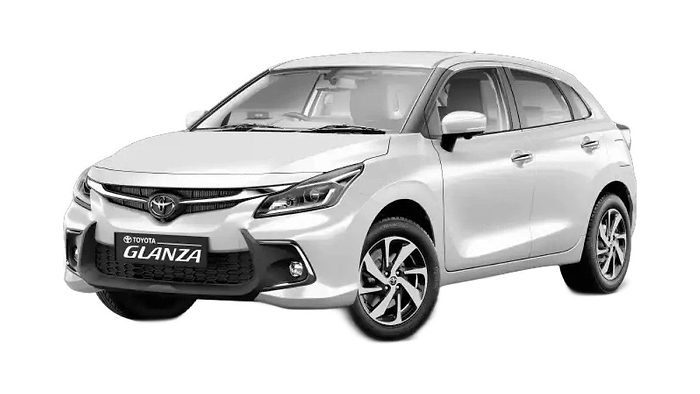
Toyota Glanza
HatchbackWhich version was tested? Six airbags and ESC as standard
Global NCAP tested the six-airbag Starlet built at Toyota's India factory. This version now gets six airbags standard: two front, two side, and two curtain airbags. It also has ESC (Electronic Stability Control, a system that helps stop the car from sliding in a sudden turn) as standard, which the old two-airbag car already had. Here's an odd bit. Toyota was offered the chance to send the upgraded car for testing and declined. Global NCAP paid for the test itself to show the benefit of the extra airbags.
Where the Starlet lost points
It wasn't a clean sheet. In the frontal crash, the footwell (the space near your feet) held firm, but the bodyshell (the car's main structure) was rated unstable. That means it couldn't safely take more force. On the child side, the head of the three-year-old dummy touched the inside of the car during the frontal crash, and chest protection for that dummy was rated low. In the side crash, the same child dummy's head was exposed to impact. These are the reasons the child score stayed at three, not higher.
How the Glanza and rivals stack up on safety
Remember, the Starlet isn't sold in India. The car you can buy that shares its platform is the Toyota Glanza (and its badge-twin, the Maruti Baleno), plus the Urban Cruiser Taisor. Those Indian hatchbacks are rated by Bharat NCAP or Global NCAP separately, so the Starlet's four stars don't automatically apply to them. In this class, the Tata Altroz and Tata Punch have scored five Global NCAP stars, setting the bar high. The Hyundai i20 is another popular rival for buyers to cross-shop. If safety is your top worry, always check the exact rating for the exact variant you're buying.
What this means for Indian buyers
This is the big takeaway. Toyota showed it can make six airbags standard on an entry car built in India, at little extra cost. From October 2025, India rules already require six airbags on new cars, so future Glanza and Urban Cruiser models here should also carry six airbags standard. That's good news if you were waiting. But a word of caution: the Starlet's four-star result is for the South Africa-spec car, not the India-sold Glanza or Taisor. Those need their own crash tests before you can trust a star count. We don't yet have confirmed Bharat NCAP scores for every current Toyota hatchback variant, so check before you sign.
References: Toyota India — official website · Bharat NCAP