Update, 26 September 2026: this story has been overtaken by events. Tata discontinued the Tigor on 25 September 2026 and replaced it with the Aeris, a new compact sedan priced from Rs 5.29 lakh. The facelift described below was never launched. The Tigor EV continues on sale and is not affected.
Tata is about to give the Tigor its first big styling refresh since 2020. The look borrows heavily from the newer Tiago facelift, and the cabin finally gets a proper 10.25-inch screen. But here's the catch: the 85 bhp petrol engine stays exactly as it is, at a time when the all-new Maruti Dzire has moved ahead in features and safety.
What's new: Fresh face, better cabin, same engine
Think of this as a makeover, not a rebuild. The Tigor facelift is expected to get a redesigned front, slimmer LED DRLs (the daytime running lights), and a bigger touchscreen inside. Tata has not officially confirmed a launch date, but it's widely expected in the coming weeks, before Diwali. What matters most: the engines carry over untouched. So this is an evolutionary update, not a mechanical one.
Exterior: Upright grille, connected lamps, new alloys
The current Tigor already looks decent for a sub-4-meter sedan, but it's starting to feel dated next to newer rivals. The facelift is expected to bring a completely redesigned front with slimmer headlamps and integrated LED DRLs, joined by a gloss black trim. The bumper gets a larger air intake with vertical and horizontal slats, giving a more upright face. The side profile stays much the same, but new alloy wheels are expected. At the back, look for revised LED tail lamps connected by a light strip and a cleaner bumper.
Interior and features: 10.25-inch screen arrives, but what stays?
This is where the Tigor needed help the most. The cabin is expected to get a new 10.25-inch floating touchscreen (up from the current 26.03 cm unit), a fully digital instrument cluster, and wireless Android Auto and Apple CarPlay. Wireless phone charging, Type-C ports, auto-folding mirrors, and a new steering wheel are also on the cards. The basic layout and the 419-liter boot, big enough for a family's weekend luggage to Lonavala, are likely to carry over. So expect a tech jump, not a full cabin redesign.
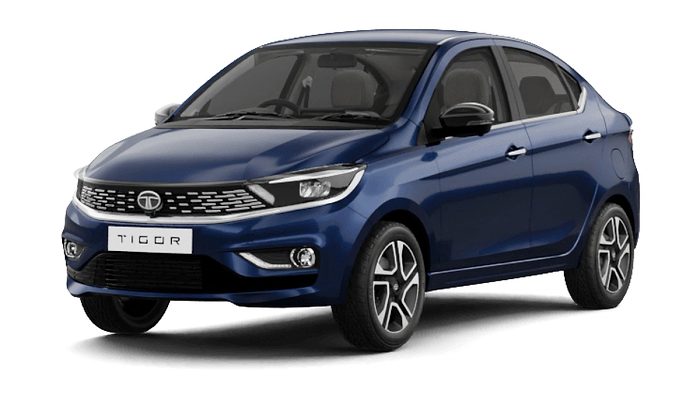
Tata Tigor
SedanSafety: six airbags standard? Still unconfirmed
The current Tigor has a 4-star Global NCAP body with dual front airbags, ABS, and EBD as standard, and ESP with hill-hold from the XZ trim up. There's talk that the facelift could offer six airbags standard across all variants, plus a 360-degree camera. But this is not confirmed and goes against the outgoing car's dual-airbag base. If Tata does add six airbags across the range, it closes a big gap with rivals. Treat it as expected, not certain, until launch.
Powertrain and mileage: 85 bhp petrol and 74 bhp CNG carry over
No engine changes here. The 1.2-liter Revotron petrol continues with 85 bhp and 113 Nm of torque (pulling power), paired with a 5-speed manual or AMT (automatic). Petrol mileage stays at 19.2 kmpl (manual) and 19.6 kmpl (AMT), figures that hold up well in city traffic. The twin-cylinder iCNG bi-fuel option carries on too, rated up to 28.06 km/kg, which is excellent for running costs. There's chatter about paddle shifters on the AMT, but that's unconfirmed. On the flex-fuel front, most modern petrol engines here run E20 (20% ethanol mix); higher ethanol blends can slightly cut mileage, but pump availability and warranty depend on the exact spec, so check with your dealer.
Expected price: Will Tata hold the ₹5.55 lakh base?
The current Tigor spans ₹5.55 lakh for the XM to ₹8.84 lakh for the XZ+ AMT (all ex-showroom). On-road prices will be higher once you add road tax, registration, and insurance, and that varies by state. Tata hasn't announced facelift prices yet. A modest ₹20,000–₹30,000 hike is realistic given the added kit, but holding the ₹5.55 lakh base would keep the Tigor sharp on value. The trims should stay familiar: XM, XT, XZ, and XZ Plus. If you want the good stuff, the XZ+ Lux with the 360-degree camera and R15 dual-tone alloys is the one to watch.
Tigor vs Dzire vs Aura: Where it wins and where it trails
The new Maruti Dzire (₹6.26L–₹9.36L) is the tough one to beat. It now offers Level 2 ADAS (safety tech that can brake for you) and six airbags standard, which the current Tigor can't match. The Hyundai Aura (₹6L–₹8.6L) also plays in this space. Where the Tigor fights back: its 419-liter boot is the biggest here, and the 28.06 km/kg iCNG makes it a cheaper daily runner than most petrol rivals. But on features and safety tech, the Dzire has pulled ahead. Unless the six-airbag rumor comes true, the Tigor's win is boot space and CNG value, not safety kit.
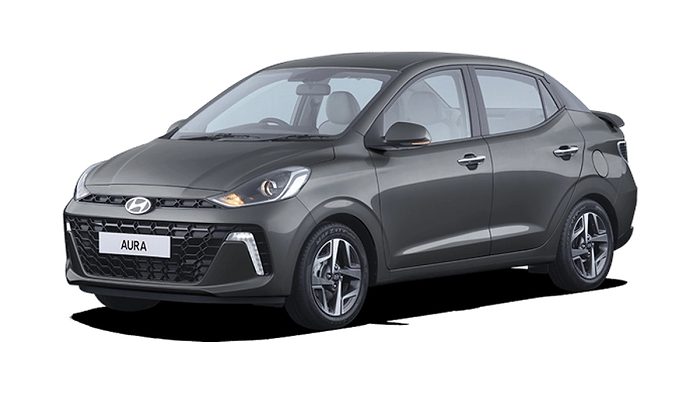
Hyundai Aura
SedanShould you buy or wait?
Simple: wait for the facelift if you're buying a Tigor now. The new screen, fresh face, and possible six airbags are worth holding out a few weeks for. For CNG fleet buyers and Tata loyalists, the Tigor still makes strong sense thanks to that 28.06 km/kg efficiency and the 419-liter boot. But if you drive a petrol only and want the latest safety net, the Dzire's ADAS and standard six airbags are hard to ignore at similar money. So the Tigor facelift stays relevant on value, but private petrol buyers should cross-shop the Dzire before signing.
References: Tata India — official website
Read next
- Tata Nexon Camo Edition launched at ₹9.99 lakh: dashcam, bigger screens, but is it the value pick?
- Tata halts Sanand production after Gujarat floods: Nexon, Sierra, Tiago, Tigor deliveries hit
- Should you buy Tata Punch.ev battery separately or pay per km?
- 2026 Tata Tiago: Petrol or CNG? Trim-by-trim guide, ₹4.70–8.55 lakh