Hyundai showed off the Bayon N Line at the 2026 Paris Motor Show, and it looks genuinely sporty. But before you get excited, here's the catch. The India-spec Hyundai Bayon takes a totally different road, with a calmer 1.5L petrol engine and a CNG version coming later. So the two cars share a body but little else under the bonnet.
Bayon N Line revealed: what's different from the India car?
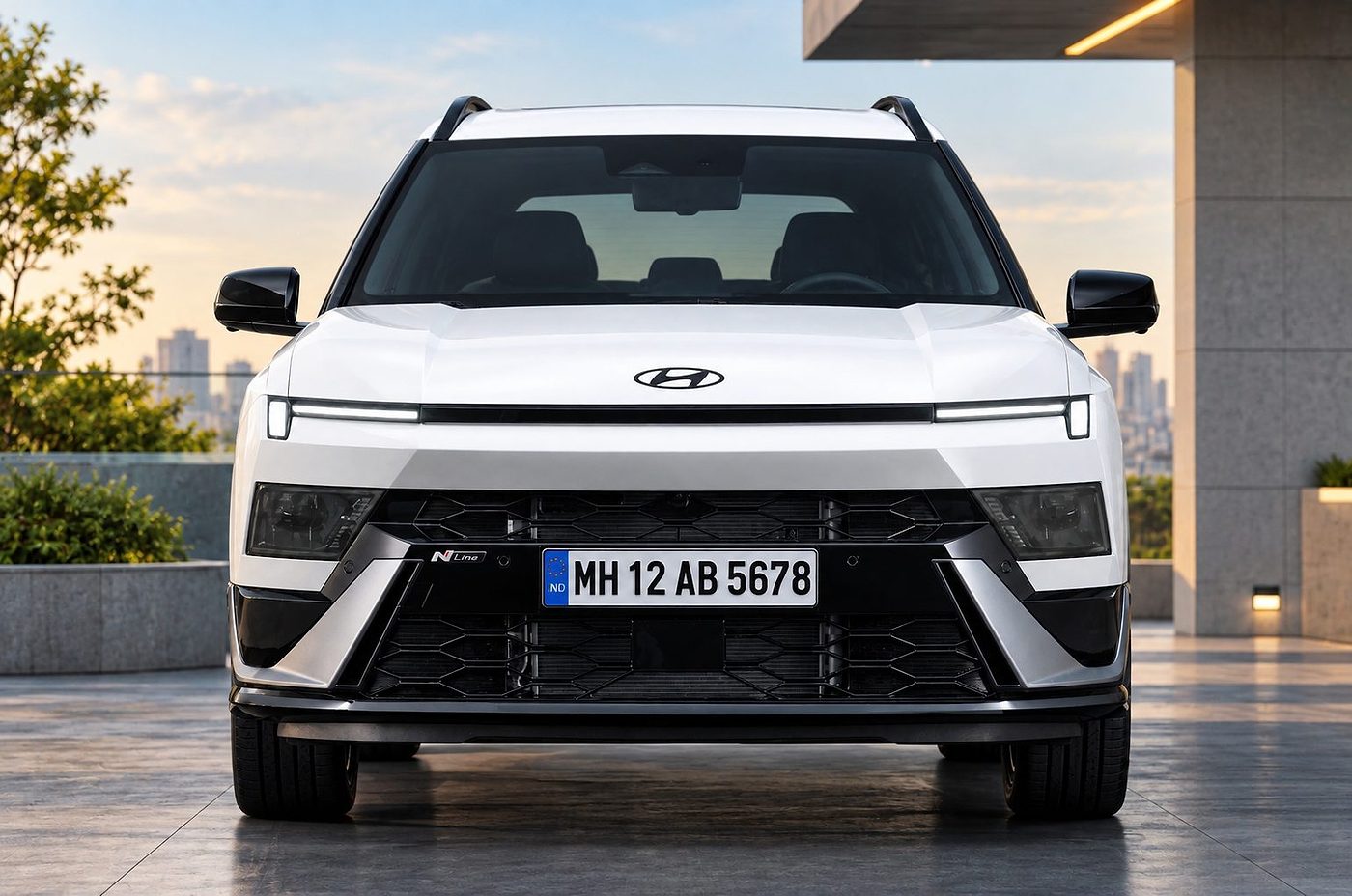
The N Line shares its basic body shape with the India-spec Bayon. But Hyundai added sportier bits all around. Up front there's a new bumper with an open design, blacked-out cladding, winglets, and a honeycomb grille, plus an 'N Line' badge and smoked headlamps. On the sides you get gloss-black cladding and mirrors, larger 18-inch alloy wheels, and N-Line badging. At the back sit a bigger twin-ridge roof spoiler, dual exhaust tips, and a fully black bumper. The India car, by comparison, gets up to 17-inch alloys and a more regular look.
Engine: why does India get a 1.5L and Europe get a 1.0L turbo?
This is the real split. The India Bayon runs only 114 bhp of 1.5-liter naturally aspirated petrol (a non-turbo engine that pulls smoothly), mated to a 6-speed manual or a CVT automatic. The N Line instead uses a 1.0-liter three-cylinder turbo-petrol in two tunes, 90 bhp and 115 bhp, with a 6-speed manual or a quick 7-speed dual-clutch auto (DCT). Hyundai claims the N Line does 0-100 km/h in as low as 10.8 seconds (how fast it reaches highway speed). Europe even gets a strong hybrid later with a combined 138 bhp. India's version is tuned for relaxed, easy driving, not outright speed.
Interior and features: what's shared, what's N Line-only
The cabin layout is largely the same on both. You get a curved pair of 12.3-inch screens (a digital driver display plus a touchscreen), a vertical center console like the latest i20, and vertical air vents. The N Line adds sporty touches: a black theme with red accents and stitching, Alcantara-style seats, and an N Line steering wheel and gear lever. It also packs a panoramic sunroof, heated and ventilated front seats, an 8-speaker Bose system, wireless Apple CarPlay and Android Auto, and Level 2 ADAS (safety tech that can brake and steer-assist for you). One neat detail: the India car gets a generative AI voice assistant that Hyundai hasn't confirmed for the N Line.
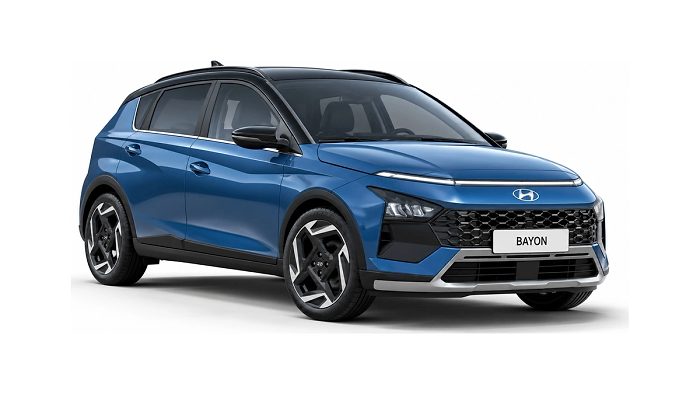
Hyundai Bayon
SUVIndia launch date: Diwali 2026, with CNG expected later
Hyundai has confirmed the Bayon nameplate for India with a launch expected around Diwali 2026. The N Line was shown at the Paris Motor Show in October 2026, and the India-spec Bayon has been confirmed for a Diwali 2026 launch. A CNG version is expected to follow sometime after launch, with an underbody gas tank. That CNG push is the key clue to Hyundai's plan here. It wants a practical, low-running-cost SUV to take on Maruti's hybrid models like the Grand Vitara and the Toyota Hyryder.
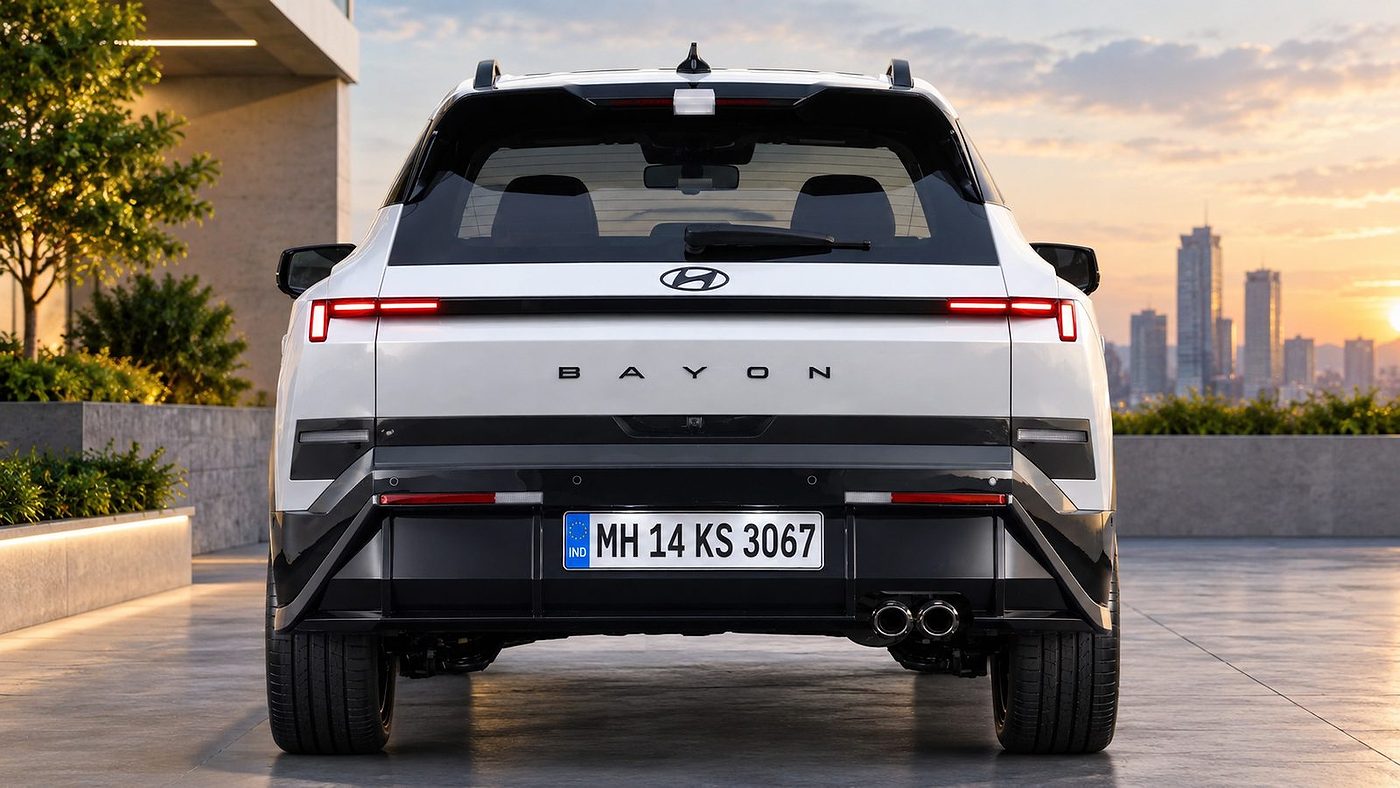
Will the Bayon N Line come to India?
Short answer: unlikely, at least at the start. Hyundai hasn't confirmed it either way. But the India car's calm 1.5L engine and the incoming CNG version point to a very different buyer. Hyundai sees the India Bayon as a no-nonsense, feature-rich family SUV that's high on comfort and low on fuel bills. A sporty turbo N Line simply doesn't fit that brief right now. If you're hoping for the DCT and 18-inch wheels, don't hold your breath.
Hyundai Bayon expected price vs Magnite, Punch, and Exter
We expect the India Bayon to cost around ₹8–14 lakh (ex-showroom; on-road is higher after road tax, registration, and insurance, and varies by state). That puts it clearly above the usual subcompact crowd. The Nissan Magnite runs ₹5.69–11.16 lakh, the Tata Punch ₹5.75–10.77 lakh, and Hyundai's own Exter ₹5.81–10.43 lakh. So the Bayon starts roughly ₹2–3 lakh above the Magnite's base. The trade-off is positioning: Hyundai is pitching the Bayon as a more premium, feature-heavy choice that slots between the Venue and Creta in size, with Level 2 ADAS as a big selling point.
References: Hyundai India — official website
Read next
- 2027 Hyundai Tucson gets 292 PS PHEV, 81 km EV range: India still waiting
- Hyundai Bayon bookings open at ₹11,000; Diwali 2026 launch, 1.5L petrol confirmed
- 2027 Hyundai Tucson revealed: 245 bhp hybrid, 17.4 km/l, India launch next?
- 2027 Hyundai Ioniq 5 update lands abroad: should India's ₹55.7 lakh buyers wait?