Update, 14 October 2026: the new-generation Glanza has launched at Rs 6.99 lakh to Rs 10.98 lakh. It does not get a sunroof. Full prices, variants and features are in our launch report: New Toyota Glanza launched at Rs 6.99 lakh. The article below was written before the launch and is kept for the record.
Toyota has confirmed the Glanza facelift for October 14, 2026. It lands just three weeks after the Maruti Baleno facelift, the car it's twinned with. So the big question for you: pay the Toyota premium, or grab a Baleno for less?
Toyota Glanza facelift: what's new at a glance
This is a mid-cycle refresh, not a new car. Think cosmetic tweaks plus a few added features, not a full redesign. The Glanza has always been a rebadged Maruti Baleno with Toyota styling and Toyota after-sales. So the September 5 Baleno facelift gives us a solid preview. Expect a new front grille, updated bumpers, fresh alloy wheels, and some cabin upgrades. The 1.2-litre petrol engine and CNG option carry over unchanged.
Exterior changes: new grille and alloys, familiar lights stay
Up front, the Glanza gets a new grille pattern and reworked bumpers. Toyota usually gives the Glanza its own grille and badging to set it apart from the Baleno, so expect that same touch here. The LED headlamps and DRLs (daytime running lights) carry over. At the rear, changes look limited to a new bumper. The existing taillights, roof-mounted spoiler, and rear wiper stay as before. Fresh alloy wheel designs round off the update. In short, evolutionary, not dramatic.
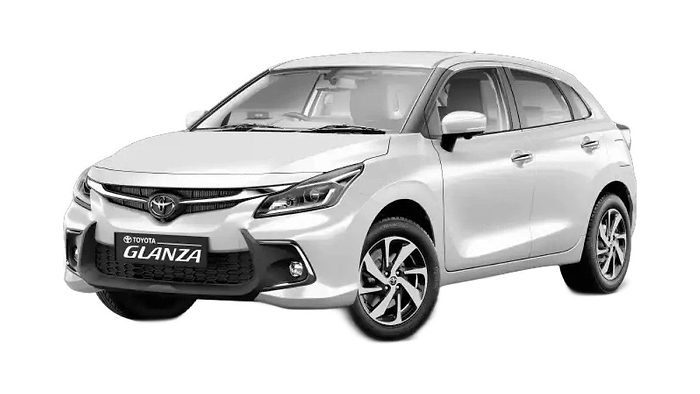
Toyota Glanza
HatchbackInterior and features: sunroof, ventilated seats, and a bigger screen expected
The cabin is where the facelift adds real value. Going by the Baleno twin, expect new upholstery and a bigger touchscreen. A single-pane sunroof looks likely, which the current Glanza doesn't offer. Ventilated seats (seats that blow cool air, great for Indian summers) and wireless phone charging are also on the cards. These are the upgrades worth waiting for. The current car already gets Toyota's connected-car tech and a decent feature list on the top V trim.
Engine, mileage, and CNG: 89 bhp petrol carries over
No mechanical changes here. The 1.2-litre petrol makes 89 bhp and comes with a manual (MT) or automated manual (AMT) gearbox. Mileage stays a frugal 22.3 kmpl on the manual and 22.9 kmpl on the AMT (ARAI figures, so real driving will be a bit lower). The CNG option makes 76 bhp and is offered only in the mid S and G trims. That CNG car is your cheapest-to-run pick for city duty. On the fuel front, this petrol already runs on E20 (petrol blended with 20% ethanol), part of the government's blending push. Higher ethanol can slightly dent mileage, but running costs stay low.
Expected price: will it stay at ₹6.73-9.99 lakh or climb?
Today the Glanza runs from ₹6.73 lakh for the base E to ₹9.99 lakh for the top V AMT (ex-showroom). Prices will likely start just above ₹6.73 lakh after the facelift. Going by past updates, expect a modest hike of around ₹20,000-30,000 at each trim, given the added kit. On-road prices will be higher once you add road tax, registration, and insurance, and that varies by state. The four trims (E, S, G, V) should carry forward, with CNG staying in S and G.
Glanza vs. Baleno facelift: same car, which one wins?
This is the real decision. The Glanza and Baleno share the same platform, engine, and now largely the same features. Historically the Glanza costs about ₹20,000-30,000 more than the Baleno at each trim level. So what does that extra money buy? Toyota's badge, a slightly longer warranty, and the perception of stronger after-sales. Maruti, on the other hand, has a much denser service network, which matters if you live in a smaller town. If you value the Toyota reliability image and don't mind paying a little more, the Glanza fits. If service and the lowest price matter most, the Baleno wins.
Verdict: wait for October 14 or grab a discount now?
If you want the sunroof and ventilated seats, waiting till October 14 makes sense. Those are genuine additions the current car misses. But if you just need a peppy, fuel-efficient hatchback and don't care about the new kit, year-end discounts on current stock could save you real money. Our pick if you wait: the mid S or G trim, ideally the CNG version for the cheapest running costs, or the petrol AMT for stress-free city driving. The Glanza is a sensible, frugal buy. Just decide whether that ₹20,000-30,000 Toyota premium over the Baleno is worth it for you.
References: Toyota India — official website
Read next
- Toyota Starlet jumps from zero to four-star Global NCAP after six-airbag upgrade
- Toyota Innova HyCross facelift: mid-Oct 2026 launch, bolder SUV face, same engines
- Toyota Innova Hycross is India's No.1 hybrid, but sales dip 6% in H1 2026
- Toyota Hyryder Aero Black Edition: ₹31,999 for black garnishes, worth it?