If you were waiting to book a Maruti Suzuki e Vitara, it just got a little pricier. Maruti has hiked prices by up to ₹20,000, the second increase since deliveries began in February 2026. The base Delta now starts at ₹16.19 lakh ex-showroom, and the total climb since May is about ₹45,000.
What went up: ₹20k on Delta, ₹15k on Zeta, Alpha spared
This round is not uniform across the range. The entry Delta 49kWh takes the full hit, up ₹20,000 from ₹15.99 lakh to ₹16.19 lakh. The Zeta 61kWh rises ₹15,000 to ₹17.94 lakh. The top Alpha 61kWh stays put at ₹19.99 lakh, and the Alpha dual-tone at ₹20.21 lakh. All prices are ex-showroom, so add road tax, registration and insurance for the on-road figure, which varies by state. Maruti has not linked this hike to any change in equipment, battery size or performance. Same car, just ₹15,000 to ₹20,000 more for Delta and Zeta buyers.
The bigger picture: base is ₹45,000 costlier than in May
One ₹20,000 hike on a ₹16 lakh car barely moves the needle. But this is the second revision in six months. Maruti had already raised prices in June, when some versions went up by as much as ₹30,000. Put the two together and some variants are up to ₹45,000 dearer than in May 2026. In percentage terms that is about 2.6% total. Small in isolation, but the repeated hikes are the story here.
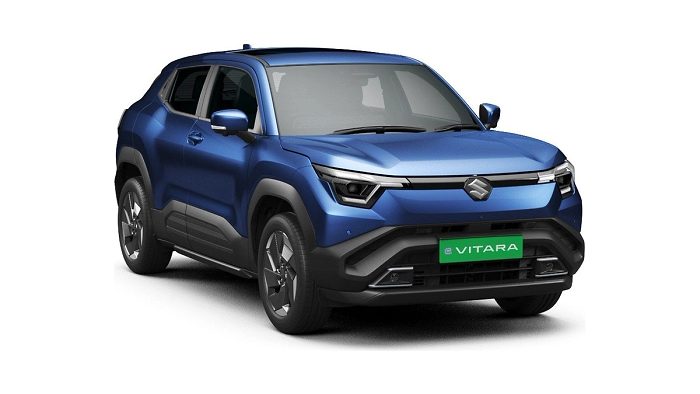
Maruti Suzuki e Vitara
SUVHow the e-Vitara stacks up against Creta Electric and Curvv EV
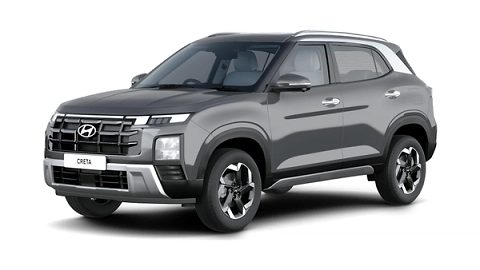
The e-Vitara sits in a crowded EV space. It takes on the Hyundai Creta Electric, Tata Curvv EV, Mahindra BE 6 and MG ZS EV, each with a different battery and pricing approach. From our catalogue, the Tata Curvv is priced ₹10.0–19.0 lakh and the MG Astor ₹9.79–15.5 lakh, so the e-Vitara sits at the pricier, more premium end. With every hike, its price cushion over the Creta Electric shrinks. The Zeta at ₹17.94 lakh now sits close to Hyundai's mid electric Creta. The e-Vitara's counter-punch stays its 543 km claimed range on the bigger battery, which beats what the Creta Electric offers.
What you still get: 49/61 kWh, up to 543 km, 7.4 kW charger
Nothing about the car has changed. The Delta uses a 49kWh battery (the pack that stores the charge) with a claimed 440 km range. The Zeta and Alpha get the 61kWh pack, rated up to 543 km. That 543 km is a lab figure, so expect roughly 380–400 km in real driving, less on the highway with AC on. Charging at home takes the supplied 7.4 kW AC wall-box a few hours for a full top-up. All India-spec versions are front-wheel drive, with the bigger battery also making more power (172 bhp vs 142 bhp on the Delta). Safety is strong: seven airbags as standard, a five-star Bharat NCAP rating, and Level 2 ADAS (safety tech that can brake and steer for you) on higher trims. Maruti gives an eight-year or 1.6 lakh km battery warranty.
There's also the ₹10.99 lakh BaaS option
If the outright prices feel steep, Maruti's Battery-as-a-Service (BaaS) plan cuts the upfront cost. Under BaaS, the vehicle price starts at ₹10.99 lakh, and you pay for the battery separately through a per-kilometre charge. Don't confuse this with the normal buy-it-all prices above. It lowers your entry cost but adds an ongoing battery bill, so it suits high-mileage users who want a smaller down payment.
Buy now or wait a bit?
Honestly, ₹20,000 won't break your decision on a ₹16–20 lakh car. If you already had your heart set on the Alpha, nothing changes for you this round. Delta and Zeta buyers simply pay ₹15,000–20,000 more, which works out to roughly ₹300–400 extra on a typical EMI over a long loan. But two hikes in quick succession suggest more could follow, and rivals keep tweaking discounts and schemes too. The competitive window is live. If you want Maruti's wide service reach and the class-best 543 km claim, the Zeta 61kWh remains the sweet spot, even after the hike.
References: Maruti Suzuki India — official website
Read next
- Maruti Suzuki price hike Sept 2026: Brezza up to ₹20,000 dearer, buy now?
- Maruti Suzuki Brezza crosses 60,000 bookings in 6 weeks: buy now or test a rival?
- Maruti Swift Discontinues Bluish Black: 6 colours left, which trim to buy in 2026
- Maruti Baleno facelift expected early September with first-ever CNG-AMT combo