VinFast has officially shown the updated VF5, and it's heading to India to take on the Tata Nexon EV. Four years after launch, Vietnam's bestselling compact EV ditches its quirky curves for a squarer, SUV-like shape. It gets a bigger 43kWh battery and a minimalist cabin built around one screen. The big question for you: is a possible ₹2.5 lakh saving over the Nexon EV worth betting on a brand with no dealers or service centers live in India yet?
What's new: The VF5 facelift in 60 seconds
Think of this as a full makeover, not a light touch-up. The old VF5 looked rounded and a bit odd; the new one stands tall and square like a proper small SUV. Inside, the quirky angled dashboard is gone, replaced by a flatter layout with a bigger 10-inch screen. The battery jumps to 43 kWh, pushing the claimed range to 370 km on the NEDC test. It's been spotted testing in India more than once, and a design patent was recently filed here too. So this is more than skin deep, but you should still treat key India details as unconfirmed for now.
Exterior: Squarer, taller, 20 mm longer, the SUV makeover
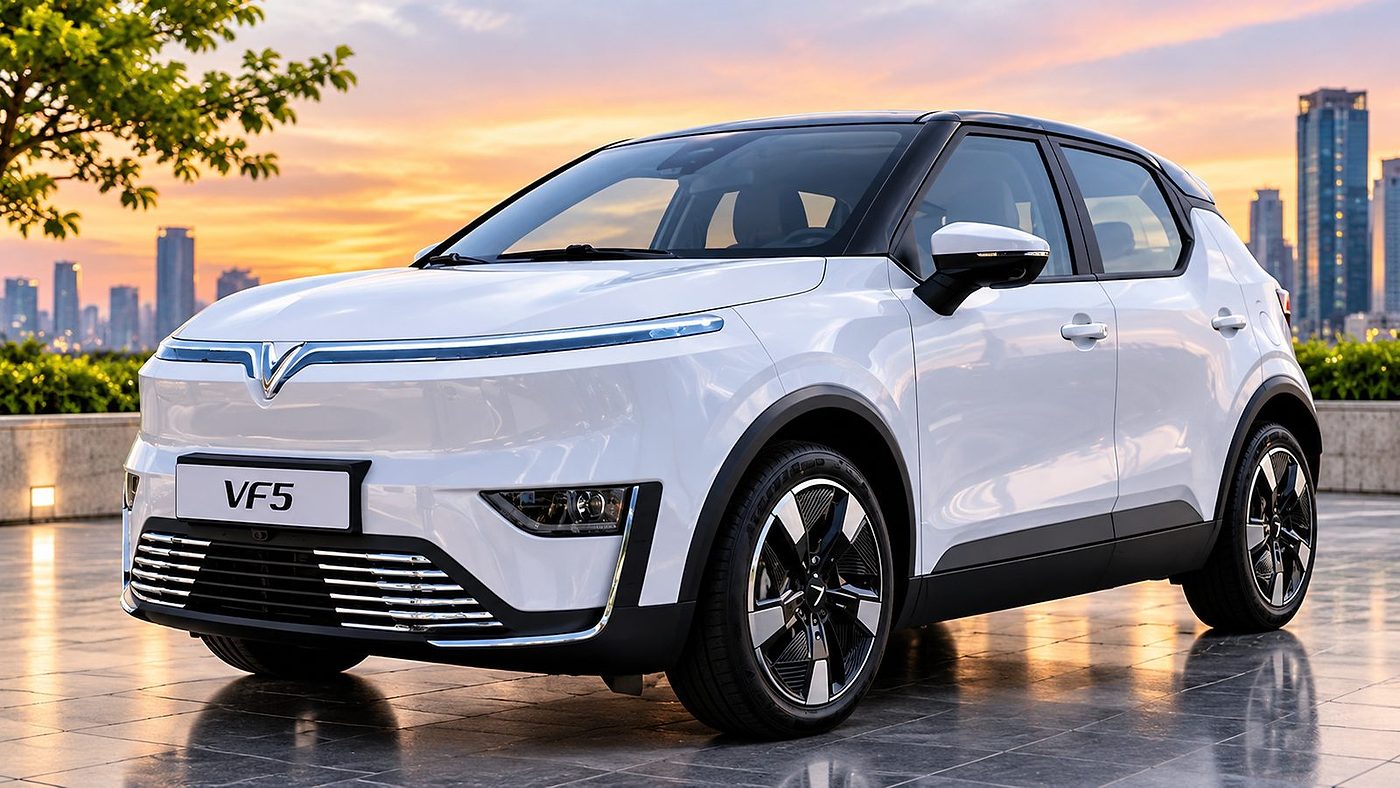
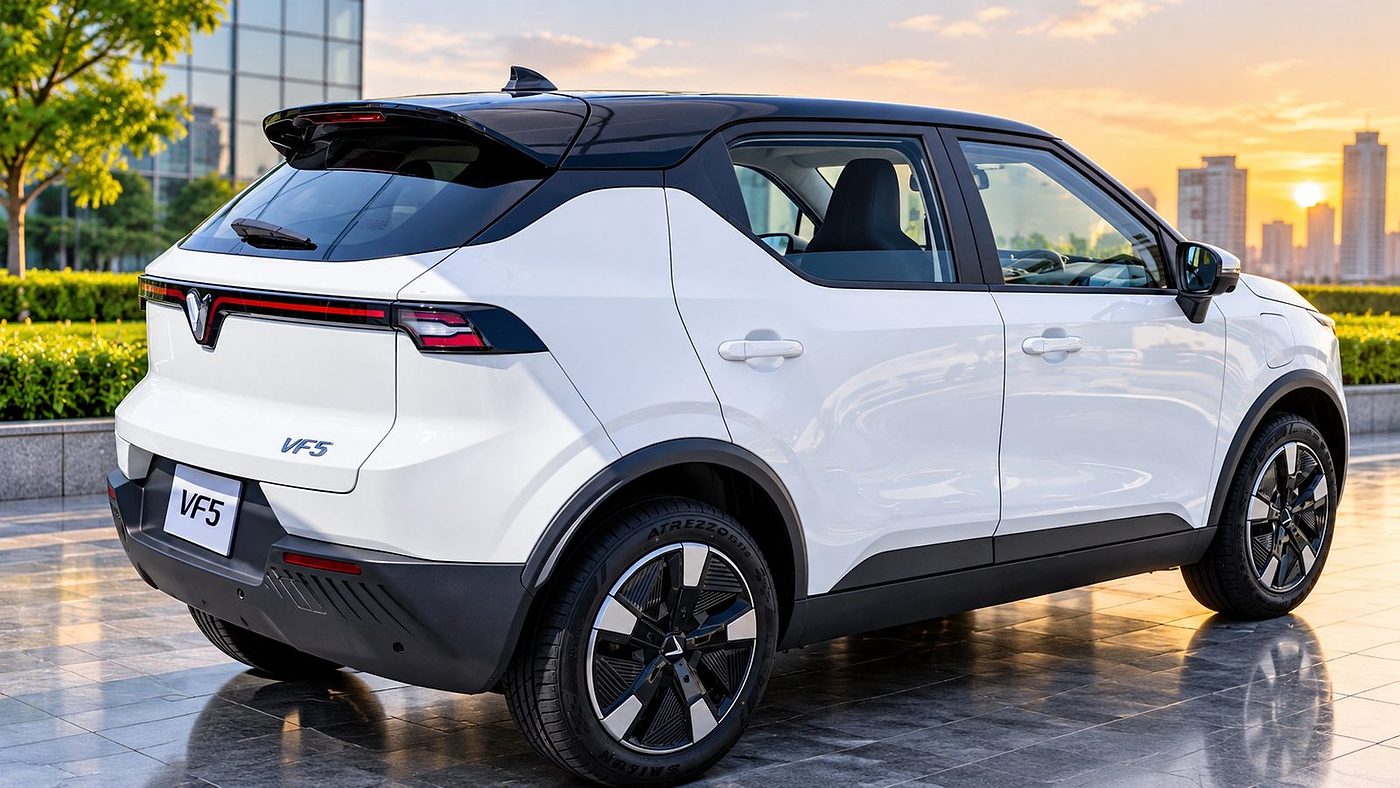
The new VF5 measures 3,987mm long, 1,772mm wide, and 1,595mm tall. That makes it 20mm longer, 49mm wider, and 16mm taller than the old car. The wheelbase (distance between front and rear wheels) stays the same at 2,514mm, so cabin space likely won't change much. Up front, the wraparound chrome trim carries over but is now longer and flatter, dipping down to show off the VinFast logo. The headlamps sit low on the bumper, with slim vertical air intakes and plenty of chrome around them. The sides get body cladding, 17-inch aero alloy wheels, and a kinked window line. At the back, there's a full-width LED light bar, a big roof spoiler, and chunky black cladding on the bumper.
Interior: One 10-inch screen, stalk shifter, no driver display
VinFast has reworked the cabin heavily. The old angled dashboard is replaced by a flatter, cleaner design. The central touchscreen grows from 8 inches to 10 inches, and there's a new two-spoke steering wheel. Here's the catch: VinFast has removed the digital driver display entirely. Your speed and other info now live inside the central touchscreen, Tesla-style, just like the bigger VF6 and VF7. The rotary gear selector is gone too, with a stalk behind the steering wheel now handling drive, reverse, and park. In its place sits a wireless phone charging pad, two cupholders, and a sliding armrest. Seats get a dual-tone finish with leatherette (fake leather) upholstery.
Battery and range: 43 kWh and 370 km NEDC—what it means
The VF5 facelift packs a 43kWh battery, up from the 29.6kWh and 37.23kWh packs on the old car. Claimed range rises to 370 km on the NEDC cycle (an old lab test that reads high). In real Indian driving with the AC on, expect something closer to 280-300 km. That's fine for city use and the odd weekend run to Lonavala, but plan charging stops on longer highway trips. The single front motor makes 99hp and 135Nm of torque (pulling power), which is modest, so don't expect quick acceleration. Charging supports 6.6 kW AC and 60 kW DC, though VinFast hasn't yet shared exact 10-80% charging times.
VinFast VF5 vs. Tata Nexon EV: price, size, and range compared
This is the fight that matters. The Tata Nexon EV Long Range costs ₹12.49 lakh to ₹16.99 lakh and uses a 40.5 kWh battery with a 465 km claimed range. The VF5's expected ₹10 lakh start would undercut the Nexon EV by roughly ₹2.5 lakh. But the VF5 trails by about 95km of claimed range. On size, the VF5 at 3,987 mm is 203 mm shorter than the Nexon's 4,190 mm. So the VinFast is the more city-friendly, easier-to-park option, while the Nexon EV gives you more range and space. The bigger gap, though, is the one you can't see on a spec sheet: Tata has a huge service and charging network, and VinFast has none live in India yet.
India launch timeline and expected price
VinFast says the facelifted VF5 is coming to India, possibly in the next few months. The company hasn't confirmed an exact launch date, so take any specific timeline with caution. The VF5 will be VinFast's entry-level model here. The ₹10 lakh figure is an estimate from the source, not an official price, so the real ex-showroom price could land higher or lower. Remember, the on-road price adds road tax, registration, and insurance, which vary by state. Being an electric car, you also won't get any central cash subsidy; only possible state road tax or registration waivers are possible, so check your local RTO.
Should you wait for the VF5 or stick with the Nexon EV?
Here's the honest read. If the VF5 lands at ₹9.5-10.5 lakh with a solid warranty, early adopters hunting a sub-₹10 lakh electric SUV might find it tempting. But a brand new to India brings real risks: no dealers or service centers running yet, unknown resale value, and no local ownership feedback. The Nexon EV costs more, but you get Tata's wide network, proven reliability, and better range. If you need a dependable EV right now, the Nexon EV makes more sense. If you're a patient early adopter chasing the lowest-price EV SUV, wait at least six months after launch to see how VinFast's service and ownership story plays out before you buy.
References: VinFast India — official website