VinFast, the Vietnamese carmaker already selling the VF 6 and VF 7 SUVs, will bring its tiny VF 3 to India in 2026. It's a boxy, two-door electric mini-SUV built for crowded city streets and small parking spots. The catch for buyers: the price story is muddled (₹6–8 lakh in our data, near ₹10 lakh in some reports), and there's no confirmed launch date yet. So should you wait? Let's break down what's real and what's still a guess.
VinFast VF 3 India launch: confirmed vs expected
VinFast has confirmed the VF 3 is coming to India in 2026. That much is official. It was also shown at the Bharat Mobility Global Expo 2025, so this isn't just a rumor. But the exact launch month is not fixed. Some listings show a tentative October 2026 date, but VinFast hasn't officially locked it in. Treat any specific month as an estimate, not a promise. The India-spec version's full specs and features will only be confirmed at launch.
Price confusion: ₹6–8 lakh or ₹10 lakh?
This is the big question, and the answer isn't clean yet. Our catalogue lists the VF 3 at an expected ₹6–8 lakh (ex-showroom). Some industry reports peg it higher, around ₹10 lakh, with a wider ₹8–10 lakh band floating about. That's a big gap for a small car, and it changes the whole buying case. At ₹6–8 lakh, it looks tempting against petrol hatchbacks. At ₹10 lakh, it's a much harder sell. Remember, ex-showroom is not what you pay. On-road adds road tax, registration, and insurance, which vary by state. The real price is the single thing that decides whether the VF 3 makes sense.
Design & dimensions: boxy SUV look, two-door layout
The VF 3's design is its main talking point. It's a small, rugged box on wheels with a tall, SUV-like stance. At 3,114 mm long, 1,679 mm wide and 1,652 mm tall, it's tiny, so squeezing into tight city gaps and small parking spots is easy. Ground clearance is about 191 mm, which is high for a car this size (that helps over big speed breakers and broken roads). One catch: it's a two-door car and seats five. To reach the rear seats, you fold the front seat forward. It rides on 16-inch steel wheels with black cladding for that tough look. So it's clearly styled more like a mini-SUV than the flat, van-like MG Comet EV.
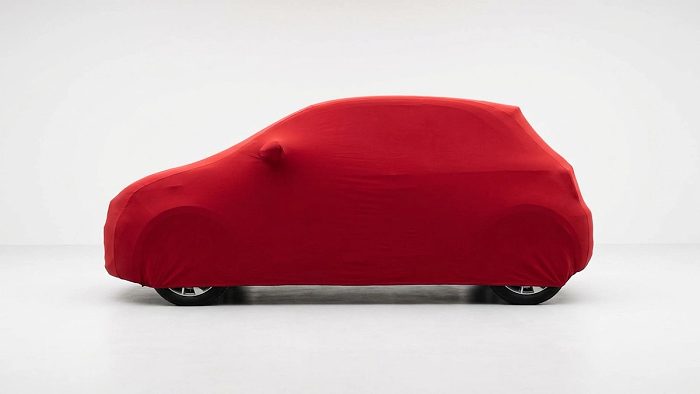
VinFast VF 3
SUVBattery, range & charging: 18.64 kWh, ~210 km claimed
The global VF 3 uses an 18.64 kWh battery (kWh is the battery size). VinFast claims around 210 km of range on a test cycle. But test-cycle numbers are always higher than real driving. Expect roughly 70% in the real world, so plan for around 150 km in mixed city use and less on the highway or with the AC blasting. For a pure city runabout, that's still enough for a few days of commuting. Charging looks decent for a small battery. On a DC fast charger, the global spec shows 10–70% in about 36 minutes. A home AC wallbox will take a few hours for a full top-up. India-spec charging details will be confirmed at launch.
Running cost: how cheap is it to run?
This is where a small EV shines. Charging at home costs roughly ₹1–1.5 per km. A petrol hatchback costs about ₹6–8 per km. So the VF 3 can be 5–6 times cheaper to run day to day. If you drive around 1,000 km a month, you could save several thousand rupees monthly on fuel versus petrol. Over years, those savings help offset the higher upfront price. One honest note on subsidies: there is no central government cash discount on electric cars right now. You may get a state road tax or registration waiver, but this differs by state (Delhi, Maharashtra, and Gujarat all vary). Check your local RTO. Also, ex-showroom usually excludes the home charger and its installation.
Features & safety (expected): 10-inch screen, airbags
Inside, the VF 3 keeps things simple. The global model gets a 10-inch floating touchscreen and a two-spoke steering wheel. That screen handles both driver info and infotainment. The basic kit includes a manual AC and front power windows, plus folding rear seats to free up luggage space. On safety, the global car offers multiple airbags, ABS with EBD (brakes that stop wheels locking up), and rear parking sensors. Important: the India-spec safety list is not confirmed yet. Indian carmakers sometimes offer fewer features than the global version, so wait for the official spec sheet before assuming.
VF 3 vs MG Comet EV: the micro-EV face-off
The MG Comet EV is the VF 3's most direct rival, and it starts around ₹7.98 lakh (ex-showroom). Both are tiny two-doors built for city use. The VF 3's edge is its taller, SUV-inspired look and that 191 mm ground clearance, much higher than the Comet's low-slung stance. That means the VF 3 handles bad roads and big bumps better. If VinFast prices it near the Comet, the taller design and rugged styling could justify picking it. Affordable EVs like the Tata Tiago EV and Citroen eC3 are also alternatives if you want four proper doors instead of two.
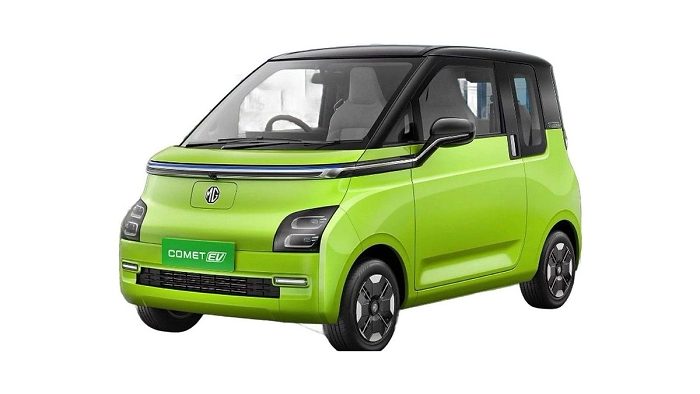
MG Comet EV
HatchbackShould you wait for the VF 3?
Our honest take: don't rush. The VF 3 could be a fun, cheap-to-run city EV with quirky SUV looks and a usable real-world range of around 150 km. But two big things are still unknown. First, the price is unclear (₹6–8 lakh vs. ₹10 lakh changes everything). Second, VinFast is new in India, so its service network and after-sales support are unproven. For an EV, that support matters a lot. If you want a stylish city micro-EV and VinFast lands it near ₹7 lakh with a solid battery warranty and service reach, it makes sense for young urban buyers and second-car families. Until the price and service picture are clear, wait for the official launch and real-world reviews.
References: VinFast India — official website