Most base EVs feel stripped down to push you up the price ladder. The Kia Syros EV HTK does the opposite. For ₹13.49 lakh it keeps the full three-screen dashboard, semi-leatherette seats, and paddle shifters, and that's ₹1 lakh less than a Tata Nexon EV Creative. But it also drops the sunroof, ventilated seats, and ADAS. So is this the smart city-EV buy, or do you spend ₹1.5 lakh more?
HTK variant: what you get for ₹13.49 lakh
The HTK is the entry point to the Kia Syros EV range, priced at ₹13.49 lakh (ex-showroom). It comes only with the smaller 42 kWh battery (the number that decides how far you go). That means 133 bhp and a claimed 443 km ARAI range (a government test, always higher than real driving). The seven-variant range then climbs all the way to the X-Line ER at ₹20 lakh. What makes the HTK interesting is that it doesn't feel like a stripped starter trim. It gets most of the cabin tech the pricier versions have.
Design: Does the base trim look 'basic'?
Honestly, no. The HTK carries over the same boxy, quirky styling as the top trims. Up front you get the bulbous nose, body-colored bumper inserts, and slim LED fog lamps, with nothing to mark it out as the cheapest one. In profile it keeps black roof rails, flush-fit door handles (they sit level with the door), and a sharkfin antenna. The only real giveaway is the smaller 16-inch alloy wheels instead of the 17-inch units on higher variants. At the back, you do lose the rear wiper, washer, and defogger, which is a niggle in the monsoon.
Interior and features: Triple screens and what's missing
Step inside and the HTK feels more premium than its price suggests. The dashboard runs a full three-screen setup: a 12.3-inch touchscreen, a 5-inch climate control screen, and a 12.3-inch digital driver's display, all standard. You also get dual-tone blue-and-grey semi-leatherette seats and a floating center console with plenty of storage since the gear selector sits on the steering column. Other kit includes a 6-speaker system, wireless Android Auto and Apple CarPlay, paddle shifters, auto climate control, rear sunshades, and auto-fold mirrors. But here's what your ₹13.49 lakh does not buy: no panoramic sunroof, no ventilated seats, and no cruise control. Spending ₹1.5 lakh more on the HTK+ (₹15 lakh) adds ventilated seats and the sunroof.
Safety: 6 airbags standard, but no ADAS
For a base EV, the safety sheet is genuinely strong. The HTK gets 6 airbags as standard, plus an electronic parking brake, rear parking sensors, hill-hold assist, and all-wheel disc brakes. There's also TPMS (tells you if a tire loses air) and a Virtual Engine Sound System that warns pedestrians the car is coming. The one gap is Level 2 ADAS (safety tech that can brake or steer for you). That's reserved for the higher trims. For city use most buyers won't miss it, but if highway driver-assist matters to you, you'll need to move up the range.
Battery, range and charging: 42 kWh, 443 km ARAI in the real world
The HTK runs the 42 kWh pack, making 133 bhp, with a claimed 443 km ARAI (MIDC) range. Treat that as the ceiling. In real driving, expect closer to 310 km in the city and around 270 km on the highway, since EVs typically deliver about 70% of the claim. That's plenty for daily commutes under 50 km, where you'd charge maybe once a week. On a 100 kW DC fast charger, it goes from 10% to 80% in 39 minutes, enough for a coffee break. On an 11 kW AC wallbox at home, it fills 10–100% in 4 hours. If you regularly do long highway runs, the 51.4 kWh ER pack (526 km ARAI, from the HTK+ ER at ₹16.49 lakh) is the safer bet.
Running cost: Roughly ₹1.5/km vs petrol's ₹7/km
This is where an EV pays you back. Charging at home costs roughly ₹1–1.5 per km, against ₹6–9 per km for a petrol SUV. At 1,500 km a month that's a fuel bill of about ₹2,000 versus ₹10,000 or more for petrol. So you save roughly ₹8,000 a month, or close to ₹1 lakh a year. Over four to five years those savings help close the higher upfront price of the EV. One caveat: there's no central cash subsidy on electric cars in India. You only get state road tax and registration waivers, and these differ by state (Delhi, Maharashtra, and Gujarat all vary), so check your RTO. Also remember the ex-showroom price does not include the home charger or its installation.
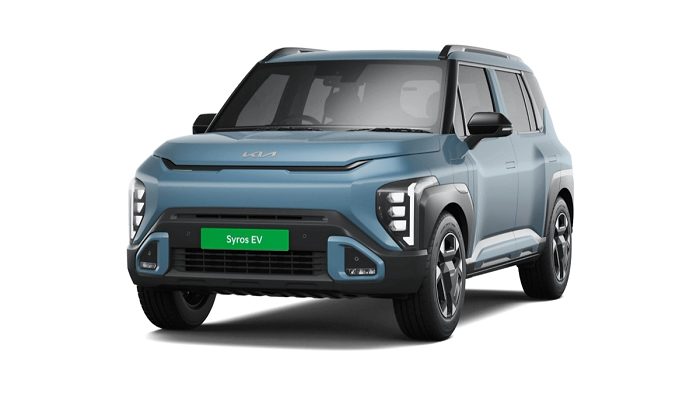
Kia Syros EV
SUVHTK vs Nexon EV: The value question
The obvious rival is the Tata Nexon EV. It's 40.5 kWh The creative variant starts around ₹14.49 lakh, so it's about ₹1 lakh dearer than the HTK. The Nexon's claimed range is a touch higher at 465 km against 443 km, but it doesn't give you the Syros EV's triple-screen dashboard or paddle shifters at this price. From our data's rivals, the Tata Curvv (₹9.76–19.16 lakh) and MG Astor (₹9.79–15.5 lakh) also sit around this money, but the Kia's cabin tech per rupee is hard to match. Kia is also expected to offer a very long battery warranty and a buyback assurance, which eases the two big EV worries: battery life and resale.
Should you buy the HTK or step up?
Buy the HTK if you want a well-equipped city EV and can happily skip the sunroof, ventilated seats, and ADAS. At ₹13.49 lakh with a real-world range near 310 km in town, it fits a daily driver doing under 50 km a day, and it's honest *paisa vasool*. Step up to the HTK+ (₹15 lakh) only if you really want ventilated seats and the sunroof, which matter in Indian summers. Go all the way to the HTK+ ER (₹16.49 lakh) if you need the bigger 51.4 kWh pack, 169 bhp, and 526 km range for regular highway trips. The X-Line ER tops the range at ₹20 lakh. For most city buyers, though, the HTK is the sweet spot.
References: Kia India — official website