The ₹13.49 lakh ex-showroom sticker on the Kia Syros EV base looked easy on the wallet. But the final amount you actually pay is a different number. Once RTO, insurance and TCS are added, the base HTK lands at around ₹15.04 lakh in Mumbai. Here's the full city-by-city math and exactly what pushes the price up.
Kia Syros EV on-road price: city-by-city view
The gap between ex-showroom and on-road is real money. For the base HTK at ₹13.49 lakh, expect the on-road figure to land near ₹15.04 lakh in Mumbai after registration, insurance and TCS. Delhi, Bangalore, Chennai and Hyderabad each apply their own road tax slabs, so the number shifts by a few thousand either way. Across the range, the on-road price spans roughly ₹15.04 lakh (base) to ₹22.55 lakh (top X-Line ER). The point is simple: budget ₹1.55–2.06 lakh above the ex-showroom figure before you sign anything.
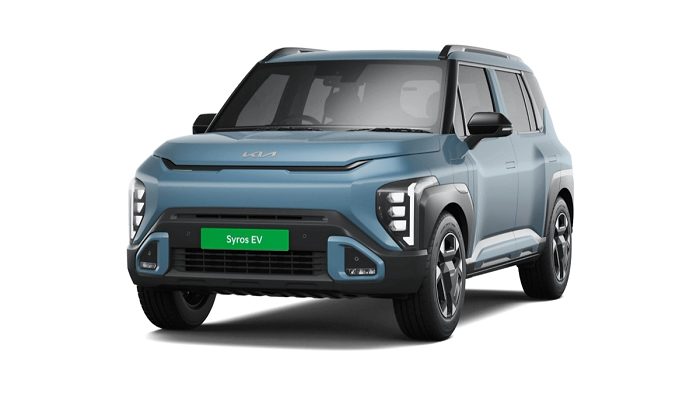
Kia Syros EV
SUVWhat adds ₹1.55–2.06 lakh? RTO, insurance and TCS explained
Three things sit on top of the ex-showroom price. First, RTO (the road tax and registration you pay to legally drive the car), which varies state to state. Some states waive or reduce road tax for EVs, so check your local RTO before you assume. Second, insurance, which is mandatory and usually the first-year comprehensive cover. Third, TCS (Tax Collected at Source), a 1% charge that kicks in on any car priced above ₹10 lakh ex-showroom. Since every Syros EV variant crosses ₹10 lakh, TCS applies to all of them. The good news: salaried and corporate buyers can claim this TCS back when filing income tax returns.
Kia Syros EV — Dimensions & weight
| Specification | Kia Syros EV |
|---|---|
| Length | 3995 mm |
| Width | 1805 mm |
| Height | 1670 mm (with roof rails) |
| Wheelbase | 2550 mm |
| Seating | 5 Person |
Variant-wise pricing: HTK to X-Line ER
Kia offers seven variants of the Syros EV. The 42 kWh cars are HTK (₹13.49 lakh), HTK+ (₹15 lakh) and HTX (₹16 lakh), all making 133 bhp with 443 km ARAI range. The 51.4 kWh long-range (ER) cars start at HTK+ ER (₹17 lakh), then HTX ER (₹18 lakh), HTX+ ER (₹19.5 lakh) and top X-Line ER (₹20 lakh), all with 169 bhp and 526 km ARAI range. All prices are ex-showroom. The jump from the base HTK to the top X-Line ER is a hefty ₹6.51 lakh, and on-road that gap stretches wider. The sweet spot for most buyers is the HTX+ ER around ₹19.5 lakh, which packs the bigger battery, full ADAS suite and features like ventilated seats and the panoramic sunroof.
Battery, range and running cost per km
You get two batteries. The 42 kWh pack claims 443 km on the ARAI MIDC test (a government cycle that runs higher than real driving). The 51.4 kWh pack claims 526 km. In real use, plan for roughly 70% of those figures: about 310 km from the small pack and around 370 km from the big one. Unlike petrol cars, EVs often deliver better range in city driving with regenerative braking, though highway efficiency is also strong at steady speeds. Charging is quick on paper. A 100 kW DC fast charger takes both packs from 10% to 80% in 39 minutes. At home, an 11 kW AC charger fills the 42 kWh in about 4 hours and the 51.4 kWh in 4 hours 50 minutes (10–100%). On running cost, home charging works out to roughly ₹1–1.5 per km, against ₹7–9 per km for a petrol SUV. That's a saving of thousands every month if you drive a lot.
Syros EV vs Nexon EV: which is the smarter spend?
The Tata Nexon EV is the obvious rival, starting at ₹12.49 lakh ex-showroom. That's ₹1 lakh less than the Syros HTK. But the Syros HTK gives you 443 km ARAI range, more than the Nexon EV's entry range. At the top end, the Nexon EV maxes out at ₹17.69 lakh, while the Syros X-Line ER sits at ₹20 lakh. For that extra ₹2.31 lakh, the Syros adds over 100 km of range and a Level 2 ADAS suite the Nexon EV doesn't match. So the Syros costs more, but you're paying for range and safety tech. If your budget is tight, the Nexon EV wins on price; if you want the longer range and driver aids, the Syros justifies the premium.
Buy now or wait? EMI snapshot and warranty angle
The Syros EV launches on 23 July 2026, in 9 days. Once launched, delivery slots will vary by city. On a loan, the base HTK at roughly ₹15 lakh on-road works out to around ₹28,000–30,000 a month over 7 years (assuming a normal down payment and interest). The real draw, as our Expert Take notes, is the expected industry-leading battery warranty, which takes a big worry off the table for EV buyers. If you want strong warranty backing and long range, the Syros makes sense. If you mostly drive short city runs and want the lowest entry price, the smaller 42 kWh Nexon EV or a Tata Punch EV may suit you better.
References: Kia India — official website