Audi India is weighing whether to build an electric car in India instead of just importing it. That single move could cut prices sharply, since import duties push luxury EV prices way up. Brand director Balbir Singh Dhillon says a decision is coming in the following months. Nothing is confirmed yet, but it would be the clearest timeline from any German luxury brand for Made-in-India electric cars.
Audi India mulls local EV production: decision in 'couple of months'
Here's the news. Audi India is studying whether to make a battery electric vehicle (an EV, a car that runs purely on a battery) locally. Dhillon told PTI the company is "contemplating a locally made BEV electric car with a decision expected in the following months." That's the key word: evaluating, not confirmed. Audi hasn't said which model, where it would be built, how much it would invest, or when it would launch. So treat this as a serious plan on the table, not a done deal.
Why local production matters for EV pricing
This is the real story for buyers. Right now Audi brings its electric cars into India as fully built imports. Those cars attract high import duties, which inflate the price a lot. Audi itself has admitted import taxes substantially raise EV prices here. Build the car in India, and you skip most of that duty. That could make an Audi EV far more competitive against local-made rivals and against petrol luxury SUVs. If approved, this is the move that could finally bring Audi's electric prices down to earth.
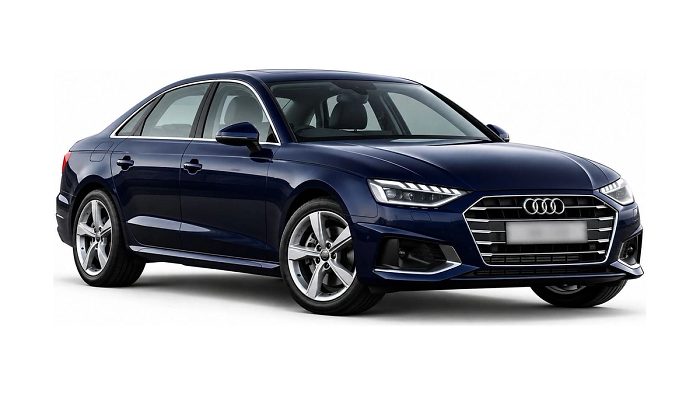
Audi A4
SedanMarket share target: 8% now, 15-16% by the early 2030s
Audi wants to double its slice of India's luxury car market. It sits at roughly 8% today. The target is 15-16% over the next three to five years. Dhillon's plan rests on three pillars: better customer experience, new product launches, and a bigger dealer network. A local EV is one piece of that puzzle, not the whole thing. Doubling share in a market where Mercedes-Benz and BMW are stronger won't be easy.
India-EU FTA: test imports first, then decide on local assembly.
Audi is also watching the proposed India-EU free trade agreement (FTA, a deal that would lower import taxes between India and Europe). If it goes through, Audi could bring in more European models at cheaper import duties. The plan is smart: use imports to test how many buyers actually want a model, then decide whether to build it here. Audi says it will keep making its core, high-volume cars locally while using imports to widen choice. The FTA could also open export doors for India's wider auto industry, Dhillon noted.
Dealership pushes into tier-II and tier-III cities.
Luxury demand is spreading beyond the big metros. So most of Audi's network expansion over the next year will target tier-II and tier-III cities (smaller towns). Audi plans to enter new towns and turn some existing facilities into new-car showrooms. The logic is simple. More showrooms in smaller cities means more buyers can see, test, and service an Audi close to home.
What's confirmed vs what's still under evaluation
Let's keep it honest. Confirmed: Audi is evaluating local EV production, and a decision is expected in a couple of months. Confirmed: the market share target and the three-pillar strategy. Also confirmed: Audi has started local assembly of the new-generation Q3 at the Skoda Auto Volkswagen India plant in Chhatrapati Sambhajinagar, Maharashtra, ahead of its India launch on 16 October 2026. That Q3 gets a 2.0-liter petrol engine and Audi's quattro all-wheel-drive system. Not confirmed: which EV would be built, the investment, capacity, local-content level, or launch date? Don't believe any specific EV model name or production date until Audi says so.
References: Audi India — official website