Thinking of buying a Volkswagen Virtus now, or should you wait? A facelift is on the way, and it looks like more than a light touch-up. Since the Virtus shares its platform and factory with the Skoda Slavia, the just-updated Slavia gives us a clear preview of what's coming.
What's changing in one line?
The Virtus facelift is expected to bring fresh looks, bigger screens, a 360-degree camera, and a new 8-speed automatic. The engines stay the same. So this is a features and tech update, not a mechanical overhaul. Volkswagen hasn't given an official launch date yet, so treat everything here as expected, not confirmed.
Exterior: what changed, what stays
The current Virtus is a clean, mature-looking sedan with LED headlamps and a wide chrome grille. The facelift is expected to get tweaked headlamps, a redesigned grille, and new bumpers up front. At the rear, look for new LED elements in the tail lamps and small bumper changes. The overall shape stays familiar, so nobody will mistake it for a new car. New alloy wheel designs and fresh colors are also likely, with Volkswagen expected to pick its own palette rather than copy Slavia's Arctic Silver and Cappuccino Beige.
Interior: bigger screens inside
The cabin should get the biggest jump. The current Virtus already has a digital cockpit and a 10-inch touchscreen, but the facelift is expected to move to a larger driver display (Volkswagen usually calls it Virtual Cockpit). Going by the Slavia, that means a 10.25-inch digital cluster showing maps right ahead of you. The touchscreen is also expected to grow, with wireless Android Auto and Apple CarPlay carried over. The surprise addition could be a massage function for the outer rear seats, useful given how roomy the Virtus is at the back.
Features & safety added
The headline new feature is a 360-degree camera (a top-view camera that helps you park in tight spots). That fixes a real gap versus rivals that already have it. Expect an upgraded infotainment system with connected features too. Rear disc brakes could arrive on the higher 1.5 TSI variants for better stopping. Safety stays strong, with the current car offering a 5-star Global NCAP rating and 6 airbags plus ESC (stability control that stops skids) as standard across the range.
Powertrain: same engines, new gearbox
Both turbo-petrol engines carry over. The 1.0 TSI makes 113 bhp, and the GT 1.5 TSI EVO makes 148 bhp. The big mechanical change is the gearbox on the 1.0 TSI. The current 6-speed torque-converter automatic is expected to be replaced by a new 8-speed AISIN AQ300 unit, the same one used on the Kushaq and Taigun facelifts. The 1.5 TSI should keep its 7-speed DSG (a quick-shifting dual-clutch auto). ARAI mileage on the current car goes up to 20.19 kmpl, which realistically means about 14–16 kmpl in daily city use.
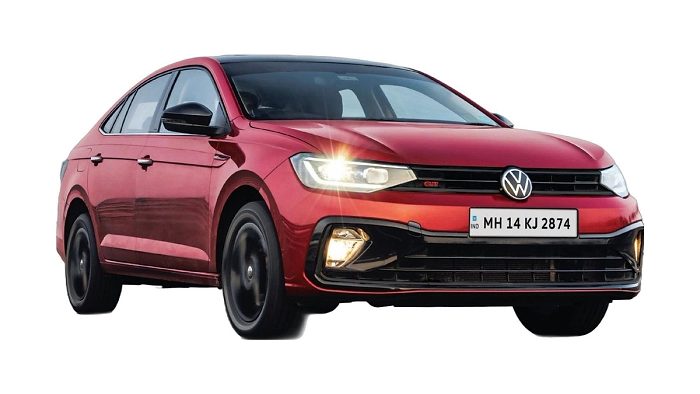
Volkswagen Virtus
SedanVirtus price and variants now
The current Volkswagen Virtus is priced from ₹10.71 lakh to ₹19.20 lakh (ex-showroom). The range starts with the Comfortline manual at ₹10.71 lakh and climbs through Highline, Highline Plus, GT Line, and Topline. The performance GT Plus 1.5 TSI DSG sits at ₹18.85 lakh, with the Anniversary Edition at ₹19.20 lakh. On-road prices will be higher once you add road tax, registration, and insurance, and these vary by state. Facelift prices aren't out yet, but expect a modest rise for the added kit.
How it stacks up against rivals
The Virtus mainly fights the Hyundai Verna and its own cousin, the Skoda Slavia. The Verna runs from ₹10.99 lakh to ₹18.41 lakh, so it's about ₹28,000 dearer at entry but tops out a bit lower. The Slavia (₹10.20–18.39 lakh) shares everything under the skin, so the choice comes down to badge and looks. The Honda Amaze (₹7.55–10 lakh) is a smaller, cheaper sub-4-meter sedan, not a direct match. The Verna offers ADAS (safety tech that can brake for you), which the Virtus still lacks, and that gap may stay even after the facelift.
Buy now or wait for the facelift?
If you want the freshest kit, wait. The 360 camera, bigger digital cluster, and smoother 8-speed auto are worth holding out for. But if you find a strong deal on the current car, it's still a safe, refined, 5-star-safe sedan that drives sweetly. The Virtus has been India's best-selling full-size affordable sedan for years, and the facelift is meant to keep it there. For most buyers, the sweet spot remains the 1.0 TSI in the Highline Plus or GT Line trim, which balances features and price nicely.
References: Volkswagen India — official website