Tata's revived Sierra is now more than an electric SUV. With Tata Communications, the Sierra.ev gets in-built 5G through the MOVE Connected Vehicle Platform, tied to Tata's new N.IO software backbone. So the car acts like a connected computer, not just a screen with a SIM. But does that change whether you should buy it? Let's break down the price, the range, and what the 5G tech actually does for you.
What the 5G connectivity actually does (and what it costs you)
Most connected cars in India run on slower 4G. The Sierra.ev instead uses Tata Communications' MOVE platform on 5G, which means faster data in and out of the car. In plain terms: over-the-air updates (new software sent to the car without a workshop visit) download quicker, so bug fixes and features arrive faster. It also allows smoother in-car streaming (think Netflix-quality video when parked and charging) and real-time remote diagnostics (the car can flag a fault before it strands you). Safety features like emergency calls and remote support are built in. Tata hasn't spelled out which trims get 5G as standard, so confirm this at the dealer before you sign. Some features will sit behind paid subscription packs, and those prices aren't public yet.
Full variant walk-up: ₹18.79–26.49 lakh, 63 kWh vs 75 kWh
The range starts with the Pure at ₹18.79 lakh, using the 63 kWh battery, 235 bhp and 535 km MIDC range (a government test, always higher than real driving). Next up is the Pure S at ₹19.99 lakh, our value pick, adding more kit while keeping the same 63 kWh setup. The Adventure starts at ₹20.99 lakh and, importantly, offers the bigger 75 kWh battery from ₹22.19 lakh with 665 km range and 207 bhp rear-wheel drive. The Empowered begins at ₹22.79 lakh with both battery choices. At the top sits the Empowered A, from ₹24.79 lakh, peaking at ₹26.49 lakh for the dual-motor all-wheel-drive version. That AWD trim makes about 344 bhp and does 0–100 km/h in 5.8s (how fast it reaches highway speed) with 624 km claimed range.
Range, charging and real running cost
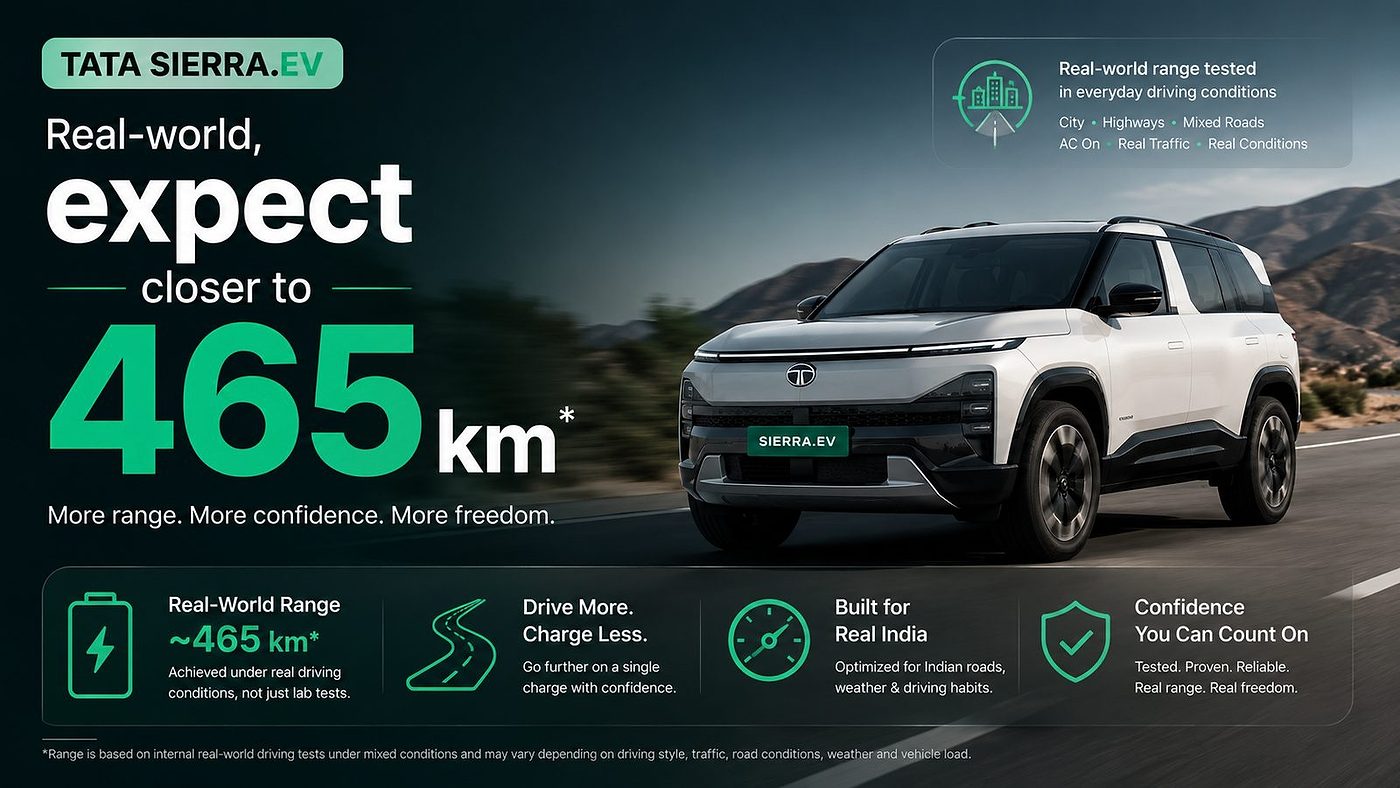
The 75 kWh battery claims up to 665 km on MIDC. Real-world, expect closer to 465 km, since EV range in daily use is roughly 70% of the claim, and it drops further on highways at speed. The 63 kWh version's 535 km claim works out to around 375 km in real driving, still enough for most city users to charge once or twice a week. Charging is quick: a 120 kW DC fast charger takes the battery from 20–80% in about 26 minutes. A home AC wallbox will take several hours overnight. On running cost, charging at home costs about ₹1–1.5 per km, against ₹6–9 per km for petrol. That's 5–7 times cheaper. For someone driving 1,500 km a month, that's rough savings of ₹7,000–10,000 monthly on fuel.
Software-Defined Vehicle: OTA, remote diagnostics, subscription packs
This is Tata's first proper Software-Defined Vehicle (a car whose features are controlled and updated by software). The N.IO platform means the Sierra.ev can gain new abilities over time through OTA updates, without you visiting a service centre. Remote diagnostics let Tata check the car's health from afar and warn you early. You'll also be able to buy subscription packs for extra features, streaming or personalisation, though Tata hasn't shared the prices yet. The upside: your car doesn't feel outdated in two years. The catch: some features may need a paid subscription to keep working, which is worth asking about upfront.
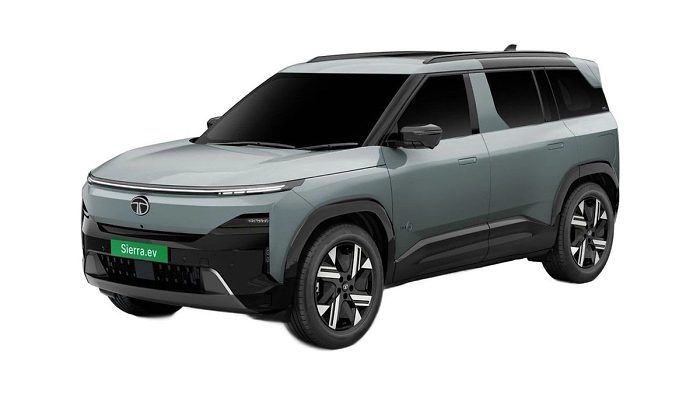
Tata Sierra EV
SUV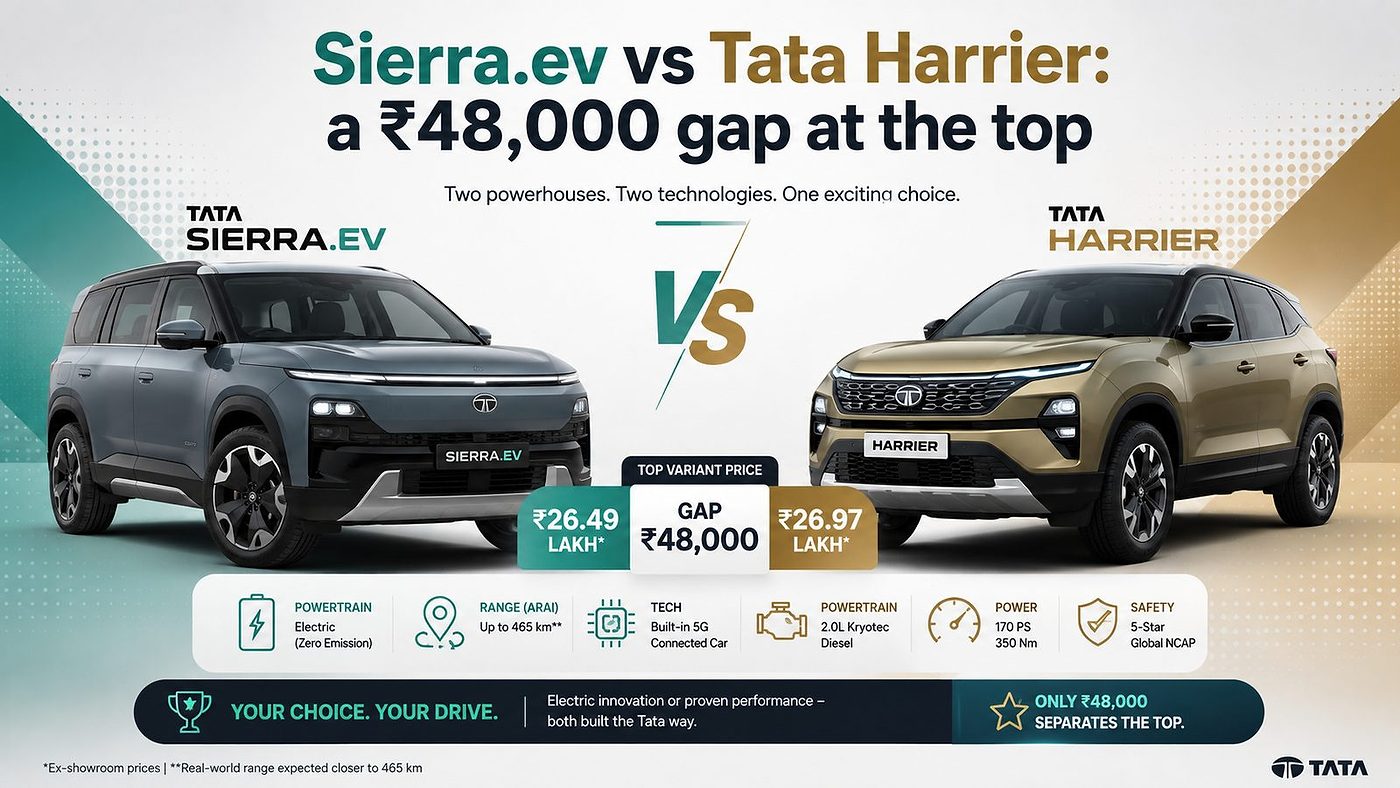
Sierra.ev vs Tata Harrier: a ₹48,000 gap at the top
Here's a comparison that matters for Tata buyers. The petrol/diesel Harrier costs ₹13.00–26.01 lakh. The Sierra.ev's top AWD trim at ₹26.49 lakh sits just about ₹48,000 above the Harrier's dearest ICE version. For that tiny premium, the Sierra.ev adds 5G connectivity, up to 665 km of electric range, instant AWD pulling power the Harrier can't match, and a lifetime battery warranty for the first owner. Against the Tata Nexon EV (₹12.49–17.69 lakh), the Sierra.ev is clearly a bigger, more premium step up. If you were cross-shopping a diesel Harrier, the electric Sierra.ev now makes a strong case, provided you can charge at home.
Buy now, or wait for rivals to add 5G?
Our Expert Take calls this Tata's most aspirational EV yet, and the 5G news doesn't change the core advice. The Pure S at ₹19.99 lakh (63 kWh, 535 km, Level 2 ADAS) stays the sweet-spot buy. The 5G layer future-proofs your software and adds a connected-car feel that other ₹20 lakh EVs simply don't have today. Rivals will eventually add 5G, but that could be a while, and you'd wait months for it. Buy now if you want the tech and can charge at home or work. Wait only if you're genuinely unsure about charging setup in your city.
References: Tata India — official website
Read next
- Next-gen Tata Nexon coming in 2027: new design, CNG stays, diesel may go
- Tata Tigor facelift coming soon: New look, bigger screen much more.
- Tata Nexon Camo Edition launched at ₹9.99 lakh: dashcam, bigger screens, but is it the value pick?
- Tata halts Sanand production after Gujarat floods: Nexon, Sierra, Tiago, Tigor deliveries hit