One in five Hyundais sold today is a connected car. That's a big jump from just 4% seven years ago. With 8 lakh Bluelink cars already on Indian roads and a 10-lakh target set for 2027, Hyundai is pushing connected tech from a top-trim luxury into an everyday feature.
What Hyundai announced: 8 lakh connected cars, 10 lakh by 2027
Hyundai Motor India said on 10 August 2026 that it has crossed 8 lakh cumulative connected-car sales in the country. The next goal is 10 lakh (one million) by 2027. Looking further ahead, the company wants 20 lakh connected cars on the road by 2030. These are cars fitted with Bluelink, Hyundai's built-in connected system that uses a SIM to send and receive data. Think remote engine start from your phone, live location tracking and an SOS button. It's a clear sign Hyundai is betting on software as much as engines.
Who gets Bluelink today, and who gets it next
Bluelink first came to India in 2019 on the Hyundai Venue, which Hyundai calls the country's first factory-fitted connected SUV. Since then it has spread to the Creta, i20 and more. Today it sits across much of the range, usually on the higher trims. The big news is the upcoming mass-market electric SUV. Hyundai says it will get next-generation connected tech as standard on every variant, not just the top one. So even the base EV buyer won't be left out.
From 4% to 20%: How adoption grew five-fold
In 2019, only about 4 in 100 Hyundais sold in India were connected cars. In 2026, that number is 20 in 100. That's a five-fold jump in seven years. The reason is simple. Connected features have moved down from expensive cars to mid-range ones. Buyers of a Venue or Creta now expect remote start, geo-fencing and voice control as normal. As Hyundai adds these features to more variants, the share keeps climbing. Hitting 20 lakh cars by 2030 assumes this trend holds.
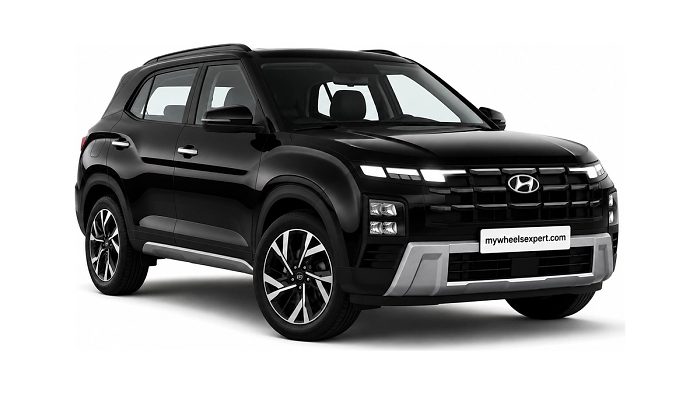
Hyundai Creta
SUVWhat Bluelink actually does: 70+ features, 450+ voice commands
Bluelink packs in more than 70 features across safety, security and convenience. You get remote vehicle monitoring, car health checks (it flags problems before they get worse), location tracking, trip history and remote commands from your phone. There's also Hyundai Pay for in-car payments, a Digital Key (unlock with your phone), Digital Passport and a Remote Immobilizer that can stop a stolen car. It understands 450+ AI voice commands in five languages, so you can set the AC or navigation by just talking. It's a full software layer, not a gimmick.
The real proof: 15,000 crash interventions and stolen-car recovery
The safety numbers are where Bluelink earns its keep. Hyundai says the system has helped over 5 lakh drivers through SOS and roadside assistance. It has supported around 15,000 crash-notification interventions. That means when the car senses a crash, it can alert help automatically, which matters most on empty highways at night. Bluelink has also helped police trace and recover stolen vehicles. These aren't brochure claims, they're real events on Indian roads.
The 2030 roadmap: SDVs and next-gen ccNC tech
Hyundai's plan leans on software-defined vehicles (cars that improve through updates after you buy them, like a phone). Its ccNC system (Connected Car Navigation Cockpit), introduced in 2025, brings controller OTA updates. In plain words, OTA (over-the-air) means the car can download new features and fixes over the internet, without a workshop visit. Earlier steps included OTA map updates on the i20 in 2020. The 2030 target of 20 lakh connected cars is built on this software-first approach. Your car gets better over time, in theory.
Should you buy a Hyundai for Bluelink, or wait for the EV?
If you're eyeing a Creta or Venue now, Bluelink is a genuine plus, but check the variant. On many models the best connected features sit on the higher trims, so read the feature list before you sign. If connected tech is your main reason to buy, the upcoming mass-market electric SUV looks smarter, since Hyundai promises next-gen tech standard on all variants. That's better value at the base end. So Bluelink makes sense for buyers who want remote control, safety alerts and future updates, but wait for the new EV if you want the newest system for the least money.
References: Hyundai India — official website