Resale value is the number one worry that keeps buyers away from EVs. Hyundai just answered it. The Hyundai Creta Electric now comes with a 60% assured buyback for up to 3 years or 45,000 km, whichever comes first. On a ₹20 lakh car, that's a guaranteed ₹12 lakh back in your hand, something Tata and Mahindra EV buyers simply don't get.
60% buyback at 3 years: The real rupee math (and the 45,000 km catch)
Here's how it works. Buy a Creta Electric, and after up to 3 years Hyundai promises to buy it back at 60% of its value. On the ₹18.03 lakh base Executive, that's about ₹10.82 lakh guaranteed. On a ₹20 lakh Premium trim, roughly ₹12 lakh. Top Excellence LR at ₹23.67 lakh? Around ₹14.20 lakh assured. But read the fine print. It's 3 years OR 45,000 km, whichever comes first. That's just 15,000 km a year. If you drive to work daily or take highway trips, you may cross 45,000 km in two years and lose the guarantee. It suits low-mileage city users, not heavy runners.
How does ₹10.99 lakh BaaS pricing work, and is the ₹3.9/km battery rent a trap?
The battery is the costliest part of any EV. Under Battery-as-a-Service (BaaS), you buy the car without the battery and rent it instead. That drops the start price to just ₹10.99 lakh, ex-showroom, versus ₹18.03 lakh for full ownership. In return you pay ₹3.9 per km as battery rent (for the 42 kWh pack). Do the math. Drive 15,000 km a year and that's about ₹58,500 a year in rent. Over 3 years, roughly ₹1.75 lakh. It lowers your upfront cost and monthly EMI, which helps if cash is tight. But if you drive a lot, the per-km rent adds up fast. BaaS makes sense for light users who want a low entry price, not for high-km drivers.
Creta Electric range & charging: 510 km claimed vs 350 km real
Two battery options here. The 42 kWh pack claims 420 km, the bigger 51.4 kWh Long Range claims 510 km (ARAI, a government test that always reads higher than real driving). Expect real numbers closer to 70% of that. So around 290–310 km from the 42 kWh in mixed use, and about 350–370 km from the Long Range. On the highway with AC on, it'll be less; in slow city traffic, more. Charging is quick. A DC fast charger takes both packs from 10 to 80% in 39 minutes at about 100 kW. That's roughly 250 km of range over a chai break. At home on a 7.4 kW AC charger, a full charge takes 6 hours (42 kWh) or 7.15 hours (51.4 kWh). Note: the ex-showroom price does not include the home charger or its installation. On running cost, home charging works out to about ₹1–1.5 per km, versus ₹6–9 per km for petrol. That's 5–7 times cheaper to run.
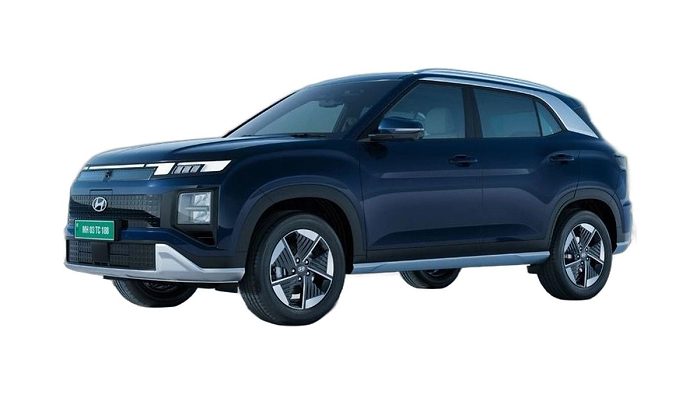
Hyundai Creta Electric
SUVBuyback vs rivals: why Tata Curvv EV & MG ZS EV owners get zero guarantees
This is where Hyundai's move bites. The Tata Curvv EV (₹16.99–19.19 lakh) and Mahindra BE 6 do NOT offer any buyback scheme. Their owners simply guess what the car will fetch in 2029. The Hyundai Creta Electric slots right into this price band but hands you a written 60% promise. Some rivals do offer buyback, like the Maruti e Vitara (₹15.99–19.99 lakh), VinFast VF6 (₹18.19–20.09 lakh) and MG ZS EV (₹17.99–20.75 lakh). But typical schemes hover near 50%. On a ₹20 lakh car, Hyundai's 60% puts about ₹2 lakh more in your pocket than a 50% deal. That's a real, spendable difference, not a brochure claim.
Should you buy now or wait?
If resale worry is what's stopping you, this tilts the Creta Electric clearly ahead. It's the same trusted Creta shape, loaded with a panoramic sunroof, ventilated seats, Level 2 ADAS (safety tech that can brake and steer for you), and V2L (use the car battery to power appliances). Note there is no central cash subsidy on electric cars in India; FAME schemes cover buses and two-wheelers only. You may still get a state road tax or registration waiver, which differs by state (Delhi, Maharashtra, Gujarat all vary), so check your RTO. Wait only if you drive more than 15,000 km a year, since you'll miss the buyback anyway, or if a 2027 refresh matters to you. For everyone else, the deal is on the table now.
References: Hyundai India — official website