Mahindra just slashed ₹8 lakh off the BE 6 Sporteq's sticker price. The catch? You now rent the battery at ₹3.75 per km, with a minimum of ₹6,750 every month. So the big question for a price-sensitive buyer is simple: does Battery-as-a-Service (BaaS) really save money, or does the per-km rent eat up that ₹8 lakh over time?
BE 6 BaaS: ₹11.45 lakh sticker, ₹8 lakh saving, but what's the catch?
Under the new BaaS plan, the Mahindra BE 6 Sporteq One drops from ₹19.45 lakh to ₹11.45 lakh, ex-showroom. That's a flat ₹8 lakh cut. The Sporteq Two follows the same pattern, falling from ₹20.95 lakh to ₹12.95 lakh. But you don't own the battery anymore. You rent it. The rent is ₹3.75 per km, with a floor of ₹6,750 a month. Mahindra worked this out assuming 60 km a day on an 8-year battery loan. So the low sticker is real, but there's a monthly bill attached for as long as you drive.
The math: when does ₹3.75/km rent beat ₹8 lakh upfront?
Here's the plain calculation. To pay back that ₹8 lakh saving through rent, you'd have to drive 2,13,333 km (₹8,00,000 divided by ₹3.75). That sounds like a lot. But at 50,000 km a year, you hit it in just over 4 years. Drive less, say 12,000–15,000 km a year, and the rent stays low, so BaaS keeps saving you money for years. Drive a lot, and the rent piles up fast. Simple rule: the fewer kilometres you clock, the better BaaS works for you.
Which variants get BaaS? Only Sporteq One and Two
BaaS is not offered across the range. It applies only to the 59kWh (the battery size) versions, which are the Sporteq One and Sporteq Two. If you want the bigger 70kWh or 79kWh battery for more range, you pay the full price with no rental option. The 70kWh Sporteq is priced around ₹22.95 lakh, ex-showroom. So BaaS is aimed squarely at the entry buyer who wants a low upfront cost, not the one chasing maximum range.
Real running cost: ₹6,750/month rent on top of charging
Don't forget, BaaS rent is separate from your charging cost. Charging at home works out to roughly ₹1–1.5 per km. Add the ₹3.75 per km battery rent, and your total running cost climbs to about ₹4.75–5.25 per km. That's still cheaper than a petrol SUV at ₹6–9 per km, but it's not as cheap as an EV you fully own, which would just cost the ₹1–1.5 home-charging rate. So the ₹6,750 monthly minimum is your fixed cost even in a slow month.
BE 6 vs Tata Nexon EV: BaaS undercuts, but Nexon owns its battery
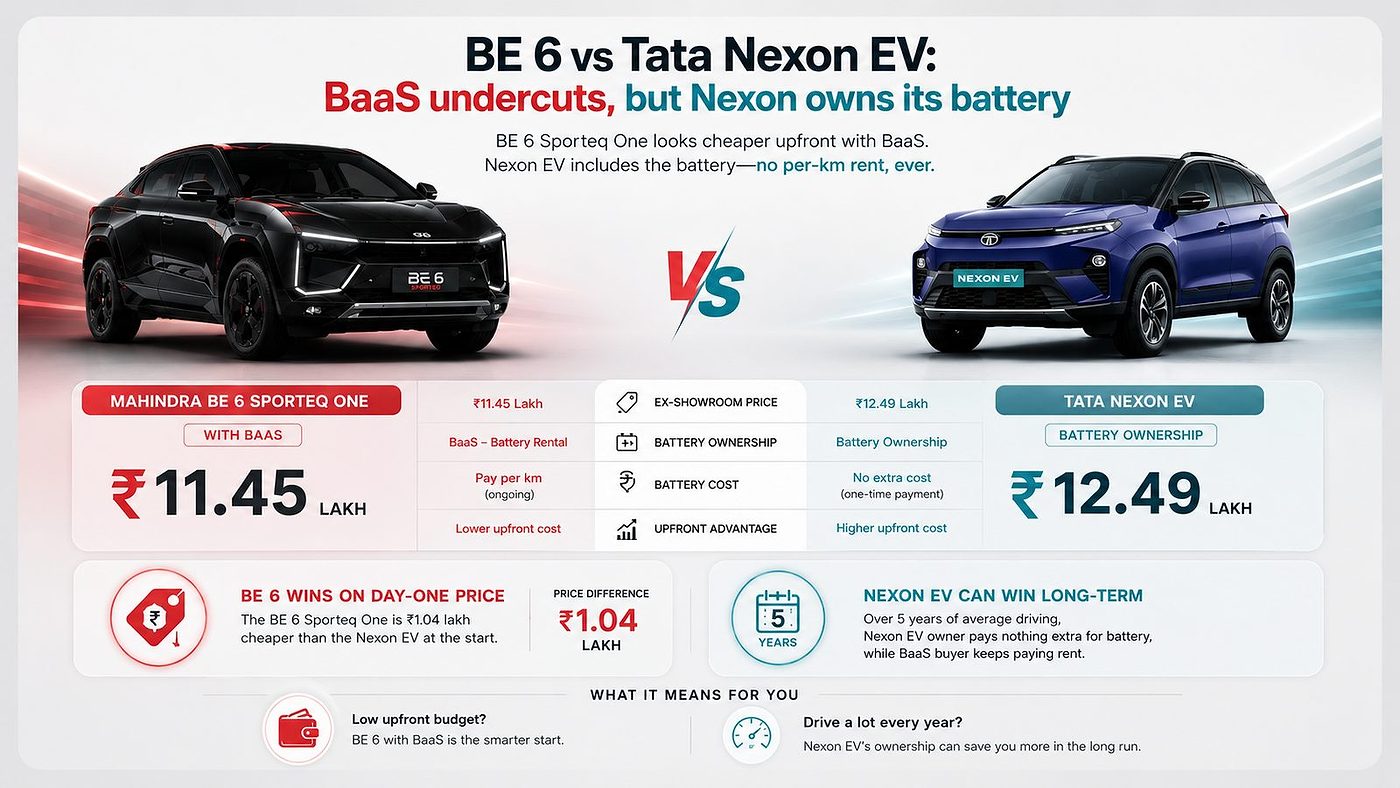
On paper the BaaS deal looks sharp against rivals. The BE 6 Sporteq One at ₹11.45 lakh undercuts the Tata Nexon EV's ₹12.49 lakh base by ₹1.04 lakh. But there's a key difference. The Nexon EV owner owns the battery outright. No per-km rent, ever. Over 5 years of average driving, the Nexon EV buyer pays nothing extra for the battery, while the BaaS buyer keeps paying rent. So the BE 6 wins on day-one price, but the Nexon EV can win on long-term cost if you drive a lot.
Battery, range and warranty: you rent it, Mahindra still covers it
The Sporteq gets a 59kWh battery on the BaaS variants. Real-world range on this size typically lands around 300–350 km in city use, lower than the brochure claim once you factor in AC and traffic (always treat ARAI figures as the ceiling). The good news: even though you rent the battery, Mahindra gives a lifetime battery warranty to the first owner. A second owner gets 10 years or 2,00,000 km, whichever comes first. So the rental risk of a dying battery sits with Mahindra, not you.
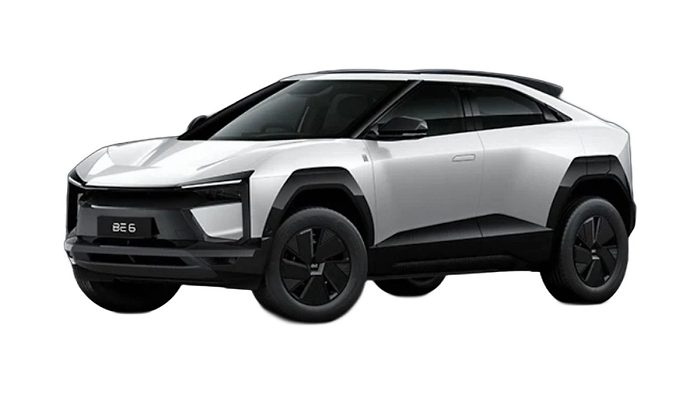
Mahindra BE 6
SUV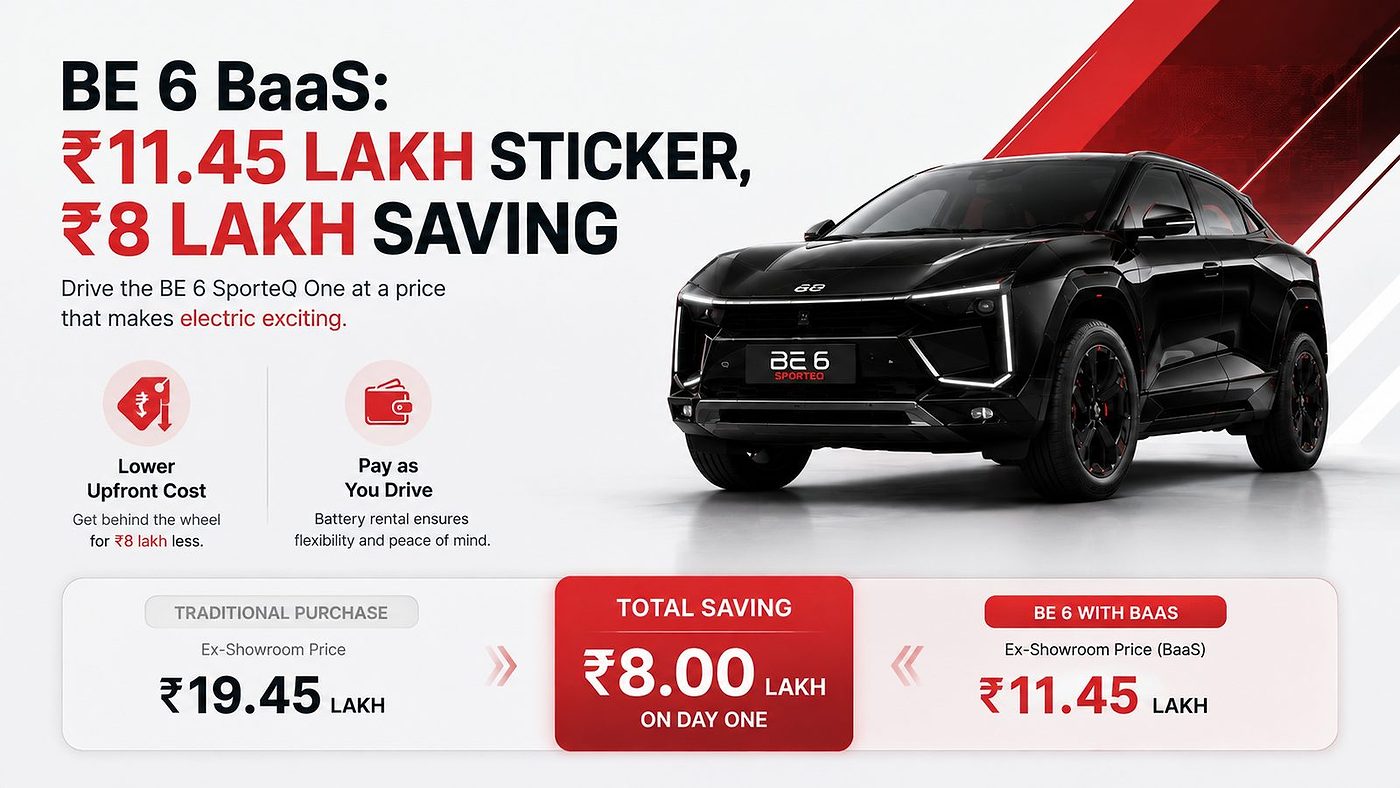
How value for money BAAS is in India?
On paper, BAAS looks like a steal the BE 6 Sporteq's price drops from a lakh to Rs 11.45 lakh with BaaS opted on the base variant, against Rs 19.45 lakh without it an upfront reduction of around Rs 8 lakh. But that's not free money, it's deferred cost. Battery usage is charged at Rs 3.75 per km, so the Rs 8 lakh gap only "pays for itself" against outright ownership after roughly 2.1 lakh km of driving which is close to the full realistic lifespan of the car for most Indian owners.
At 1,000 km a month that's Rs 3,750 in battery charges, rising to Rs 7,500 a month at 2,000 km and Mahindra has calibrated the scheme around roughly 60 km of daily usage. For someone doing that kind of daily commute, the running cost adds up fast and starts eating into the fuel-cost savings that were the whole point of going electric.
Where it genuinely makes sense: lowering the entry barrier for buyers who can't afford the upfront battery cost, or for short-term/lower-mileage owners who'll sell before the crossover point. Where it doesn't: anyone planning to keep the car long-term and rack up serious kilometers — for them, buying the battery outright works out cheaper over the ownership period. It's a cash-flow tool dressed up as a savings scheme.
Should you take BaaS or buy the battery? A named verdict
BaaS makes clear sense if you're a city commuter who drives under 15,000 km a year, can't put down ₹8 lakh extra today, and plans to upgrade in 3–4 years. The lower EMI and lifetime battery cover make it easy. Skip it if you drive over 20,000 km a year or plan to keep the car for 8+ years, because the rent will quietly overtake the ₹8 lakh saving. If you want the lowest possible monthly outgo and low usage, the Sporteq One BaaS at ₹11.45 lakh fits the bill. Just count your yearly kilometres before you sign. Remember, ex-showroom excludes the charger and its installation, and EV benefits are state-level road-tax or registration waivers, not central cash, so check your RTO.
References: Mahindra India — official website