

Renault just simplified the Kwid lineup — and honestly, that's a good thing. The 2026 Kwid facelift dropped the old four-variant structure and now offers only two trims: Evolution and Climber. Less confusion, easier decisions.
But "easier" doesn't mean "obvious." There's still a ₹1.08 lakh gap between the base Evolution and the top Climber, and that money gets you some features that genuinely matter—especially on the safety front. So if you're shopping for a new Kwid right now, the real question is, which variant of the 2026 Renault Kwid should you buy?
I've gone through the spec sheets, compared features side by side, and factored in what actually matters for daily driving in India. Here's the full breakdown.
What's New With the 2026 Renault Kwid?
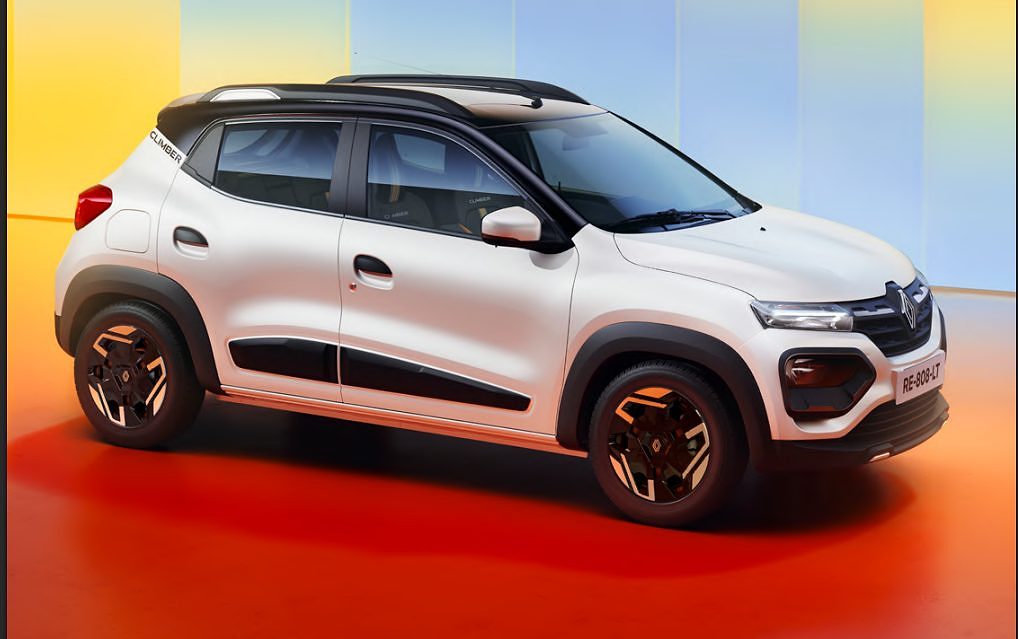
Before getting into the variant comparison, let's quickly cover what changed with this update.
The 2026 Kwid is not a full redesign — it's a lifecycle facelift. The big changes are cosmetic and structural. Renault slapped on its new 3D corporate logo, gave the Climber redesigned dual-tone wheel covers, added a new Kiger-sourced three-spoke steering wheel, and tweaked the tailgate lettering with a silver finish.
Mechanically? Nothing changed. Same 1.0-liter engine, same gearbox options, same platform. The real story is the variant shakeup — Renault killed off the old Authentic (base) and Techno (mid) trims entirely. What's left is a cleaner two-trim lineup where the Evolution serves as the entry point and the Climber sits at the top.
The other interesting addition is an official retrofitted CNG kit available for manual variants at ₹70,450 extra, backed by a 3-year / 1 lakh km warranty. More on that later.
2026 Renault Kwid — Complete Variant-Wise Price List
Here's what each variant costs, ex-showroom:
A couple of things to note here. The Evolution is ₹22,000 more expensive than the old base Authentic trim—because that variant is gone now. But if you were eyeing the earlier Evolution or Climber, you're actually paying ₹14,000 to ₹32,000 less than before. So Renault has effectively made the higher trims more affordable while removing the bare-bones entry option.
2026 Renault Kwid: Engine, Mileage and Performance
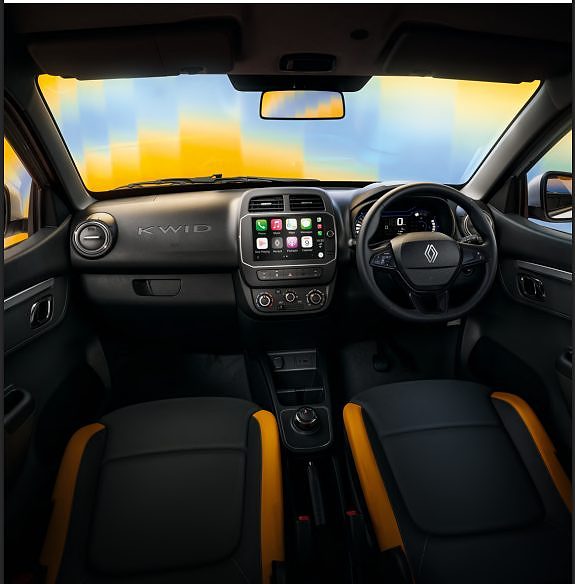
Both trims share the exact same powertrain — no engine variation between Evolution and Climber.
Real-world fuel efficiency tends to be around 18–20 kmpl in city conditions and about 15–17 kmpl on the highway when loaded. The AMT actually delivers slightly better efficiency than the manual in ARAI testing, which is a nice bonus if you're leaning toward automatic.
The Kwid's 1.0-liter three-pot engine is adequate for city commutes—zippy enough in lower gears and reasonably refined at cruising speeds. Highway overtakes with a full cabin need some planning, but for the segment and the price, it does its job without complaint. Just don't expect it to feel quick.
Renault Kwid Evolution — Features and What You Get
The Evolution is the base variant now, priced at ₹4.53 lakh (manual) and ₹4.90 lakh (AMT). Here's what it comes with:
Exterior: Body-colored bumpers, 14-inch steel wheels with covers, LED DRLs, door decals, rear spoiler, and remote keyless entry.
Interior & Comfort: Fabric seat upholstery, piano black and chrome inserts, manually adjustable ORVMs (internally), front power windows only, manual AC, a LED monochrome instrument cluster, and a 12V power socket.
Infotainment: 8-inch touchscreen with wireless Apple CarPlay and Android Auto, 2-speaker audio system, USB and AUX ports, plus Bluetooth connectivity.
Safety: Dual airbags (driver + front passenger), ABS with EBD, brake assist, electronic stability program (ESP), traction control, TPMS (tire-pressure monitoring), rear parking sensors, speed-sensing auto door lock, 3-point seatbelts for all occupants, rear child locks, and seatbelt reminders. Hill-start assist comes standard on the AMT variant.
For a car that starts under ₹4.60 lakh, this is a pretty solid package. The 8-inch touchscreen with wireless phone mirroring is still uncommon at this price point. Having ESP and traction control at this range is also worth appreciating.
What's missing? No rear power windows, no steering-mounted controls, no electrically adjustable ORVMs, no reversing camera, and — this is the big one — only 2 airbags.
Renault Kwid Climber — What Extra Features Do You Get?
The Climber starts at ₹5.15 lakh (manual) and ₹5.61 lakh (AMT). It builds on everything the Evolution offers and adds a meaningful list of upgrades:
Exterior Additions: ORVM-integrated turn indicators, body cladding on the doors, dual-tone wheel covers, two-tone paint option with a blacked-out roof, faux front and rear skid plates, and "Climber" branding on the C-pillars. This gives it a noticeably sportier, more SUV-like stance compared to the Evolution.
Interior & Comfort Additions: Chrome-plated inner door handles, two-tone cabin trim, all four power windows (rear ones are missing on Evolution), steering-mounted audio controls, electrically adjustable ORVMs, a rear parcel tray, and a manually adjustable inner rearview mirror (IRVM)—handy for cutting out headlight glare during night driving.
Safety Additions — This Is Where It Really Matters: The Climber gets 6 airbags (dual front + side airbags), a step up from just 2 on the Evolution. It also adds a rearview camera—absent on the base trim.
That IRVM, those additional airbags, and the camera alone change the safety equation significantly. The rest—power windows all around, steering controls, and better-looking exterior—adds everyday comfort and usability.
Renault Kwid Evolution vs Climber — Head-to-Head Comparison
Here's the full side-by-side breakdown of what separates the two trims:
The price difference between Evolution MT and Climber MT is ₹62,000. Between Evolution AMT and Climber AMT, it's ₹71,000. For that gap, you're getting four extra airbags, a reversing camera, all-four power windows, steering controls, and a better-looking car overall.
That's not a bad trade at all.
AMT vs. Manual—Which Gearbox Should You Pick?
The AMT costs roughly ₹37,000–₹46,000 more than the corresponding manual variant. Here's how to think about it:
Pick the AMT if: You drive in heavy city traffic daily, want the convenience of not clutching through jams, and can live with occasional jerky shifts during aggressive driving. The AMT also gets hill-start assist, which is a genuine boon in cities with flyover inclines and parking garages.
Pick the manual if: You want maximum control, drive on highways often, or are considering the CNG option (CNG is only available with MT). The manual is also slightly cheaper and will have marginally lower maintenance costs over time.
The Kwid's AMT is operated through a rotary dial on the center console rather than a traditional lever—it takes a day or two to get used to but works fine after that. It won't match a proper torque-converter automatic, but for stop-and-go city commuting, it reduces fatigue considerably.
2026 Renault Kwid CNG — Should You Consider It?
Renault doesn't offer a factory-fitted CNG kit. Instead, it provides an authorized dealer-retrofitted CNG setup for manual variants at an additional cost of ₹70,450. This comes with a 3-year / 1 lakh km warranty — whichever comes first.
If you're clocking high daily kilometers—say 60–80 km or more—the CNG option can bring your running costs down noticeably. The petrol engine produces 69 hp on petrol; expect a marginal power drop on CNG, which is standard for dual-fuel setups.
One thing to keep in mind: the CNG kit eats into the Kwid's already compact 279-liter boot space. If you regularly carry luggage or family bags, that's a real compromise. For solo commuters or couples without heavy boot requirements, it's a practical fuel-saving move.
2026 Renault Kwid Dimensions, Boot Space and Ground Clearance
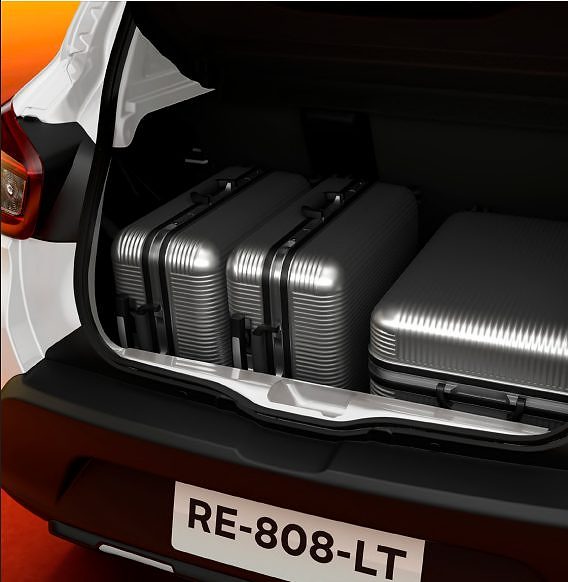
The Kwid's dimensions haven't changed with this update:
That 184 mm ground clearance is a genuine practical advantage over rivals like the Alto K10. It handles speed breakers, potholes, and unpaved colony roads without scraping—something everyday Indian drivers will appreciate. The 279-liter boot is reasonable for the segment, and folding down the rear seats opens up 620 liters for those occasional big loads.
2026 Renault Kwid Colour Options
The 2026 Kwid is available in seven color options: Electric Blue, Fiery Red, Ice Cool White, Moonlight Silver, Outback Bronze, Planet Grey, and Zanskar Blue. The Climber variant also gets dual-tone options featuring a blacked-out roof — which, honestly, makes the car look significantly more premium from the outside.
How Does the 2026 Kwid Stack Up Against Rivals?
The Kwid's main competitors in the entry-level hatchback space are the Maruti Suzuki Alto K10 (starting at ₹3.70 lakh) and the Maruti Suzuki S-Presso (starting at ₹3.50 lakh).
The Alto K10 and S-Presso start lower, but their feature-loaded variants overlap with the Kwid's pricing. Where the Kwid stands out is its SUV-ish design language, higher ground clearance, slightly more modern cabin tech (the 8-inch touchscreen is a genuine advantage), and now 6 airbags on the Climber.
Maruti's trump card remains its service network — it's wider and more accessible than Renault's in smaller towns. If after-sales accessibility is a concern in your area, that's worth factoring in. But purely on product design, features, and safety at this price, the Kwid holds its own well.
Our Verdict — Which 2026 Renault Kwid Variant Should You Actually Buy?
Here's my recommendation, broken down by buyer type:
Best Value Pick — Kwid Climber MT (₹5.15 lakh)
This is the variant I'd point most buyers toward. The jump from Evolution to Climber costs about ₹62,000, and what you get in return—6 airbags instead of 2, a reversing camera, all-four power windows, steering-mounted controls, electrically adjustable ORVMs, and a more premium-looking exterior—is genuinely hard to ignore. The safety uplift alone makes the case. If you're buying a new car in 2026 with only 2 airbags when a 6-airbag option exists at a modest premium, it's tough to justify skipping it.
Best for City Commuters — Kwid Climber AMT (₹5.61 lakh)
If your daily drive involves bumper-to-bumper traffic, the AMT variant adds real convenience. Hill-start assist comes included, the AMT's fuel efficiency is actually slightly better than the manual's on paper, and the clutch-free experience reduces fatigue over long commutes. Yes, it's the priciest variant at ₹5.61 lakh, but it's still very affordable in the broader market context.
Budget-Conscious Pick — Kwid Evolution MT (₹4.53 lakh)
If your budget is tight and you absolutely need to keep costs down, the Evolution isn't a bad car. You still get the 8-inch touchscreen, Apple CarPlay, ABS with ESP, TPMS, and rear parking sensors. It's a well-equipped base variant by segment standards. Just know that you're settling for 2 airbags and no reversing camera—which is a safety compromise you should be comfortable with.
For High-Kilometre Commuters — Kwid Evolution MT + CNG Kit (~₹5.24 lakh)
If you drive 50+ kilometers every day and want to keep running costs as low as possible, the CNG option on the Evolution manual makes financial sense over time. Just factor in the boot space loss and the slight power reduction on CNG mode.
Frequently Asked Questions (FAQs)
How many variants does the 2026 Renault Kwid have?
The 2026 Kwid is available in two trims — Evolution and Climber. Each trim can be had with either a 5-speed manual or a 5-speed AMT gearbox, making it four variants in total (six if you count the CNG options for manual trims).
Which variant of the 2026 Kwid has 6 airbags?
Only the Climber variant (both MT and AMT) gets 6 airbags. The base Evolution trim comes with 2 airbags—driver and front passenger only.
What is the mileage of the 2026 Renault Kwid?
The ARAI-claimed mileage is 21.7 kmpl for the manual transmission and 22.5 kmpl for the AMT. Real-world fuel efficiency is typically around 18–20 kmpl in mixed city-highway driving.
Does the 2026 Renault Kwid come with a factory-fitted CNG kit?
No. Renault offers an authorized dealer-retrofitted CNG kit for manual variants only, at an additional cost of ₹70,450. It comes with a 3-year or 100,000 km warranty.
What is the price difference between Kwid Evolution and Climber?
The Climber MT costs ₹62,000 more than the Evolution MT. The Climber AMT costs ₹71,000 more than the Evolution AMT. The Climber adds 6 airbags, a reversing camera, all-four power windows, steering controls, and upgraded exterior styling.
Is the 2026 Renault Kwid Climber worth the extra money?
In our opinion, yes. The additional airbags (4 extra), rear-view camera, power windows for all doors, and steering-mounted controls make the Climber a significantly better package for a relatively modest price increase. For most buyers, the Climber MT offers the best balance of value, features, and safety.
What colors is the 2026 Renault Kwid available in?
The Kwid comes in seven colors—Electric Blue, Fiery Red, Ice Cool White, Moonlight Silver, Outback Bronze, Planet Grey, and Zanskar Blue. The Climber also offers dual-tone options with a blacked-out roof.
How does the 2026 Kwid compare with the Maruti Alto K10?
The Kwid is pricier than the Alto K10 at the base level, but it offers a bigger touchscreen, SUV-inspired design, higher ground clearance (184 mm), and up to 6 airbags on the Climber. The Alto K10 benefits from Maruti's wider service network and lower starting price.