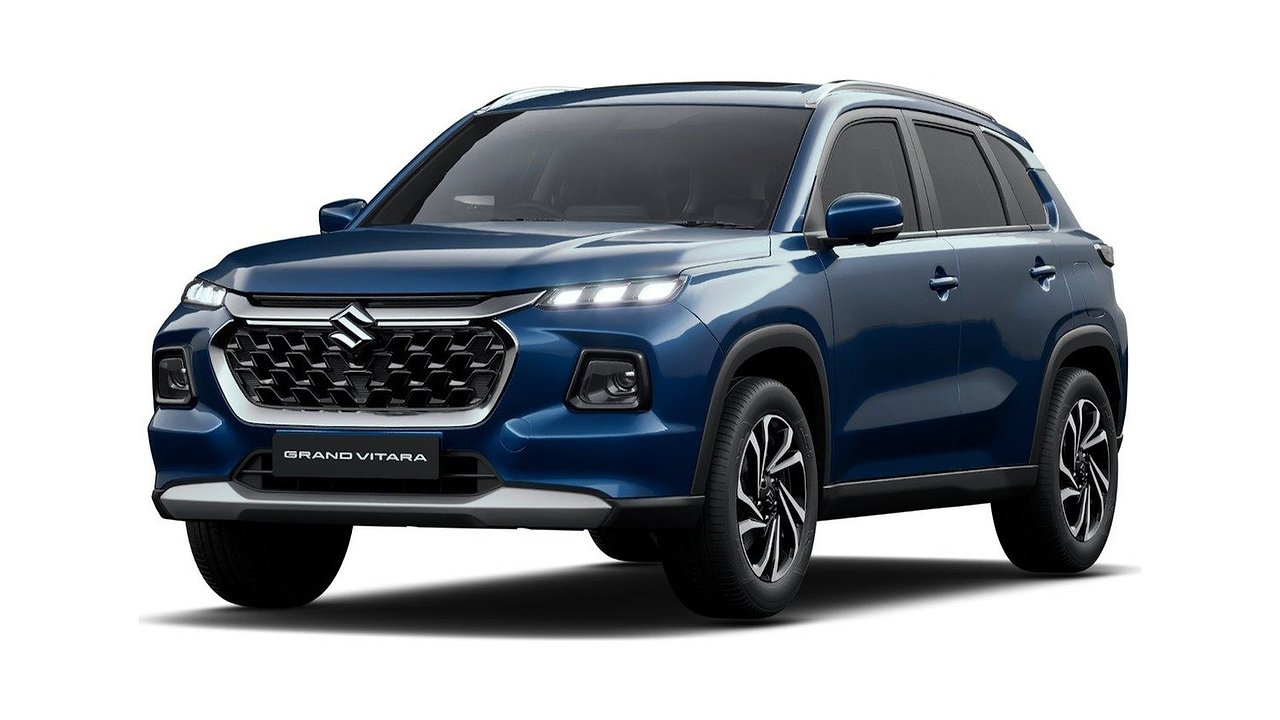
Maruti Suzuki has cut Grand Vitara prices by up to ₹38,900 on Zeta (O) and Alpha (O) variants this June 2026, leaving CNG and strong-hybrid trims unchanged.
Key facts
- Cut: up to ₹38,900
- Scope: Zeta (O) MT/AT, Alpha (O) MT/AT only
- Revised range: ₹10.76–19.57 lakh (ex-showroom)
- No change: CNG, strong-hybrid, or base petrol variants
Maruti Suzuki has dropped prices on four Grand Vitara petrol variants, Zeta (O) and Alpha (O) in manual and automatic, by ₹38,900 each. The cut takes the SUV's ex-showroom span to ₹10.76–19.57 lakh. Every other trim, including the entry Sigma, mid Delta, top Alpha, CNG variants, and the strong-hybrid range, holds its old price. No reason was announced, though mid-cycle discounts often signal inventory clearance or pre-refresh stock movement.
What's changed, and what hasn't
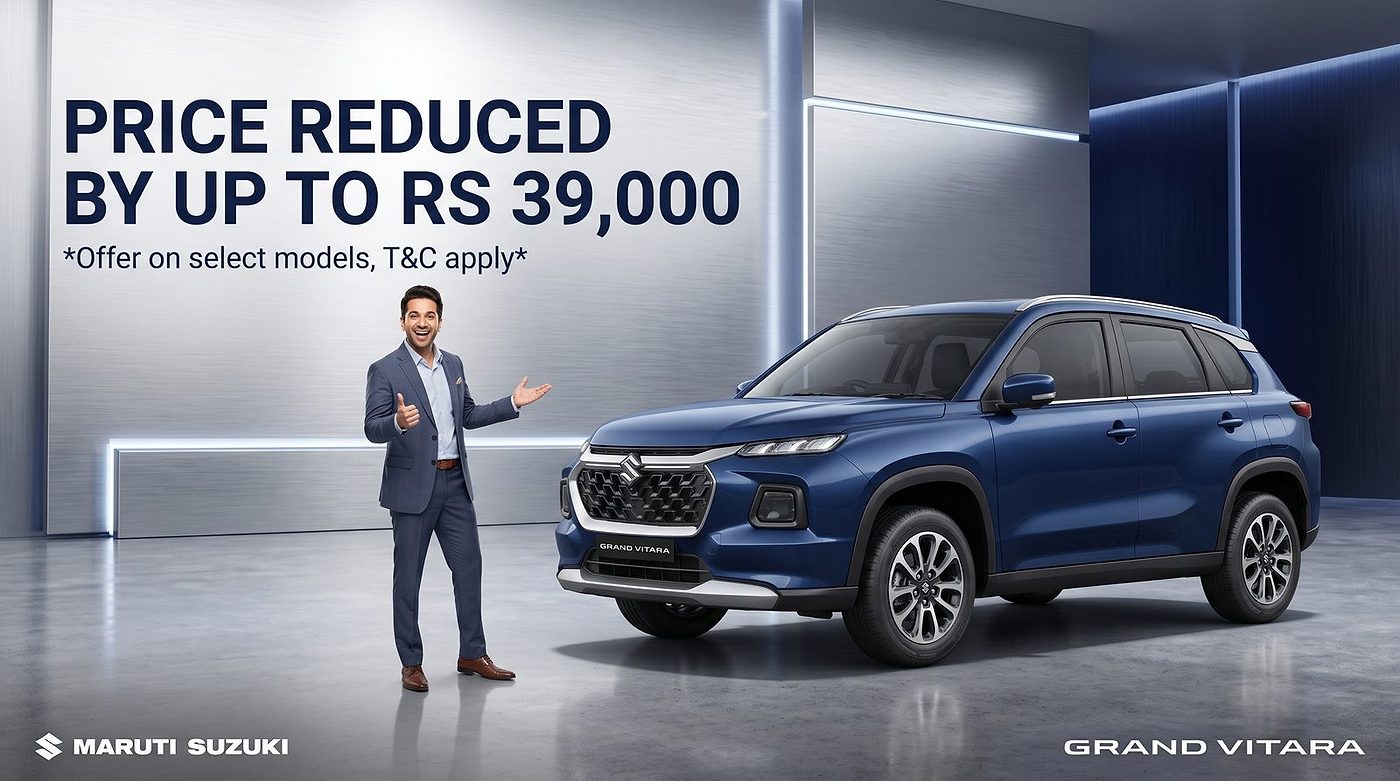
The Zeta (O) MT now costs ₹13.89 lakh (down from ₹14.28 lakh) and the Alpha (O) MT ₹15.39 lakh (from ₹15.78 lakh). Their automatic siblings see identical drops: Zeta (O) AT to ₹15.24 lakh, Alpha (O) AT to ₹16.73 lakh. These four optional trims, distinguished by leatherette seats, a wireless charger, and a 360-degree camera over the standard Zeta and Alpha, were the only ones repriced. The 1.5-litre naturally aspirated petrol in all other variants (102 bhp, 21.11 kmpl ARAI; real-world city ≈16–17 kmpl) continues at ₹10.77 lakh for the Sigma, ₹12.10 lakh for the Delta, ₹13.70 lakh for the Zeta, and ₹15.20 lakh for the Alpha. The CNG Delta and Zeta (87 bhp bi-fuel) stay at ₹13.00 lakh and ₹14.60 lakh. Every strong-hybrid variant, Delta Plus at ₹16.63 lakh through Zeta Plus and Alpha Plus at ₹19.57 lakh, was left alone.
Why only the optional trims?
Maruti typically uses mid-year cuts to move slower-selling configurations before a facelift or festive stock refresh. The Zeta (O) and Alpha (O) sit in an awkward pricing band: pricier than the base Zeta and Alpha by ₹58,000–₹60,000 for features that many buyers skip, yet not as loaded as the hybrid trims. Dropping them by nearly ₹39,000 narrows that gap and makes the leatherette-plus-360-camera package more digestible. It also undercuts the Hyundai Creta SX (O) 1.5 petrol MT (≈₹14.3 lakh) and the Kia Seltos HTK Plus petrol MT (≈₹14.5 lakh) by a meaningful margin.
Hybrid still commands a premium, and the savings
The strong-hybrid Delta Plus (114 bhp system output, 27.97 kmpl ARAI; real-world city ≈22–24 kmpl) starts at ₹16.63 lakh, a ₹2.73 lakh jump over the now-cheaper Zeta (O) AT. That premium buys you ≈7.4 km per litre over the petrol automatic in ARAI terms, or roughly 6–7 kmpl in the real world. At ₹100 per litre and 15,000 km a year, the hybrid saves ≈₹40,000 annually in fuel, so the premium pays back in 6–7 years. You also get a CVT instead of a torque-converter, electric-only crawl in traffic, and regenerative braking. The trade-off: boot space drops from 373 litres to 265 litres because the battery pack sits under the floor. Maruti's system is a self-charging strong hybrid (no plug needed), so you never hunt for a charger, and it holds 15–20% better resale than a comparable EV. States like UP grant a 100% road-tax waiver on strong hybrids (saving ≈₹1.8 lakh); Delhi's draft policy offers 50% off for strong/PHEV models under ₹30 lakh, though the Grand Vitara strong-hybrid top trim misses that cap by ≈₹0.6 lakh on-road.
Should you buy now or wait?
If you were eyeing the Zeta (O) or Alpha (O), this is a straightforward ₹38,900 saving, no strings, no feature changes. EMI on the Zeta (O) MT (₹13.89 lakh, 8.5% for 7 years) drops from ≈₹26,000 to ≈₹24,850 a month. But if you want the entry Sigma or the hybrid, the price stays the same, so waiting for a festive discount (typically ₹20,000–₹40,000 in cash + exchange) could make sense. The Grand Vitara is due for a facelift by late 2026 or early 2027, expect minor styling tweaks, an updated touchscreen, and possibly ADAS, but the current model's strong-hybrid powertrain and 5-star Global NCAP rating (adult 28.52/34, child 41.66/49) won't change.
References: Maruti Suzuki India — official website