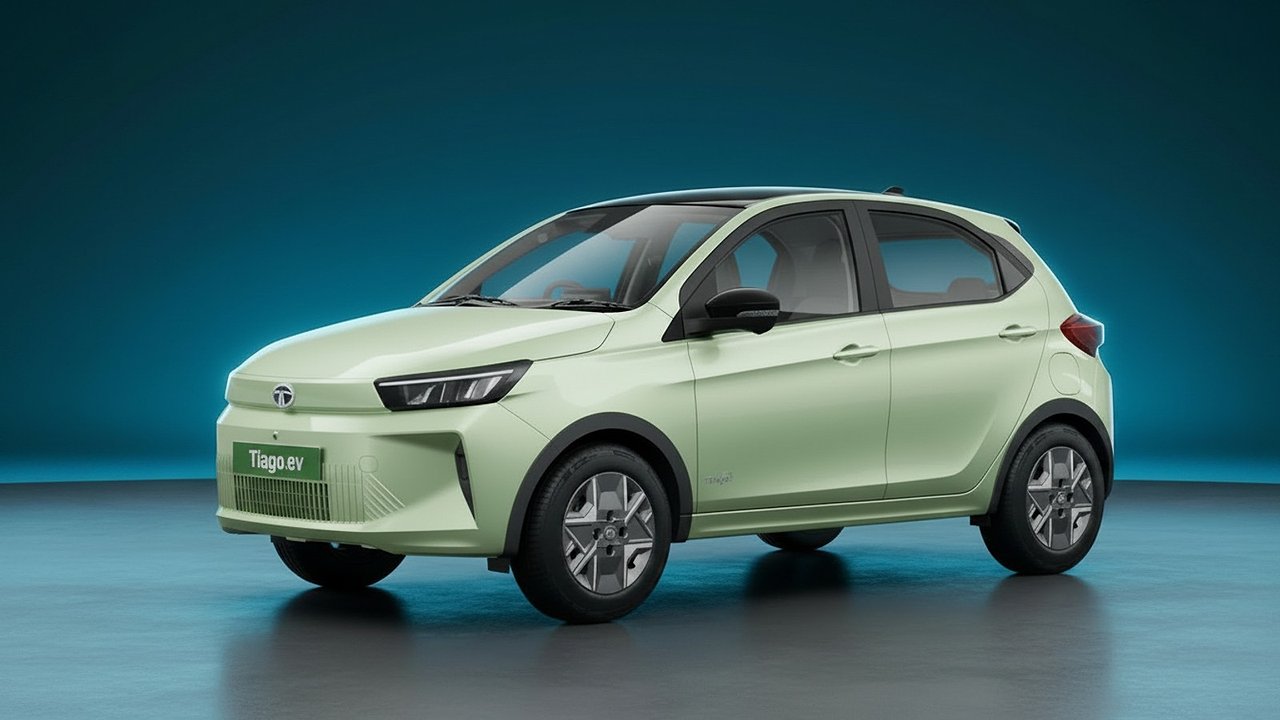
Tata's new battery subscription slashes the Tiago EV's upfront cost from ₹5.84 lakh to under ₹5 lakh, letting you lease the 19.2 kWh pack and pay monthly, ideal for city users clocking <50 km/day, but high-mileage buyers still recover the outright purchase premium in 2–3 years via fuel savings.
Key facts
- Upfront: expected <₹5L with battery lease vs ₹5.84L outright (Smart, 19.2 kWh)
- Monthly: lease cost TBA; outright Smart = ₹5.84L (60 bhp, 226 km MIDC)
- Range: ~160 km real-world (70% of 226 km MIDC); DC fast adds 100 km in 18 min
- Savings: ₹1–1.5/km home charging vs ₹6–9/km petrol = ₹5,000–7,000/month at 1,000 km
- Safety: 6 airbags standard; lifetime 24 kWh battery warranty, 8 yr/1.6L km on 19.2 kWh
Tata just rewrote the Tiago EV's entry ticket. A new battery subscription plan drops the Smart variant below ₹5 lakh ex-showroom, down from the outright ₹5.84 lakh, by letting you lease the 19.2 kWh pack and pay a monthly fee instead of owning it. It's the boldest push yet to crack India's EV anxiety around upfront cost, but the real question is whether you'll pay more over five years than if you'd bought the battery outright. We've run the numbers against the full Tiago EV range and the petrol Tiago to find out who wins.
What battery subscription changes
The headline move: Tata will offer the Smart variant (19.2 kWh, 60 bhp, 226 km MIDC range) at an expected sub-₹5 lakh price if you lease the battery pack instead of owning it. You'll pay a recurring monthly fee, exact amount, tenure, km caps and buyout terms are awaited, so treat this as a policy announcement rather than a full product launch. The upside is obvious: you shave ~₹85,000 off the upfront bill, making the EV cheaper on day one than even some petrol hatchbacks. The trade-off? You don't own the battery, so resale gets tricky (will the next buyer take over your lease, or does Tata handle it?), and if you cross the monthly km limit, overage charges could stack up. Warranty stays with the pack, 8 years or 1,60,000 km on the 19.2 kWh, lifetime on the 24 kWh for the first owner if you buy outright, but lease terms will govern coverage under the subscription model.
Where it sits in the range, and who should still buy outright
The full Tiago EV lineup runs ₹5.84–9.99 lakh ex-showroom. Smart at ₹5.84 lakh (19.2 kWh, 60 bhp, 226 km MIDC) is the lease candidate. Step up to Pure Plus at ₹8.49 lakh for the same 60 bhp pack with more kit, or ₹9.49 lakh for the 24 kWh pack (74 bhp, 285 km MIDC, 0–100 in 5.7 s). The top Creative Plus at ₹9.99 lakh adds a 360-degree camera, blind-view monitor and the bigger HARMAN touchscreen (26.03 cm vs 20.32 cm). All trims get 6 airbags, ESP, multi-mode regen with four levels, and DC fast charging that does 10–80% in ~35 minutes or drops 100 km into the pack in just 18 minutes. For outright buyers clocking ≥100 km daily, think highway commuters or family road trips, the math tilts toward ownership: at 1,000 km a month, you save ₹5,000–7,000 over petrol (home charging at ₹1–1.5/km vs ₹6–9/km for a petrol Tiago), so you'll recover the ₹1.14 lakh premium over the petrol base (₹4.70 lakh) in roughly two years, and the battery is yours to keep or sell.
Real-world costs and the subsidy reality
Expect ~160 km of real range on the 19.2 kWh pack in mixed city-highway use, about 70% of the 226 km MIDC claim, and closer to 200 km if you're gentle in the city. Charging at home on a 15A socket takes ~8–9 hours for a full top-up; a 3.3 kW AC wallbox cuts that to ~6 hours. DC fast is the star: 18 minutes gets you 100 km, enough for an unplanned dash across town. Running cost works out to ₹1–1.5 per km at ₹8–10 per unit, versus ₹6–9/km for the petrol Tiago at 20 kmpl and ₹100/litre fuel. Over 1,000 km a month that's a ₹5,000–7,000 pocket win, or ₹60,000–84,000 a year. One hard fact: there is no central cash subsidy on electric cars in India anymore, only state-level road-tax and registration waivers that vary by RTO (Delhi, Maharashtra and Gujarat offer the fattest breaks; check yours). On-road price = ex-showroom + insurance + your state's cut, and the wallbox + installation are extra.
Should you lease or buy?
Battery subscription makes sense if you're a city-only user doing <50 km a day, unsure about EV commitment, or need the lowest possible EMI today. Cab aggregators eyeing a two-year flip will love the low entry and won't care about residual value. But if you're planning to keep the car five years and clock serious distance, say 15,000 km a year or more, buying outright is almost certainly cheaper over the life of ownership, even before you factor in resale (a Tiago EV with an owned, warranted battery will command a far better price than one on an expiring lease). Wait for Tata to publish the lease cost, tenure and km caps before you sign; a ₹3,000/month fee over 60 months adds ₹1.8 lakh, wiping out the upfront saving. And if you're cross-shopping the petrol Tiago at ₹4.70 lakh base, remember the EV's ₹1.14 lakh premium (outright) pays for itself in fuel savings alone within 18–24 months at typical Indian driving patterns.
References: Tata India — official website