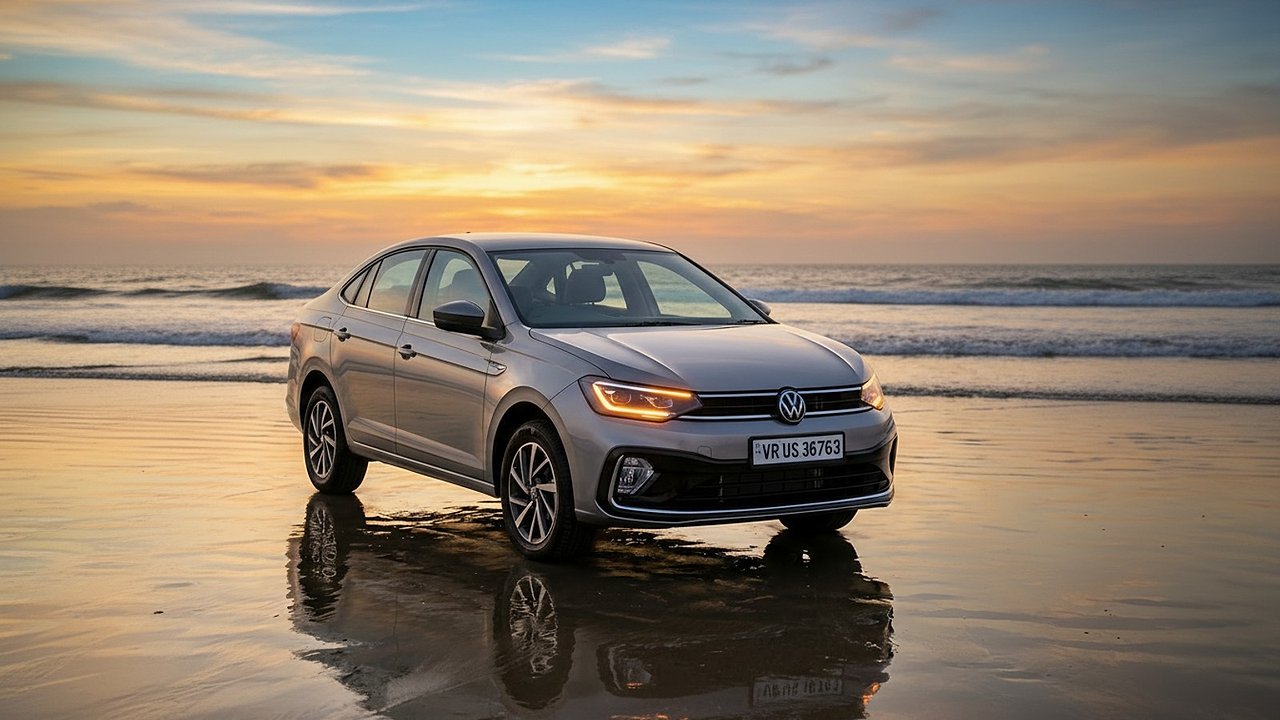
Volkswagen Virtus facelift launching soon with redesigned exterior, larger digital display, and improved cabin tech, but 1.0L and 1.5L TSI engines, dimensions, and wheelbase carry over unchanged.
Key facts
- Current price: ₹11.56–19.03 lakh (ex-showroom)
- Engines: 115 PS 1.0L TSI, 150 PS 1.5L TSI, both retained
- Expected updates: new LED headlamps, digital cluster, larger touchscreen, ambient lighting
- Dimensions unchanged: 4,561 mm length, 2,651 mm wheelbase, 521-litre boot, 179 mm ground clearance
- Rivals: Hyundai Verna (₹17.42 lakh top-spec) with ADAS, Honda City, Skoda Slavia
The Volkswagen Virtus already owns the 'driver's sedan' crown in the ₹11–18 lakh space, thanks to sharp handling and those two brilliant TSI engines. Now, a facelift is inbound, think refreshed LEDs, a bigger digital display, and possibly ambient lighting. But the mechanical recipe is untouched: same 115 PS 1.0L three-cylinder and 150 PS 1.5L four-cylinder turbos, same manual/auto/DSG gearbox spread, same 2,651 mm wheelbase and 521-litre boot. Which raises the real question: is a cosmetic nip-tuck enough to keep the Virtus competitive against the tech-laden Hyundai Verna and Honda City, especially if VW tacks on a ₹30,000–60,000 premium?
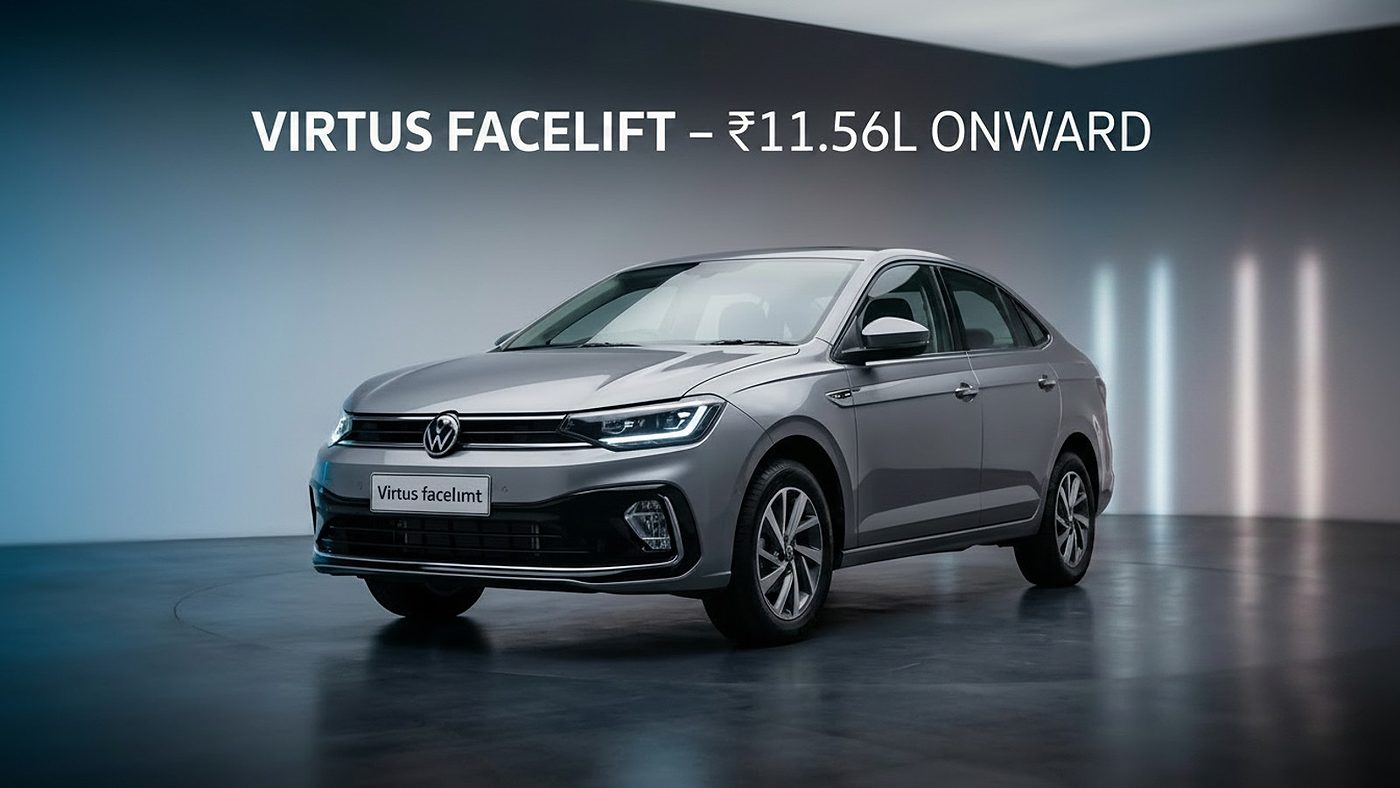
What's changing (and what isn't)
Expect a redesigned front fascia: new LED headlamp signature, revised grille, updated bumpers, fresh alloy-wheel designs, and reworked tail-lamps. VW may even slip in an illuminated logo or connected lighting elements to mirror global trends. What's not changing? The 4,561 mm length, 2,651 mm wheelbase, 179 mm ground clearance, and 521-litre boot, those stay locked. The silhouette remains a taut, planted three-box sedan.
Cabin tech & features, closing the gap?
Currently, the Virtus runs an analogue cluster with a digital MID and a 10-inch touchscreen. The facelift should bring a larger digital instrument cluster (likely 8-inch+), possibly a 10-inch+ touchscreen upgrade, new upholstery, and ambient lighting. Existing kit, ventilated front seats, auto climate control, wireless charging, cruise control, 6 airbags, electronic stability control, should carry over unchanged. The big unknown: will VW add ADAS (even Level 1 with adaptive cruise and lane-keep) or a 360-degree camera? The Hyundai Verna 1.5 Turbo DCT SX(O) at ₹17.42 lakh already offers Level 2 ADAS and a panoramic sunroof; the Virtus GT Plus Sport 1.5 DSG at ₹19.03 lakh, a ₹1.61 lakh premium, can't afford to remain a tech laggard.
Powertrain & pricing, how much for the polish?
The 1.0-litre TSI (115 PS, 178 Nm, 18.67 km/l ARAI in manual guise) and 1.5-litre TSI (150 PS, 250 Nm with cylinder deactivation, 18.12 km/l ARAI manual) carry over, as do the 6-speed torque-converter auto and 7-speed DSG options. VW will likely add ₹30,000–60,000 per variant for the cosmetic updates. If the base Comfortline 1.0 MT climbs from ₹11.56 lakh to ~₹11.90 lakh and the GT Plus Sport 1.5 DSG nudges ₹19.60 lakh, you'll need to weigh that against year-end discounts on unsold current stock, or waiting for the Slavia facelift (which will land with identical updates) to arrive.
Should you wait for it?
If you want sharper looks and a more modern cabin without giving up VW's rock-solid build and engaging dynamics, yes, the facelift makes sense. But if you're cross-shopping the Verna for its ADAS suite or the City for its proven resale, the Virtus update is evolutionary, not revolutionary. The ideal buyer? Someone who values a proper driving experience, the 1.5 TSI's mid-range punch, the taut ride, the feelsome steering, over feature parity. If VW adds ADAS or keeps the price hike modest, the Virtus facelift could be the smart pick. If it's just new headlamps and a bigger screen for a ₹60,000 bump, grab the outgoing stock at a discount.
References: Volkswagen India — official website