
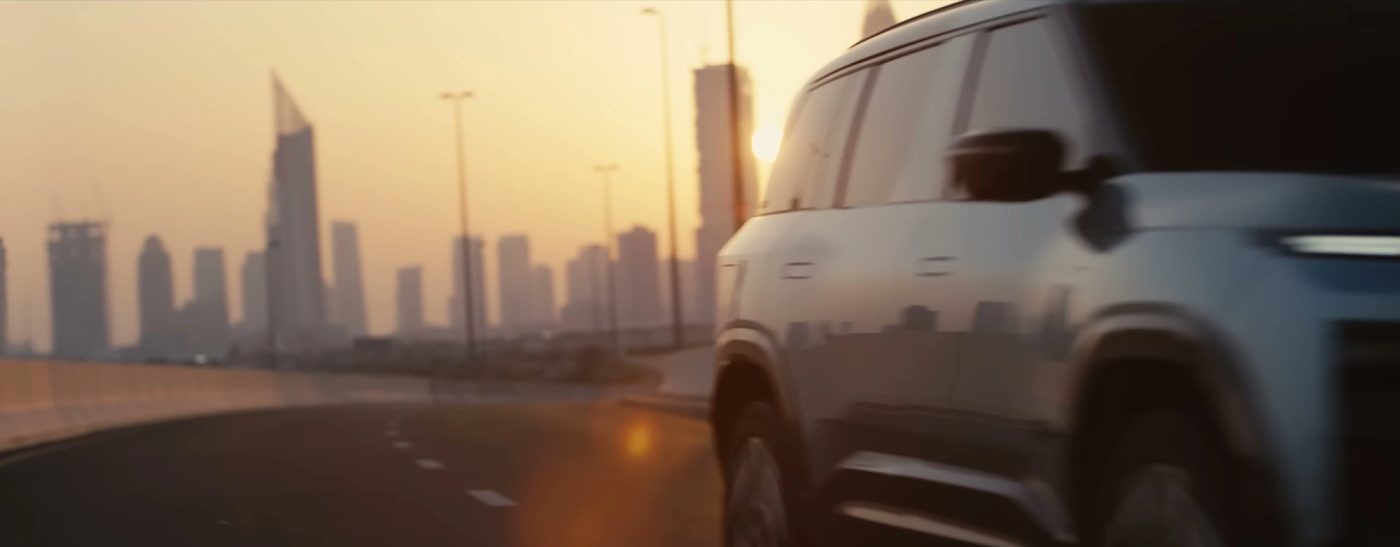
Tata Motors has finally shown the Sierra EV in full. A new promotional video gives Indian buyers their first proper look at the electric SUV ahead of its June 30 launch, confirming the design and dropping hints about the hardware it'll share with the Harrier EV.
The Sierra EV is Tata's latest attempt to plant a flag in the electric SUV space, taking the ICE-powered Sierra platform and bolting on electric motors and batteries. The basic shape is familiar, but the EV gets its own colour schemes and front-end tweaks to distance itself from the petrol or diesel versions.
What's different in the Sierra EV design
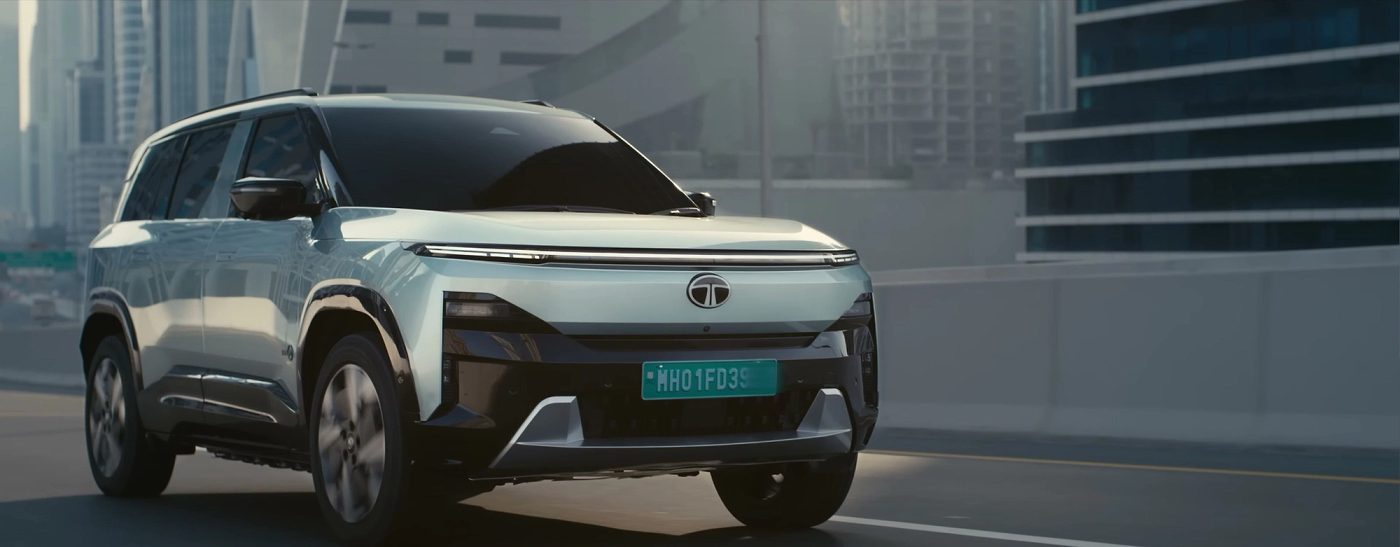
Tata's done what it usually does when converting an ICE car to electric: keep the skeleton, swap the skin details. The Sierra EV's silhouette is recognisably Sierra, but the front fascia gets reworked with contrast colour treatments — think body colour playing off black or grey panels to signal this is the electric one.
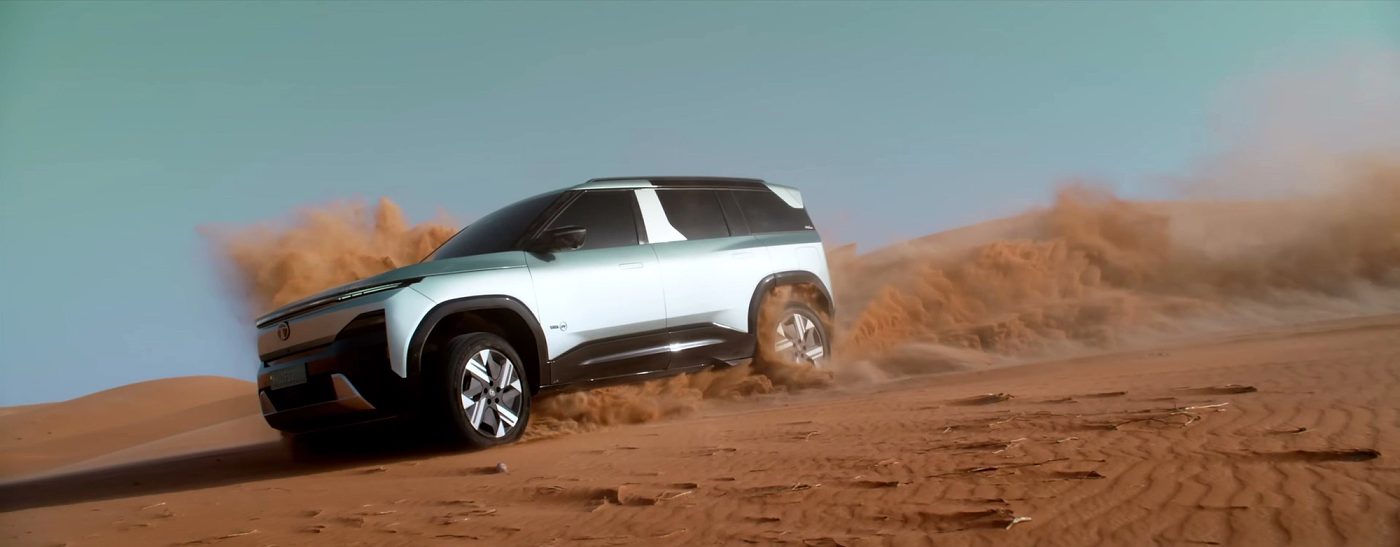
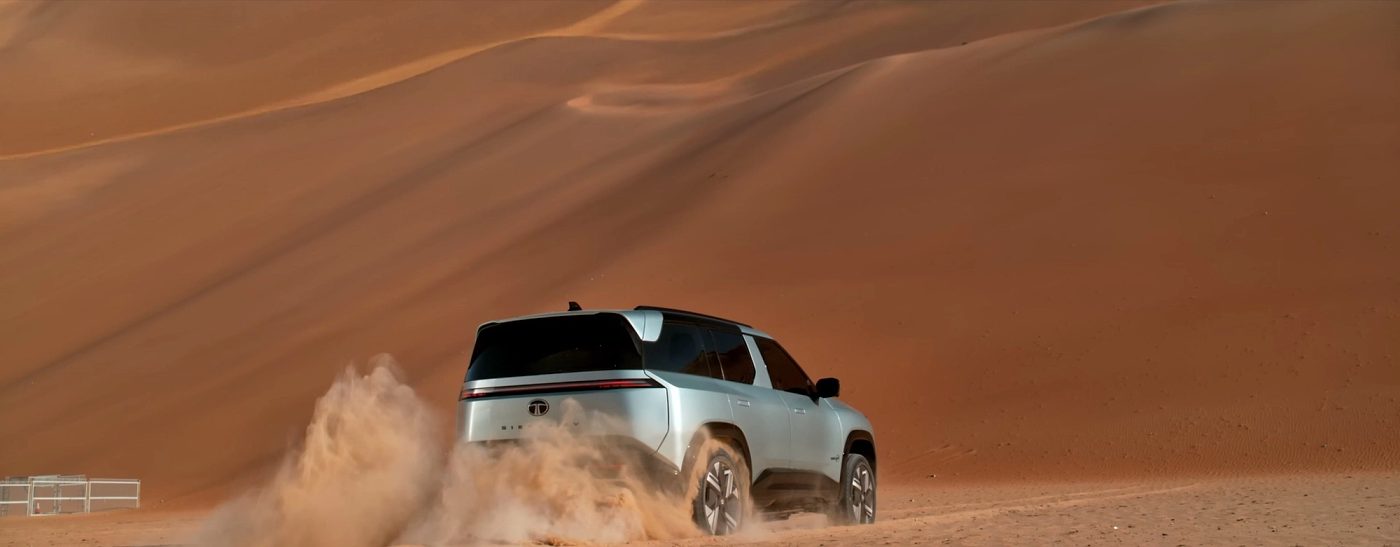
The teaser shows the SUV powering up a massive sand dune, so Tata clearly wants you to think adventure and capability. The exterior looks muscular and upright, honouring the Sierra name while nodding to modern EV design. Expect the usual EV cues: blanked-off grille, aero-friendly alloys, maybe some blue accent lighting like Tata's other EVs.
The cabin hasn't been fully shown yet, but safe bet it'll borrow heavily from the Harrier EV — big touchscreen, digital dials, connected car tech, the works.

Battery, range & AWD capability — what to expect
The Sierra EV should lift its mechanical guts straight from the Harrier EV. That means two battery packs: a 65kWh unit for base variants and a bigger 75kWh for the top trims. Real-world range? Somewhere between 450km and 550km, depending on which battery you pick and how you drive.
Here's the interesting bit: Tata's likely offering all-wheel drive. That would make the Sierra EV one of the few proper AWD electric SUVs in India. It gives the Sierra an edge over road-focused rivals like the Hyundai Ioniq 5 or Mahindra's incoming XUV.e8. Pair AWD with decent ground clearance, and you've got an electric SUV that can actually handle rough stuff.
Charging matters. If the Sierra EV mirrors the Harrier EV's setup, expect 10–80 percent in around 40–50 minutes on a 50kW DC fast charger, possibly quicker if Tata supports higher-power chargers.
Price & variant breakdown — where it sits
Tata's expected to slot the Sierra EV between ₹18.99 lakh and ₹25.49 lakh (ex-showroom). Base variants with the 65kWh battery and two-wheel drive should start around ₹19 lakh. The top-spec 75kWh AWD model could nudge ₹25.5 lakh.
That puts it squarely against the Mahindra XUV.e8 and comfortably below premium crossovers like the Hyundai Ioniq 5 or VW ID.4. It also undercuts the Harrier EV, giving buyers a cheaper way into Tata's electric SUV lineup.
Expect three or four variants — probably named Creative, Accomplished, Empowered, and Pure+ if Tata sticks to its EV naming playbook. Goodies like ventilated seats, panoramic sunroof, 360-degree camera, and ADAS will likely be top-trim exclusives.
How it compares: Sierra EV vs. rivals
The Sierra EV's main boxing match is with the Mahindra XUV.e8, which is landing around the same time. Both will offer AWD, similar battery sizes, and comparable pricing. It'll come down to range, charging speed, and which cabin you like better.
The Hyundai Ioniq 5 is a different beast — pricier (₹45 lakh and up), more futuristic, with 800V fast-charging and a posher interior. But it doesn't do rugged SUV or AWD versatility like the Sierra EV.
The MG ZS EV is another option, though it's smaller, less powerful, and doesn't have AWD. If you're still weighing ICE alternatives, the Sierra EV competes indirectly with the Hyundai Creta, Kia Seltos, and even its sibling, the Tata Harrier. The EV's higher upfront cost gets balanced by cheaper running costs — assuming electricity stays cheaper than fuel — and zero tailpipe emissions.
Should you buy the Sierra EV now, or wait?
If you want a practical, midsize electric SUV with proper off-road chops and Tata's growing EV backbone, the Sierra EV deserves a serious look. The June 30 launch will lock in final specs, pricing, and variants, so hold tight a few more days before signing anything.
That said, there's a case for waiting. The Mahindra XUV.e8 is arriving soon and might offer better bang for your buck, especially if Mahindra prices aggressively. Tata's charging network is improving but still thin outside the big cities, so if you're in a smaller town, think hard about charging access.
On the other hand, early Sierra EV buyers get Tata's solid service network, relatively proven battery tech, and the brand's growing EV credibility. If the base variant stays close to ₹19 lakh and the 75kWh AWD lands under ₹26 lakh, the Sierra EV could be one of the sharpest value plays in the Indian electric SUV market this year.