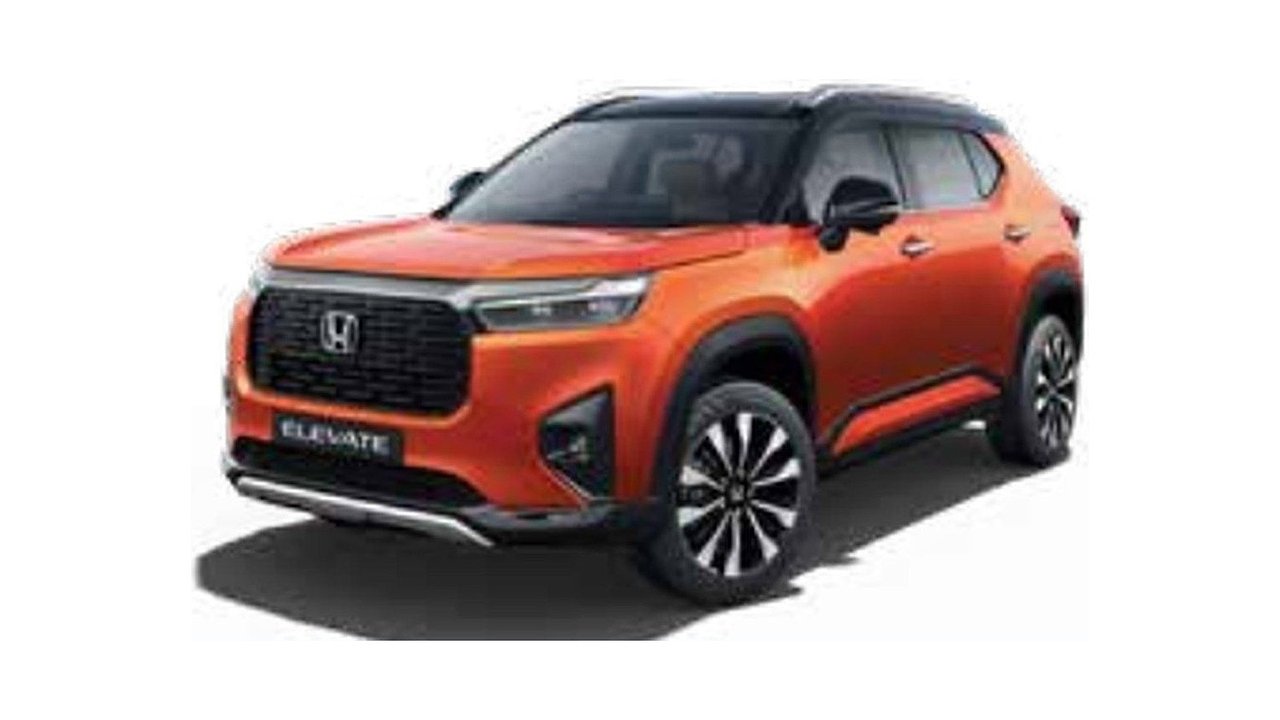
Honda has officially launched the Elevate in India, marking the brand's return to the hotly contested mid-size SUV segment. The introductory price is ₹10.99 lakh (ex-showroom), slotting the Elevate between the compact WR-V and the larger CR-V. The target? Buyers who want space, practicality, and Honda's trademark reliability without stepping into premium territory.
This is Honda's first all-new SUV for India in years, built on a fresh platform and designed specifically for markets like ours. It goes up against the Hyundai Creta, Kia Seltos, Maruti Grand Vitara, and Volkswagen Taigun—a segment that accounts for nearly a quarter of all SUV sales in the country. That's a lot of metal to compete with.
What exactly is the Honda Elevate?
The Elevate is a five-seater mid-size SUV, roughly 4.3 metres long, designed to offer generous cabin and boot space without the bulk of a three-row vehicle. Honda has positioned it as a practical, urban-friendly SUV with a focus on interior roominess, ease of driving, and fuel efficiency.
Unlike some rivals that share platforms across brands, the Elevate rides on Honda's own architecture, which also underpins global models. The design is clean and upright, with a tall roofline that maximises headroom and a squared-off rear that promises a usable boot. Inside, the cabin layout is simple and ergonomic—tactile materials and ease of use take priority over visual drama.
Honda is banking on its reputation for low running costs, strong resale value, and a solid service network. Those still matter deeply to Indian families buying their first or second SUV.
Price and variant breakdown
The Elevate is offered across multiple variants, with prices starting at ₹10.99 lakh for the base trim and going up to an estimated ₹16.67 lakh for the top-spec version (all prices ex-showroom, pan-India). This places it competitively within the segment, undercutting some premium variants of the Creta and Seltos while staying above the base trims of the Grand Vitara and Taigun.
Honda typically offers a manual gearbox on lower variants and a CVT automatic on mid and top trims. Expect LED headlamps, a touchscreen infotainment system with wireless Android Auto and Apple CarPlay, automatic climate control, cruise control, and a sunroof on higher variants. Safety kit includes multiple airbags, ABS with EBD, rear parking sensors, and ISOFIX child seat anchors as standard.
The top variant likely adds Honda Sensing—the brand's suite of advanced driver-assistance systems—including adaptive cruise control, lane-keep assist, and collision mitigation braking. Exact feature lists will vary by trim, so check what you're actually getting before you sign.
Engine, mileage, and the honest running cost math
The Elevate is powered by a 1.5-litre naturally aspirated petrol engine, the same unit used in the City sedan. It produces around 121 bhp and 145 Nm of torque, mated to either a six-speed manual or a CVT automatic. No diesel. No hybrid. Not at launch, anyway.
Expect real-world mileage in the range of 14–16 kmpl for the manual in mixed driving, and 13–15 kmpl for the CVT, depending on how you drive and where. Highway runs should push those numbers higher. Honda's naturally aspirated engines are known for their refinement and low maintenance costs, but they lack the low-end punch of turbo-petrol rivals. You'll notice that in city traffic.
Running costs should be competitive. Honda's service intervals are reasonable, spares are widely available, and resale values have historically been strong. Insurance premiums will be in line with other mid-size SUVs. If you drive sensibly, fuel bills won't break the bank. Over five years, the Elevate should be one of the more affordable SUVs to own in its class.
How it stacks up against the competition
The Elevate enters a segment dominated by the Hyundai Creta and Kia Seltos, both of which offer multiple engine options, including diesel and turbo-petrol, plus more gearbox choices. The Creta has a slight edge in perceived premium-ness and feature richness, while the Seltos appeals to younger buyers with sportier styling and tech.
The Maruti Grand Vitara and Toyota Hyryder bring strong hybrid options to the table, promising 25+ kmpl in mild-hybrid guise—a big draw for cost-conscious buyers. The Volkswagen Taigun and Skoda Kushaq offer sharper handling and more powerful turbo engines, but come with a premium price tag and higher running costs.
The Elevate's trump cards? Honda's brand trust, a spacious cabin, predictable ownership costs, and the availability of ADAS at accessible price points. But it's missing a diesel or hybrid, and the naturally aspirated petrol may feel underpowered to buyers used to torquey turbo motors. It's a safe, sensible choice—classic Honda. Just not the most exciting one.
Should you buy it now, or wait?
If you're a Honda loyalist or prioritise long-term reliability and low running costs over outright performance or feature bragging rights, the Elevate makes a strong case. The pricing is sharp, the package is well-rounded, and the brand's after-sales reputation is hard to beat. Families looking for a fuss-free, roomy SUV that won't surprise them with repair bills will find a lot to like here.
But if fuel economy is your top priority, the Grand Vitara hybrid offers measurably better mileage. If you want more power or a diesel option, the Creta, Seltos, or even the MG Astor might suit you better. If you're willing to wait, discounts typically start appearing four to six months after launch, especially around festive seasons.
Bottom line: if the Elevate ticks your boxes and you're ready to buy, there's no compelling reason to wait. Initial demand will be high, and waiting periods could stretch. But if you're undecided or can afford to hold off, test-drive all the rivals, check real-world owner reviews, and see how initial reliability and service experience pans out. The mid-size SUV segment is fiercely competitive. Make sure you're choosing the one that fits your needs, not just the newest badge on the block.