
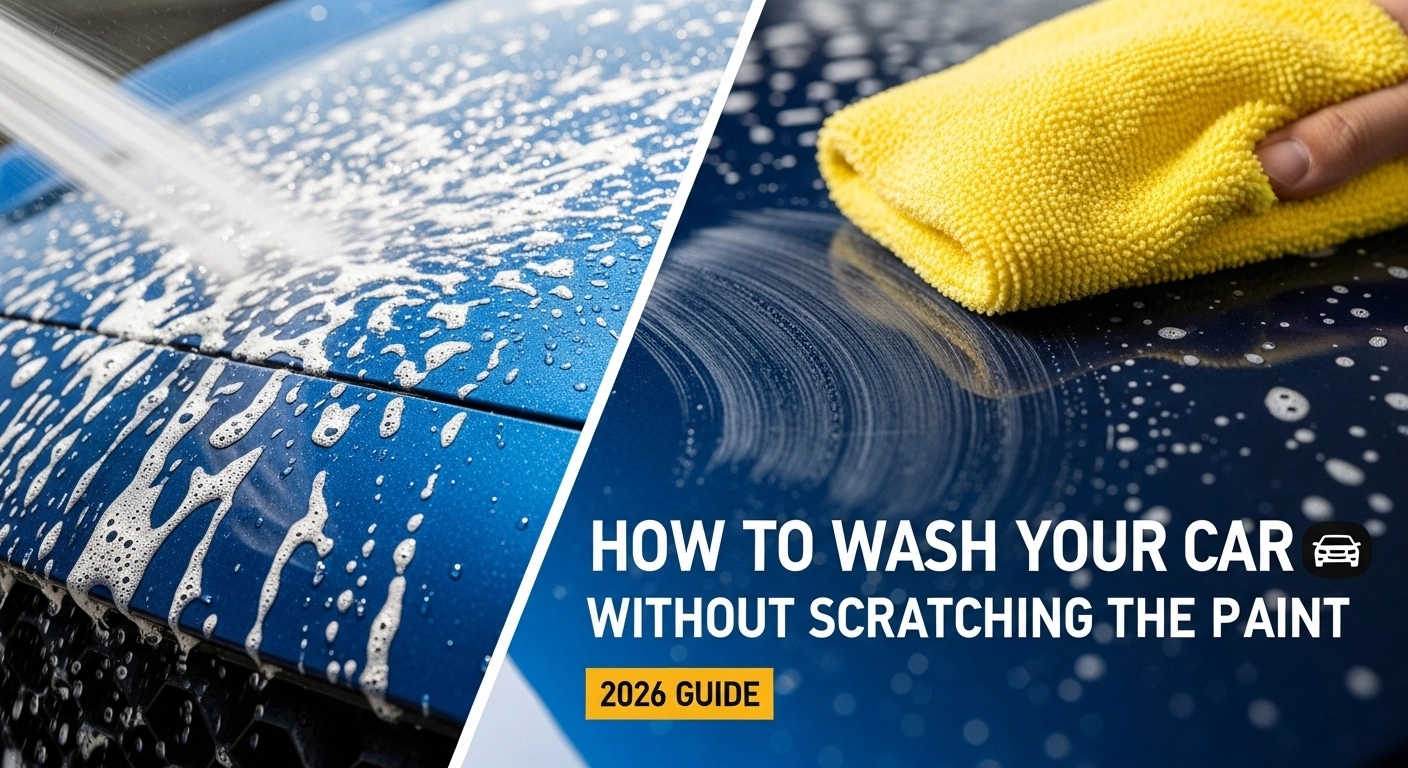
Washing your car should protect it, not damage it. Yet the most common cause of swirl marks, fine scratches, and dulled paint is improper washing technique. Whether you have been using a single bucket with an old sponge or relying on automatic drive-through washes, there is a good chance your current routine is quietly degrading your vehicle’s finish every time you clean it.
In this step-by-step guide for 2026, we will walk you through the safest way to wash your car at home using techniques trusted by professional detailers around the world. By following these methods, you will maintain your car’s factory shine, preserve any existing wax or ceramic coating, and avoid the micro-scratches that make paint look tired and dull over time.
Why Most People Scratch Their Cars While Washing
The primary cause of wash-induced scratches is dragging dirt and grit across the paint surface. When you use a dirty sponge, a single bucket of murky water, or a rough towel, you are essentially grinding tiny particles into your clear coat. Over time, these micro-scratches accumulate and become visible as swirl marks, especially on dark-colored vehicles. Automatic car washes are another common culprit. Many tunnel washes use recycled water and abrasive brushes that trap contaminants from previous vehicles. Even touchless car washes, while safer, can use highly acidic or alkaline chemicals that strip wax and degrade paint protection over time.
Step 1: Gather the Right Supplies
Before you even touch your car, assemble the correct tools. You will need two clean buckets, grit guards for each bucket, a high-quality microfiber wash mitt, a pH-neutral car wash shampoo, a foam cannon or foam gun if available, several clean microfiber drying towels, and a dedicated wheel cleaning brush. Avoid using household dish soap, bath sponges, or old cotton rags. Dish soap is formulated to strip grease, which means it will remove wax, sealant, and even weaken ceramic coatings. Sponges trap dirt particles on their flat surfaces and grind them into the paint, while cotton rags leave lint and cause friction damage.
Step 2: The Pre-Rinse Is Critical
Never start scrubbing a dry or lightly damp car. Begin by thoroughly rinsing the entire vehicle with a strong stream of water from a pressure washer or garden hose with a jet nozzle. This removes the heaviest layer of loose dirt, dust, bird droppings, and debris before any physical contact. If you have a foam cannon, this is the time to apply a thick layer of snow foam. Snow foam is a pre-wash detergent that clings to the surface and begins dissolving road grime, bug splatter, and other contaminants. Let the foam dwell for three to five minutes, then rinse it off completely. This single step dramatically reduces the amount of dirt left on the surface when you begin the contact wash.
Step 3: Use the Two-Bucket Method
The two-bucket wash method is the gold standard for safe car washing. Fill one bucket with your car wash shampoo solution and clean water. Fill the second bucket with plain rinse water and place a grit guard at the bottom. Dip your microfiber wash mitt into the soap bucket, wash one panel of the car using straight-line motions rather than circular movements, then rinse the mitt thoroughly in the plain water bucket before dipping it back into the soap bucket. The grit guard traps particles at the bottom of the rinse bucket, preventing them from returning to your mitt. This cycle ensures that you are always washing with a clean mitt, which is the single most effective way to prevent scratches during a hand wash.
Step 4: Wash from Top to Bottom
Always start washing from the roof and work your way down. The lower panels of your car, particularly the rocker panels, wheel arches, and bumpers, accumulate the most dirt, road grime, and tar. By washing the cleanest areas first, you avoid contaminating your mitt with heavy grit before touching the cleaner upper panels. Wash the wheels and tires last with a separate brush and a dedicated wheel cleaner. Brake dust is highly abrasive and corrosive, and you never want wheel contaminants anywhere near your paint.
Step 5: Rinse and Dry Properly
After washing every panel, give the entire car a final thorough rinse. Remove the nozzle from your hose and let water sheet off the surface in a smooth, even flow. This sheeting technique actually helps remove most of the water from flat surfaces, reducing the amount of drying you need to do by hand. For drying, use a clean, high-quality microfiber drying towel or a purpose-built car drying towel. Pat and blot the surface gently rather than dragging the towel across the paint. Some detailers prefer to use a filtered air blower to dry their vehicles completely without any physical contact, which is the safest possible method.
Step 6: Protect Your Results
Once your car is clean and dry, consider applying a layer of protection to lock in the results. A quick detailer spray or spray sealant takes only minutes to apply and adds a hydrophobic layer that makes your next wash even easier. If you have a ceramic coating, use a ceramic-specific maintenance spray to boost the coating’s hydrophobic properties and extend its lifespan. Establishing a regular washing schedule of every one to two weeks will prevent contaminant buildup and keep your vehicle looking its best between professional detail appointments.
Common Mistakes to Avoid
Some of the most damaging mistakes include washing in direct sunlight, which causes soap to dry on the surface and leaves water spots. Using a single bucket without a grit guard is another major risk factor. Skipping the pre-rinse and immediately scrubbing a dusty surface will almost certainly introduce new scratches. Finally, using old or previously dropped towels is a recipe for disaster, as even one piece of embedded grit can scratch the paint on every pass.
By following this guide consistently, you will preserve your car’s paint quality, protect any existing coatings, and save money on expensive paint correction services down the road. Safe washing is the foundation of proper car care, and once you adopt these habits, you will never go back to your old routine.